Get Full Government Meeting Transcripts, Videos, & Alerts Forever!
Get email alerts on the Health Insurance Transition topic
No spam. Unsubscribe anytime.
SFHSS and Blue Shield report fewer calls but retirees say problems persist after Medicare Advantage transition
Summary
San Francisco Health Service System and Blue Shield of California said call volumes and call-center metrics improved following the Medicare Advantage PPO transition, but retirees and advocacy groups told the board ongoing issues remain, including benefit replication and acupuncture claims.
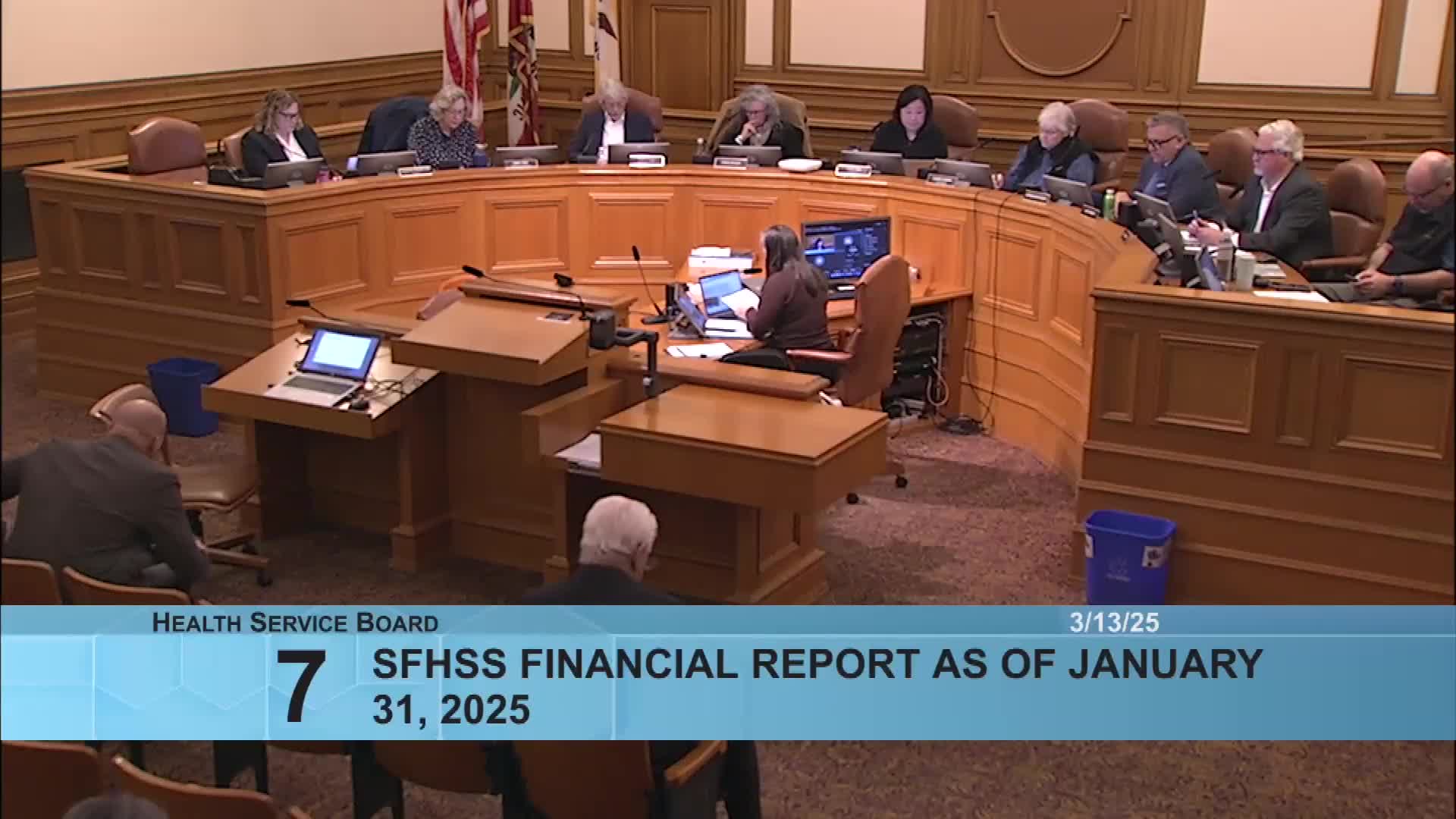
San Francisco's Health Service System (SFHSS) and Blue Shield of California told the SFHSS Health Service Board on March 13 that transition-related call volume and service metrics for the Blue Shield Medicare Advantage PPO have fallen since January, but members and advocates said problems persist and need additional outreach and fixes.
SFHSS Chief Operating Officer Ray Guillen said the number of members walking in or calling for help related to the Blue Shield MAPD transition “has dropped by 50% compared to January,” and that the system’s average speed to answer, average handle time and first-call resolution improved in February. Guillen said HSS hosted a March 4 roundtable with Protect Our Benefits, Blue Shield leaders and SFHSS staff to discuss member-reported issues.
The session’s purpose was to assess remaining problems and Blue Shield’s plans to resolve them, Guillen said. “Once we move away from these monthly transition updates, we will continue to share with this board the HSS and Blue Shield call metrics in the monthly director’s report,” he added.
Charles Lee, senior manager for Blue Shield’s group Medicare business, presented the insurer’s metrics and said the Blue Shield concierge and HSS call center volumes “have dropped drastically” from January to February. Lee said Blue Shield’s abandonment rate dropped to 1% and average speed to answer returned to a roughly “30 second commercial timeframe.” He said average handle time remained in the 17–18 minute range and that some follow-up contacts account for a drop in first-contact resolution.
Lee described several resolved technical issues: a legacy membership file problem, an eligibility file issue with Blue Shield’s transportation partner, and a claim-side error that caused an incorrect $100 outpatient facility copayment for some retirees at UCSF. He said Blue Shield corrected the fee processing, will reprocess affected claims and will communicate to members about reimbursement.
Tiffany Gill, Blue Shield account executive, said the company and SFHSS agreed to send an additional member communication detailing frequently asked questions and to provide monthly and quarterly reports to SFHSS to continue joint monitoring. She also said Blue Shield will present at a RECCSF webinar to educate members and help them use Blue Shield engagement tools.
Retirees and advocates told the board the work is not complete. Fred Sanchez of Protect Our Benefits praised Blue Shield for fixing the UCSF facility fee but said the volume of emails the coalition is receiving has not fallen and that some serious access issues remain, including denials for routine services reported from out-of-area members.
Caller River Weiner told the board Blue Shield “did not replicate the services from UnitedHealth to the letter,” and urged Blue Shield to adopt a policy of replicating UnitedHealth services automatically rather than resolving problems on a case-by-case basis. Jan Miller, on the phone, said she and her husband have had “issues with the ASH network when it comes to acupuncture benefits,” saying the Blue Shield evidence-of-coverage and ASH processing differed and that she had been unable to resolve the claim after six weeks of back-and-forth.
Blue Shield staff acknowledged ongoing member questions about differences in benefit use and said education for members and providers is part of the response. Lee and Gill reiterated a member phone line for assistance: (800) 370-8852, 8 a.m.–8 p.m., seven days a week, and said notices about corrected claims will be mailed to members.
Board discussion focused on member communications, provider-side education (for example, notifying providers they can write a 100-day prescription), and whether outstanding problems should be escalated in parallel to continuing monitoring reports.
The board did not take a formal vote on this presentation; members thanked presenters and asked for the next monthly update.
Ending: SFHSS and Blue Shield said metrics improved in February, and both urged members with unresolved issues to use the insurer’s phone line while Blue Shield and SFHSS continue joint monitoring and targeted communications.