Get Full Government Meeting Transcripts, Videos, & Alerts Forever!
Get email alerts on the Healthcare Sharing Ministries topic
No spam. Unsubscribe anytime.
Committee hears bill to recognize healthcare sharing ministries and exempt them from insurance code
Summary
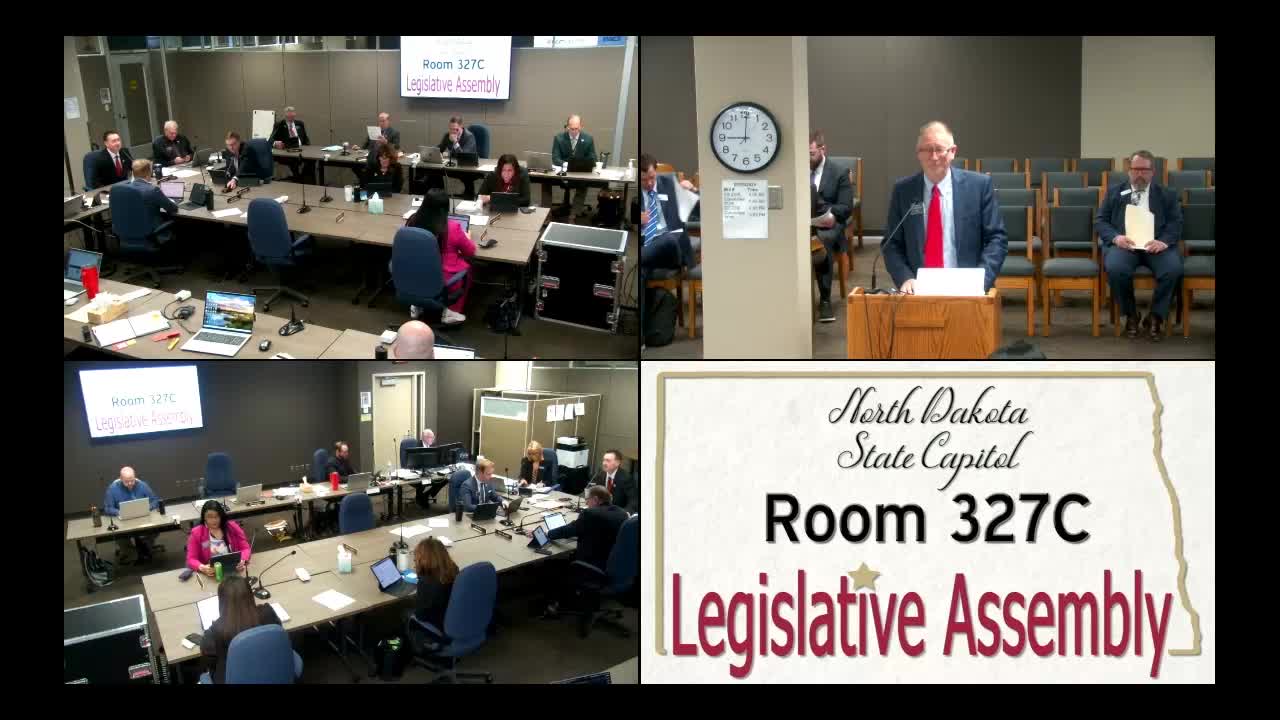
Senator Kent Weston introduced Senate Bill 2348 at a House Industry, Business and Labor Committee hearing, saying the bill would both ensure public colleges accept student membership in healthcare sharing ministries in lieu of campus insurance requirements and explicitly state that healthcare sharing ministries are not insurance subject to insurance regulation.
Senator Kent Weston introduced Senate Bill 2348 at a House Industry, Business and Labor Committee hearing, saying the bill would both ensure public colleges accept student membership in healthcare sharing ministries in lieu of campus insurance requirements and explicitly state that healthcare sharing ministries are not insurance subject to insurance regulation.
The bill would add a statutory definition for healthcare sharing ministries and provide a regulatory safe harbor: qualifying ministries must be nonprofits recognized under Internal Revenue Code section 501(c)(3), limit membership to persons who share a common set of ethical or religious beliefs, maintain audited finances and give written disclaimers to members that participation is voluntary and payments are not guaranteed. Proponents told the committee the measure is intended to protect student choice and to avoid subjecting faith-based sharing arrangements to insurance regulation.
Why it matters: Supporters said the change preserves access to higher education without forcing students to buy duplicate insurance and clarifies regulatory responsibility between the state insurance commissioner and the attorney general. Opponents said similar arrangements function like insurance in practice and that exempting them from insurance oversight reduces consumer protections and regulatory transparency.
The sponsor: "For the record, I'm Senator Kent Weston from District 15," Weston said, and described the bill as addressing "two specific and practical needs related to healthcare sharing ministries in North Dakota." He told the committee he had family members who had used such programs and described them as an established alternative to insurance.
Proponents' description and proposed statutory safeguards Shane Gettle, representing Samaritan Ministries, told the committee the bill's two central functions are (1) to add a statutory definition of a healthcare sharing ministry and (2) to clarify that those ministries are not regulated as insurance. Gettle said the bill would require ministries to be 501(c)(3) nonprofits, operate under written guidelines that members sign, perform independent financial audits and provide clear disclaimers that payments are voluntary and not contractual guarantees.
Joel Noble, director of public policy for Samaritan Ministries, told the committee Samaritan serves more than 1,500 individual lives in North Dakota and estimated another roughly 4,000 lives are covered statewide across similar ministries. Noble said ministries do not assume or pool risk like insurers and that the National Association of Insurance Commissioners defines insurance as transferring risk to a company and pooling that risk. "Healthcare sharing ministries do not assume any risk at all, nor do we guarantee payment of medical bills," Noble said.
Questions from the committee and clarifications from witnesses Representative Casper asked whether the ministries provide written documentation of what is covered; Gettle deferred detailed operational questions to Noble, who said members receive guideline booklets at enrollment, sign annual continuation forms and are told up front what is shareable.
Noble said routine preventive services that are truly routine (for example, a scheduled screening without a symptom) may not be shared, but if a screening finds a condition (for example, a polyp at colonoscopy) the resulting care would then be eligible as a "symptom-based" need. He said members generally may choose any provider and that cash-paying members enjoy control over where they seek care.
Opposition and regulatory concerns Dylan Wheeler of Sanford Health Plan testified in opposition. Wheeler said if a product "is held out as, acts like, or otherwise functions like insurance, it's insurance" and should be regulated by the North Dakota Insurance Department. He said healthcare sharing ministries can cause "confusion, abrasion, and frustrations with patients and health systems alike," citing situations in which members receive bills for care they believed would be covered. Wheeler urged a "do not pass" recommendation.
Neutral testimony from higher education Katie Fitzsimmons, director of student affairs for the North Dakota University System, said the system stands neutral after an amendment added an exception for international students (who must hold visa-mandated insurance). She said campuses already accept healthcare sharing ministries in many cases and that most students report having some form of coverage. Fitzsimmons said pockets of students (international students, some professional programs, student athletes) remain subject to specific insurance requirements under state board policy.
Key clarifications made in the hearing - The bill carves out international students from the higher-education waiver so visa-required insurance remains mandatory for that population (amendment discussed and later incorporated in testimony). - Supporters said healthcare sharing ministries will remain subject to oversight as charities under the attorney general's authority and to IRS regulation as 501(c)(3) nonprofits; the bill would remove ambiguity about insurance regulation but not remove all forms of oversight. - Proponents recommended requiring independent financial audits and written disclaimers for transparency.
Next steps The committee held the public hearing and heard both proponent and opponent testimony and clarifications from the North Dakota University System; no final committee vote on Senate Bill 2348 appears in the hearing record provided.
Sources: Committee hearing transcript; testimony of Senator Kent Weston, Shane Gettle (representing Samaritan Ministries), Joel Noble (Samaritan Ministries), Dylan Wheeler (Sanford Health Plan), and Katie Fitzsimmons (North Dakota University System).