Get Full Government Meeting Transcripts, Videos, & Alerts Forever!
Get email alerts on the Dct Governance topic
No spam. Unsubscribe anytime.
Committee lays over bill establishing commissioner model for Direct Care and Treatment
Summary
Representative Frederick’s bill to replace the executive board with a commissioner‑led governance model for Direct Care and Treatment advanced in committee after adoption of conforming language; lawmakers laid the bill over for further consideration.
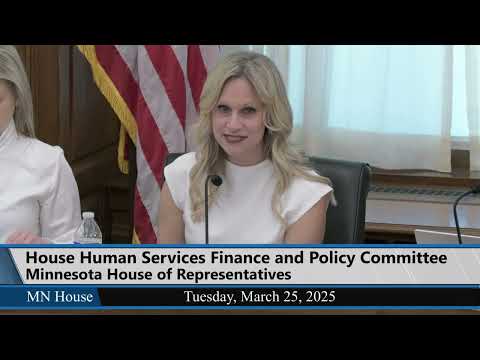
The House Human Services Finance and Policy Committee laid over House File 2,037 after adopting a conforming amendment that aligns the bill with companion senate language to establish a commissioner model for Direct Care and Treatment (DCT) and to create a chief executive role reporting to that commissioner.
Representative Zack Frederick offered the DE1 amendment, which replaces the previously proposed executive‑board governance model with a commissioner who would oversee DCT and a CEO who reports to the commissioner. The sponsor said the change is intended to preserve accountability and provide an operational leader insulated from short‑term political volatility while ensuring legislative oversight. The committee approved the conforming amendment by voice vote and then laid the bill over for possible inclusion.
Frederick described his rationale as accountability for a $1‑plus billion agency delivering secure hospital care and statewide services. He said an executive‑board model (with a board of part‑time members that meets periodically) would not provide the same level of direct accountability and rapid recourse to executive action as a commissioner model tied to the governor’s executive branch. The DE1 amendment nonetheless retains an advisory council and stakeholder representation so that technical and clinical voices remain available to agency leadership.
Committee members and chairs said they intended to continue the conversation about governance models and that additional drafting and stakeholder engagement will follow. The bill will return in future committee work with further amendments and negotiations.