Get Full Government Meeting Transcripts, Videos, & Alerts Forever!
Tualatin staff propose expanded land‑use noticing options; council asks for more details
Summary
City planning staff reviewed state and local noticing rules and presented three enhanced options—double mailings to tenants, larger on‑site signs, and an improved projects website—while council members asked about costs, legal risk and social media. No code changes were approved at the work session.
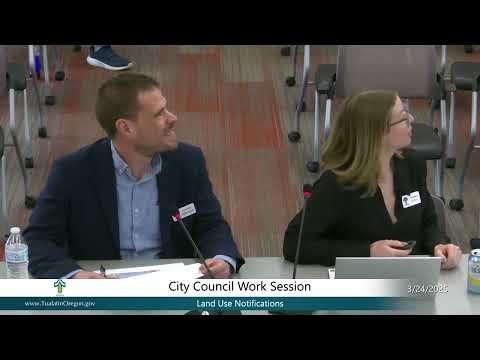
City of Tualatin planning staff reviewed the city’s land‑use noticing practices at a March 24 work session and presented three potential enhancements — expanded mailings to tenants, larger on‑site notice signs, and upgrades to the city’s land‑use projects website — while answering council questions about cost, legal risk and outreach reach.
The presentation was led by Steve Cooper, interim community development director, who said the state requires mailed notice to property owners within 100 feet but Tualatin’s development code (Chapter 32) currently mails to property owners within 1,000 feet and additionally notifies entire platted residential subdivisions. “The state rules required a mailed notice to property owners within 100 feet from the project site as determined through the most recent tax assessment roll,” Cooper said. Senior planner Erin Engman summarized how the city currently notifies by postcard mail, an on‑site sign, a projects webpage and (for hearings) a newspaper notice. “There are many reasons to provide land use notices,” Engman said, noting public involvement helps the city and applicants by surfacing local knowledge and perspectives.
Why it matters: Tualatin’s local radius is ten times the state minimum and can include entire subdivisions, producing widely different mailing footprints around a site and creating gaps where individual lots inside a subdivision are or are not included. Staff said the city’s broader practice reduces the risk of procedural challenge but also increases…
Already have an account? Log in
Subscribe to keep reading
Unlock the rest of this article — and every article on Citizen Portal.
- Unlimited articles
- AI-powered breakdowns of topics, speakers, decisions, and budgets
- Instant alerts when your location has a new meeting
- Follow topics and more locations
- 1,000 AI Insights / month, plus AI Chat