Get Full Government Meeting Transcripts, Videos, & Alerts Forever!
Get email alerts on the Emergency Medical Services topic
No spam. Unsubscribe anytime.
Dallas EMS reports clinical gains; prehospital blood pilot aids critically injured patients
Summary
Dallas Fire Rescue presented its 2024 EMS annual report, noting improvements in documentation, transport rates and cardiac arrest survival; a newly launched prehospital blood transfusion pilot treated five patients with four survivors to date.
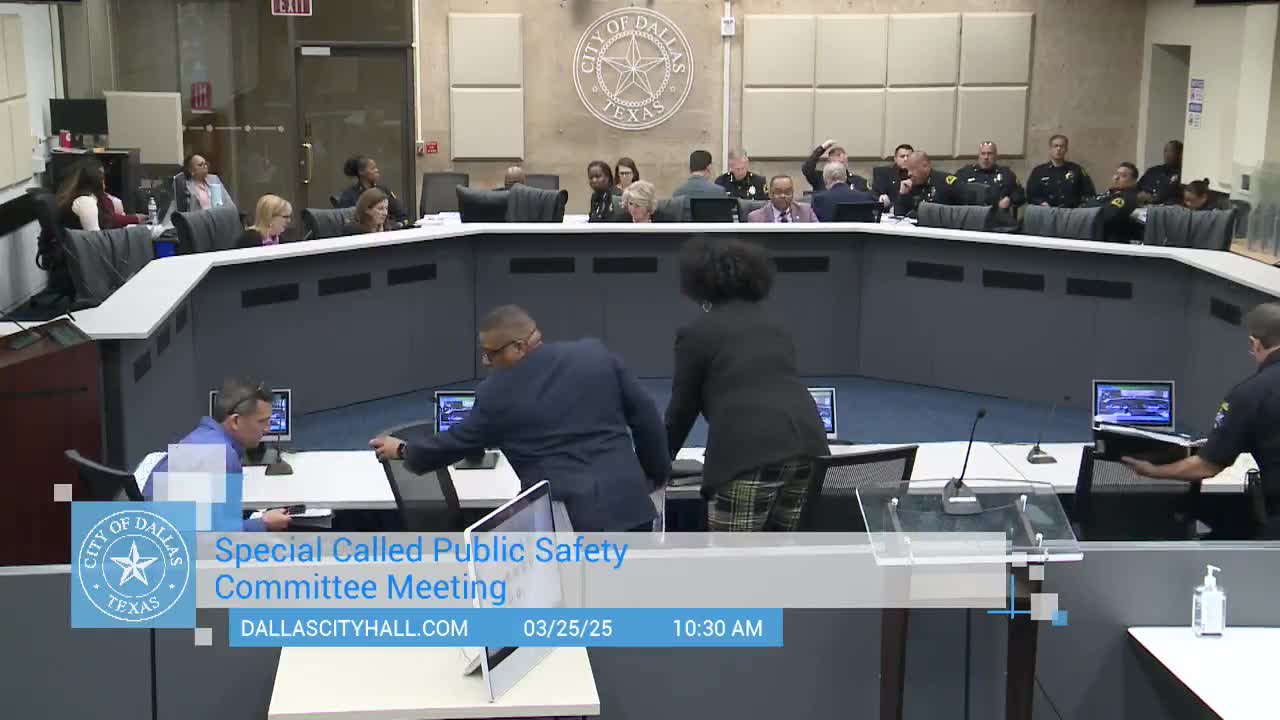
Dallas Fire Rescue presented its 2024 Emergency Medical Services annual report to the Public Safety Committee, highlighting clinical quality improvements, program expansions and early results from a prehospital blood transfusion pilot.
Scott Klumner, Dallas Fire, and Chris Shireh, section chief of EMS, described rising contact volume and improved documentation that increased transports and billing capture. The department said it has expanded specialized responses: eight single-function ambulances (12 hours a day, seven days a week), a downtown low‑acuity unit (Medic 1) staffed by a paramedic and crisis-intervention partner, mobile outreach teams for frequent callers (MODS), an expanded overdose response team in partnership with Dallas County, and several facility‑embedded paramedics.
The department emphasized measurable quality improvements: they reported raising the transport rate from under 50% historically to about 70% after updated protocols and training, and they recognized 84 patients who survived sudden cardiac arrest and left the hospital neurologically intact. "We're proud to say we reviewed more than 2,900 cases and did 1,200 individual case reviews," said the medical leadership, noting that medical directors completed reviews in 90% of flagged cases.
A prominent new clinical initiative—prehospital blood transfusion—has been used on five patients during the pilot; clinicians reported four survivors so far. "So far as of today we have administered 5 patients blood, and of those 4 have survived," the department said. Staff explained the pilot currently deploys blood via two EMS supervisors (north and south) to avoid delaying transport and to match refrigeration and equipment constraints; leaders said they are analyzing data and could expand the program if findings and logistics support a larger rollout.
Committee members praised the annual report’s presentation and asked for follow-up data, including more detailed quality-improvement measures and trends across cardiac arrest care and transport rates. Staff said additional dashboards—for opioid response and other real‑time metrics—are in development.