Get Full Government Meeting Transcripts, Videos, & Alerts Forever!
Get email alerts on the Budget Fees topic
No spam. Unsubscribe anytime.
Caroline County reviews FY2026 fee schedule; board directs staff to adjust liquor, Jonestown water and town-tax collection fees
Summary
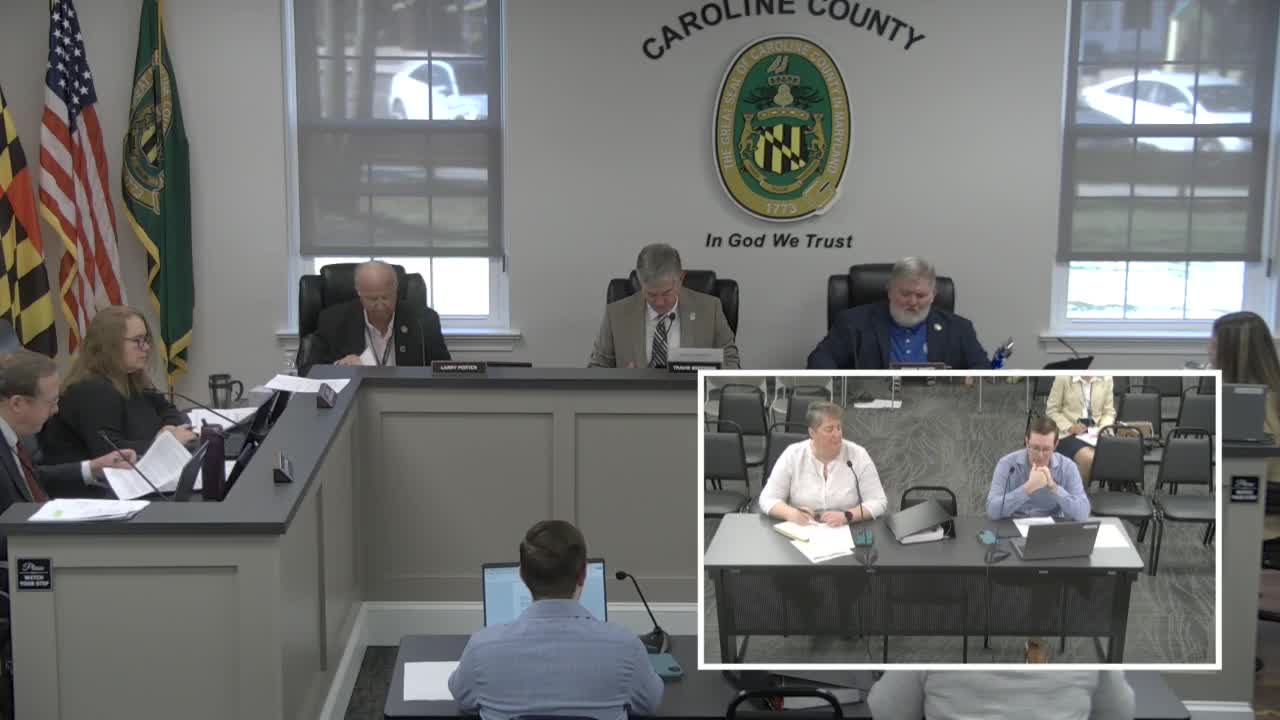
At a March 25 budget workshop Caroline County staff reviewed the draft FY2026 fee schedule and commissioners directed changes to liquor-application fees, Jonestown water charges, and municipal tax-collection caps.
County finance staff presented a draft FY2026 fee schedule at a March 25 budget workshop. Commissioners discussed several highlighted items and gave direction for staff to update the draft to reflect new fee levels for specific services.
Liquor licensing: Staff reviewed the structure of local liquor-license fees, which are constrained in part by state statute but include a county application fee and a license fee that county staff manage. Commissioners noted the county’s application and licensing fees did not recover full operating costs: the board was told the department anticipated roughly $60,000 in liquor-license revenue while operating costs last year were about $99,000. After comparing surrounding counties’ fees, the board agreed to raise the county’s initial application fee from the current level to $500 to better cover processing and legal-advertisement costs. Staff said the annual license-fee schedule (for renewals and inspections) would be reviewed separately and may require state-level change for larger adjustments.
Jonestown water system: Staff and commissioners discussed the small Jonestown water system, which serves about 52 active connections and has historically operated without capital reserves. Staff said the system’s breakeven fee would be approximately $476 (annual), and the fund has been operating at near zero. Commissioners discussed removing an ‘‘unconnected property’’ line from the schedule and agreed to begin a staged increase for users; a $3.50 per-year figure was discussed and board members said they were comfortable starting at that level while staff prepare formal notices to affected property owners.
Town tax-collection administrative fee: The county currently charges the municipalities 1% of tax revenue collected with a cap “not to exceed $15,000.” Staff recommended raising that cap to $22,500 and phasing out the cap in a future year to ensure the county recovers costs for tax-collection services. Commissioners discussed phasing the increase in over one to two years to avoid sudden budget shocks to municipalities; staff will prepare a formal schedule and notice to towns.
Other items: Commissioners heard an update that Caroline County’s share of Chesapeake College funding is increasing because of enrollment formula changes; staff noted the governor’s proposed budget could change final numbers. County staff also discussed cannabis-related disbursement rules and potential allowable uses (workforce training and onboarding) for funds returned to counties from the state, and staff will share related draft legislation with the board.
The workshop produced direction rather than final budget adoption; staff will incorporate the fee adjustments into updated budget documents and bring them back for formal adoption after required advertisements and hearings.