Get Full Government Meeting Transcripts, Videos, & Alerts Forever!
Get email alerts on the Wildfire Evacuation topic
No spam. Unsubscribe anytime.
Committee advances narrow CEQA exemption for secondary wildfire egress routes amid concerns about safeguards
Summary
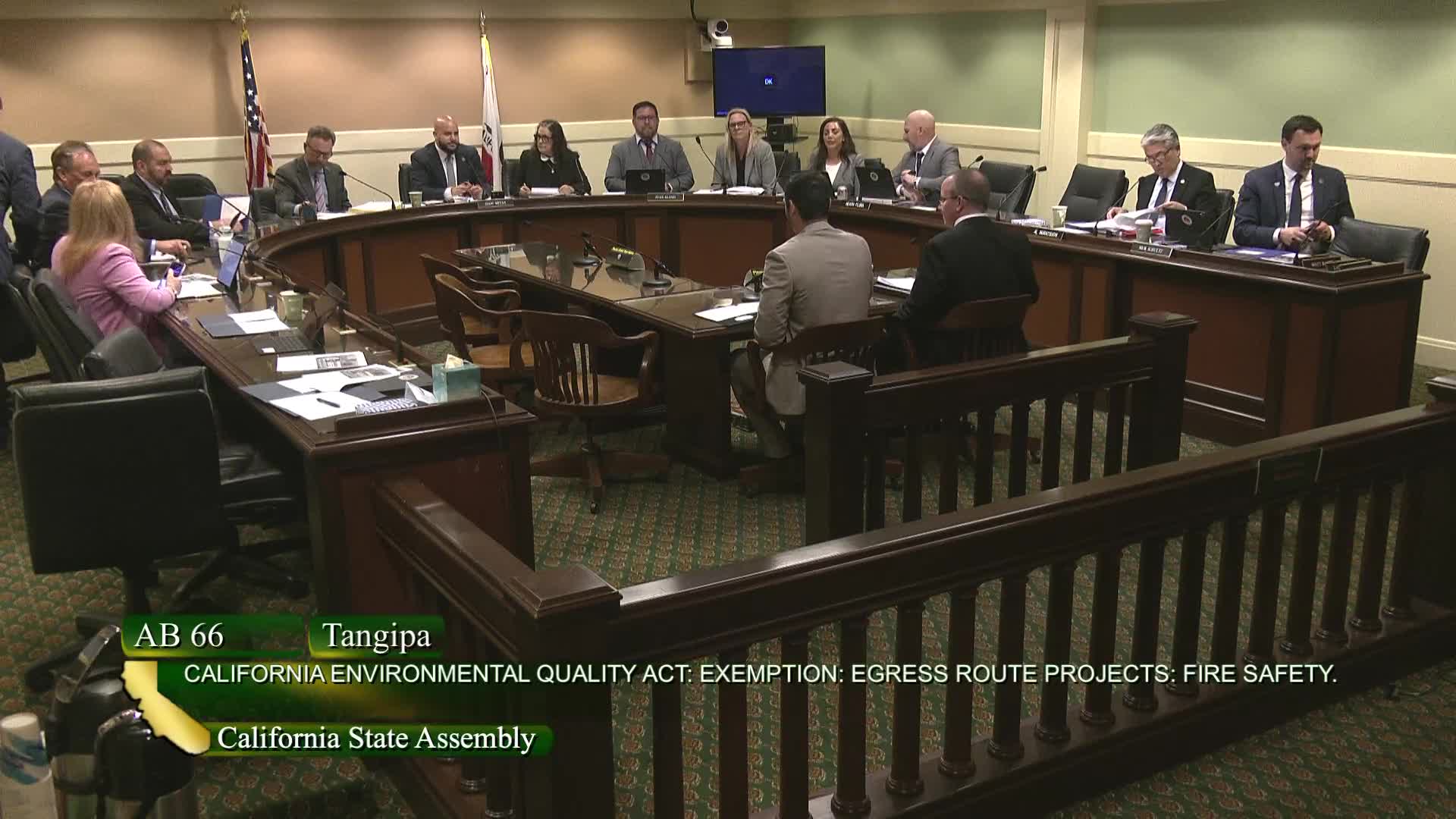
AB 66, which would create a targeted CEQA exemption to expedite construction of secondary emergency evacuation routes in high fire-risk areas, passed out of committee as amended after debate about whether the bill provides sufficient guardrails to protect archaeological, habitat, and other environmental resources.
Assemblymember Tangipa (author) told the committee AB 66 would allow local agencies to build emergency evacuation routes in specified high fire-risk areas more quickly by providing a targeted CEQA exemption for secondary egress projects identified by the Board of Forestry. "This bill removes unnecessary roadblocks so that communities can build emergency evacuation routes in high risk areas without getting tangled in years of red tape," the author said.
John Kennedy with the Rural County Representatives of California testified in support and described the exemption as narrow, with environmental safeguards to protect species, wetlands, and cultural resources. He said many rural communities lack modern secondary egress routes and that the bill would reduce time and cost associated with CEQA compliance.
Opponents and skeptical committee members raised several concerns about the scope and definitions in the bill. Committee member Zipper questioned how agencies would determine impacts to wetlands, protected species, cultural resources and alternatives without CEQA analysis. The author and supporters said determinations about wetlands and protected species would still be made as part of the exemption process and that the bill focuses on narrow secondary egress routes sized to community needs.
Several members voiced support for the bill's goal but sought technical amendments and more precise limitations on length, location, and pre-hearing analyses. Assemblymember Tangipa acknowledged the concerns and said the bill applies only where the Board of Forestry has recommended a secondary route and that staff would continue to work with members on clarifying language. The committee voted to refer AB 66 to Appropriations as amended.