Get Full Government Meeting Transcripts, Videos, & Alerts Forever!
Get email alerts on the Release Based Cleanup Regulations topic
No spam. Unsubscribe anytime.
Regulation review committee rejects DEEPs release-based cleanup rules; agency says it can resubmit quickly
Summary
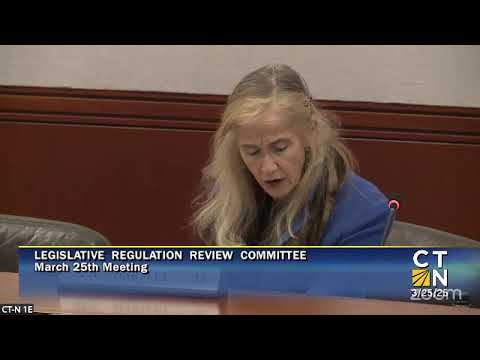
The Legislative Regulation Review Committee on March 25, 2025 voted to reject without prejudice proposed release-based cleanup regulations submitted by the Connecticut Department of Energy and Environmental Protection (DEEP).
The Legislative Regulation Review Committee on March 25, 2025 voted to reject without prejudice proposed release-based cleanup regulations submitted by the Connecticut Department of Energy and Environmental Protection (DEEP).
The committee's rejection followed a discussion in which DEEP Commissioner Katie Dykes and Brendan Shane, legal director for DEEPs Environmental Quality Branch, said the agency could address the Legislative Commissioners Office (LCO) reports concerns and resubmit the regulation package relatively quickly but wanted to coordinate timing with parallel statutory changes.
The vote and why it matters
The committee voted to accept the LCO recommendation of "rejection without prejudice" for proposed regulation 2025-014, giving DEEP the opportunity to revise and resubmit. The LCO memo identified nine substantive concerns and a number of technical corrections. Committee members who spoke said they want the final regulation to avoid unintended consequences for property owners, developers and public health.
"We could be prepared to resubmit fairly quickly," DEEP Commissioner Katie Dykes told the committee, after thanking staff and stakeholders who worked on the voluminous draft. "We could also potentially resubmit a little bit later to regs review in order to give time for the statutory changes to move forward."
Brendan Shane, DEEPs legal director, confirmed that the LCO report cited nine substantive concerns and a handful of technical corrections and said one remaining substantive issue will require a short conversation with LCO to ensure the agencys intent is properly reflected. "I think it is possible for us to make those changes in relatively short order," Shane said.
Timing and statutory coordination
DEEP staff explained the agency has proposed an effective date tied to the statutory transition and that they do not want the regulations to become effective before accompanying statutory changes are adopted. Shane said DEEP proposed an effective date of March 1, 2026, and asked the committee and LCO to consider sequencing so the regulations and statute align. The committee chair said the committee meets year-round and encouraged DEEP to resubmit as soon as feasible.
Stakeholder context and related legislation
Committee members and DEEP staff described an extended stakeholder process dating back to 2019, multiple white papers, and an ongoing working group that stakeholders and legislators want to continue. Senator (name recorded in transcript) and others cited House Bill 785, a bill to continue the stakeholder working group, and another bill containing the technical statutory changes DEEP says are needed to effect a clean transition.
Several speakers emphasized the economic-development implications of reforming the states Transfer Act approach to cleanup. One committee member said the Transfer Act has been a barrier to redevelopment for decades and noted there are Transfer Act sites in many legislative districts.
Committee direction and next steps
The rejection without prejudice leaves DEEP able to revise and return. Committee members suggested aiming for an April resubmittal if possible so there would still be opportunity to address remaining issues in May if needed; DEEP said it is "flexible on timing" but wants to ensure statutory changes and the regulations fit together.
Votes at a glance (other items on the March 25 agenda)
- 2025-004 Department of Consumer Protection: Community association managers continuing education Motion to accept LCO recommendation of approval in whole with technical corrections Approved. - 2025-005 Department of Administrative Services: Military leave Motion to accept LCO recommendation of approval in whole with technical corrections Approved. - 2025-006 Department of Energy and Environmental Protection: Three minor air quality amendments Motion to accept LCO recommendation of approval in whole Approved. - 2025-007 Connecticut Board of Labor Relations: Interim relief pending final disposition Motion to accept LCO recommendation of approval in whole with technical corrections Approved. - 2025-008, 2025-009, 2025-010, 2025-011 Connecticut Board of Labor Relations: Various continuation/adjournment/postponement/notice-of-withdrawal provisions Motions to accept LCO recommendations of approval in whole with technical corrections Approved. - 2025-012 Department of Consumer Protection: Flour (flour) enrichment standards repeal Motion to accept LCO recommendation of approval in whole Approved. - 2025-013 Department of Consumer Protection: Appraisal exam qualifications Motion to accept LCO recommendation of rejection without prejudice Rejected without prejudice. - 2025-015 Police Officer Standards and Training Council: Uniform crowd control and management policy Motion to accept LCO recommendation of rejection without prejudice Rejected without prejudice.
What the committee record shows
The transcript and roll calls show committee members repeatedly accepted the LCO recommendations during the meeting; several items were approved on motions offered by Representative Godfrey and seconded by Senator Kissel. For the release-based cleanup package, the committee voted to accept the LCO recommendation of rejection without prejudice and encouraged DEEP and LCO to work together on resubmittal timing.
Ending
DEEP said it appreciated the committees review and stakeholder participation and will decide whether to resubmit quickly or after related statutory changes move forward. The committee chair reiterated the committees availability and expressed a preference for an expedited resubmittal so the package can be finalized before the legislative session concludes.