Get Full Government Meeting Transcripts, Videos, & Alerts Forever!
Get email alerts on the Education Funding topic
No spam. Unsubscribe anytime.
Title I inequities and end of pandemic-era Medicaid eligibility threaten Michigan at‑risk school funding
Summary
Craig Theel, research director at the Citizens Research Council, told the Michigan House appropriations subcommittee that inequities in federal Title I grant distribution and a roughly 7.5% statewide drop in students counted as economically disadvantaged after pandemic‑era Medicaid rules ended could cause widespread reductions in state at‑risk funding for schools.
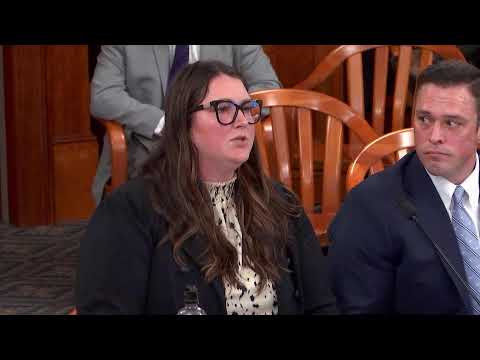
Craig Theel, research director at the Citizens Research Council, told the Michigan House Appropriations Subcommittee on School Aid and the Department of Education that two federal funding issues threaten state efforts to direct more resources to low-income students.
Theel said Title I federal grants are distributed unevenly across districts and that a recent 7.5% statewide decline in the number of students counted as economically disadvantaged will reduce the number of pupils that generate state at‑risk payments. “Congress has failed to address the inequities of Title 1. So Michigan lawmakers should step in,” Theel said, and he recommended using state at‑risk dollars to correct the federal distribution problem.
The issue matters because Michigan ties state at‑risk (Section 31a) funding and recent Opportunity Index targets to counts of economically disadvantaged students. Theel said the state target adopted from the School Finance Research Collaborative is a 35% weight above the foundation allowance for high‑need students (higher in the highest‑poverty band), but that Title I — roughly $500 million a year in Michigan, he said — does not align with those state weights and is “inequitably distributed.” At the same time, the end of pandemic-era Medicaid enrollment rules reduced the count of students directly certified as low income, producing a roughly 7.5% drop (about 60,000 students statewide, per Theel’s presentation) in the October counts used for funding.
Theel walked lawmakers through statewide and district examples. He said a 35% weight on a foundation allowance of about $9,800 would translate to roughly $3,363 extra per qualifying student under a fully funded target but that appropriations have been prorated and the current per‑student state at‑risk payment is lower (he cited a prorated figure of about $1,500). He showed Opportunity Index estimates that combined state and federal dollars would produce roughly $4,000 per pupil in mid‑poverty districts and about $4,700 in the highest‑poverty band if funding goals were met.
But when Title I dollars are layered on top, some districts reach a higher share of the Opportunity Index target while similar districts fall far short. Theel argued this results from the federal Title I formula’s hold‑harmless and base grant features and is outside state control, while Section 31a distribution is fully under state authority. “You have no control over the federal formula. You have no control over how much Title 1 dollars go to individual districts. But you do have total control over Section 31 at‑risk funding,” Theel said.
Theel also described the effects of the Medicaid policy change on district budgets for 2025–26. He said CEPI enrollment files show a 7.5% decline in students counted as economically disadvantaged and that the change will interact with the state appropriation formula. Because per‑pupil state payments are calculated by dividing the state appropriation across eligible students, he said, a sharp drop in eligible counts can raise the per‑pupil rate while reducing total dollars for many districts. Using Livonia Public Schools as an example, Theel said their counted economically disadvantaged students fell from about 4,600 to 3,800, producing an estimated $1.5 million reduction in at‑risk funding that he said could translate into roughly 10 teacher positions. He estimated Westwood Heights (Genesee County) could lose about $580,000, roughly three teacher equivalents, after per‑pupil changes are accounted for.
Theel offered no binding policy; he suggested several options for the committee to consider, including (1) using some recent at‑risk funding increases to equalize Title I shortfalls across similarly situated districts and (2) changing the student count methodology to a multi‑year or blended count instead of a single year look‑back to reduce year‑to‑year cliffs. He left his analysis in the committee record and said his report is available online and was summarized by Bridge Michigan.
Committee members pressed Theel on comparative state practice and measurement alternatives. Theel said Michigan’s at‑risk reimbursement rate historically trailed some other states and that the state has adopted a student‑centered weighted funding approach in recent years. Representative Glanville asked whether the drop reflected students leaving districts or a change in certification; Theel said the decline was largely a certification shift tied to the end of federal Medicaid enrollment rules and that the students remain enrolled but may no longer be identified as economically disadvantaged for funding purposes.
No formal policy change was taken during the meeting; the committee did not vote on Theel’s recommendations. Two procedural motions recorded in the transcript were approvals of the committee minutes (motion by Representative Borton; approved without objection) and a later motion to excuse absent members (moved by Representative Markkanen; approved). Theel told the clerk he would leave his materials for the record.
Looking ahead, Theel highlighted that the subcommittee has statutory control over Section 31a distribution and enrollment counting rules and that lawmakers could act to mitigate immediate local budget impacts. He advised that absent state action some districts will likely implement staffing and program reductions when developing 2025–26 budgets.