Get Full Government Meeting Transcripts, Videos, & Alerts Forever!
Get email alerts on the 62j Mandate Review topic
No spam. Unsubscribe anytime.
Committee approves technical fixes to 62J mandate-review statute, sends bill to Commerce
Summary
Senate File 1407 makes technical and clarifying changes to Minnesota Statute 62J, aiming to remove ambiguous language, clarify participant roles and adopt standardized forms; committee adopted an A4 amendment and referred the measure to Commerce.
The Health and Human Services Committee approved Senate File 1407, a technical bill aimed at clarifying Minnesota Statute 62J — the statutory process that requires cost-benefit evaluation of proposed insurance mandates.
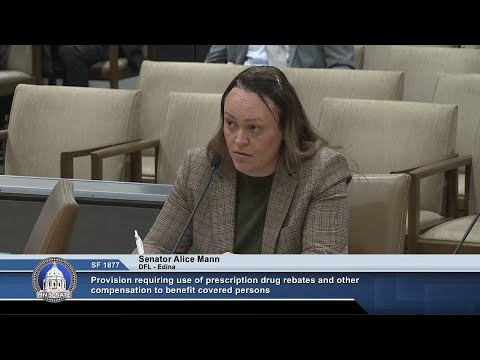
Sponsor Senator Mann said the measure does not change current practice but removes ambiguous language, restores pathways for new legislators to participate in health coverage legislation, and standardizes the evaluation process. She described the bill as aligning statutory language with legislative practice.
The committee adopted an A4 technical amendment that clarifies language, changes a header reference from rulemaking to adoption of forms, and deletes a section that sponsors described as unnecessary. Bentley Graves of the Minnesota Chamber of Commerce testified in support of continuing to refine the process and asked for ongoing engagement to ensure transparency for employers and policymakers.
Committee members asked whether the bill changes whether Medical Assistance (MA) proposals are included in 62J review. Senator Mann said 62J historically applies to the private (fully insured) market and that MA inclusion is a separate policy choice; the A4 amendment removed language that could be read differently.
After debate and no recorded roll-call, the committee recommended SF1407 as amended and referred it to the Committee on Commerce.
The bill is positioned as procedural clarification to improve transparency and predictability in the mandate-review process rather than as a substantive change to coverage requirements.