Get Full Government Meeting Transcripts, Videos, & Alerts Forever!
Get email alerts on the Traffic Safety topic
No spam. Unsubscribe anytime.
Grand Island committee seeks independent study of Stony Point–Ransom intersection as subdivision moves forward
Summary
At its March 11 meeting the Grand Island Traffic Committee reiterated safety concerns about the proposed subdivision at Stony Point and Ransom, urged a third‑party traffic study by the GBNRTC and raised bus turning‑radius and construction flagging issues.
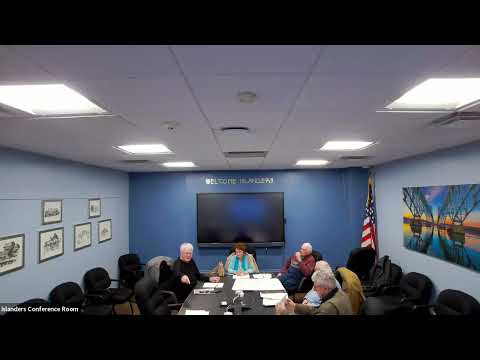
The Grand Island Traffic Committee on March 11 urged the town and county to commission an independent analysis of the Stony Point Road and Ransom Road intersection after committee members raised multiple safety concerns tied to a proposed subdivision and planned road work.
Committee members said the subdivision developer’s plan to widen parts of the roadway and add turning lanes may not address how school buses and construction traffic will maneuver through the intersection. "We're trying to put 5 gallons worth of cars in a 2 gallon intersection," said Larry (committee member), a repeated refrain during the discussion. Members worried the rear of large school buses could swing into adjacent lanes or onto sidewalks when making turns, exposing pedestrians and nearby vehicles to risk.
The committee asked the town to request that the Greater Buffalo‑Niagara Regional Transportation Council (GBNRTC) run modeled scenarios — including traffic signals, roundabouts and stop‑control alternatives — to show how each option would affect queuing and turns. "We have asked that question. The GBNRTC will do that. We have asked the town to ask the county to let them run this," a committee member said.
Members flagged several specific concerns: the bus turning radius at the Stony Point–Ransom connection; the need to widen the roadway by about six feet in one segment to preserve turning clearance; unclear construction work‑zone delineation during buildout; and the potential for single‑lane flagging operations to interfere with school buses. Frank (committee member) noted the importance of showing the work area on plan sheets so flagging and protective barrels are placed where drivers will see them and buses can be routed safely.
The committee also said it did not receive plan sets early enough to comment before planning board approval. Members asked for full‑size plans earlier in the review process rather than 8½-by‑11 reductions so they can review turning templates, timing and sequence drawings and submit comments prior to final approval.
Several committee members suggested the school district’s bus routing or schedule (a return to a three‑tier bell schedule was discussed as one possible mitigation) could reduce peak traffic at the intersection, but no formal direction was given to the district during the meeting. The committee did not adopt a motion changing its prior position from April (when members previously expressed opposition to installing a traffic signal at this location); instead, members asked for the independent analysis before any change to intersection control is finalized.
Next steps noted at the meeting: the committee will request that the town forward plans to the GBNRTC for scenario modeling, and the committee asked that future plan sets be delivered earlier in the review process so members can comment prior to final engineering approval. No formal vote on project approvals or signal installation occurred at the March 11 meeting.