Get Full Government Meeting Transcripts, Videos, & Alerts Forever!
Get email alerts on the Juvenile Justice Infrastructure topic
No spam. Unsubscribe anytime.
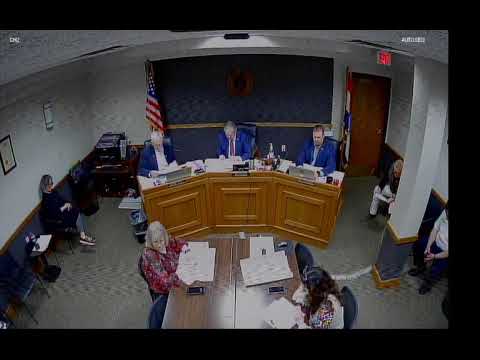
Cole County architects, commissioners debate size and cost of proposed juvenile center; $14M target remains under review
Summary
Architects presented revised plans aimed at meeting a $14 million construction target for a new Cole County Juvenile Center; commissioners and staff debated cell counts, design fees, site acquisition and ongoing operating costs.
County officials and the commission’s architects discussed March 25 efforts to trim a proposed Cole County Juvenile Center design so it meets a previously set construction target of $14 million, while commissioners raised questions about operating costs and whether fewer secure cells would better match current demand.
Curtis with Architects Alliance (first name given in the record as Curtis) told commissioners the design team has reworked the plan to fit the $14,000,000 construction target by reducing square footage and eliminating many exterior bump‑outs. He said Bartlett West revised the site work and “is saving us some considerable site costs,” and that Mapholz (the pre‑construction firm identified in the record) was preparing an updated cost estimate.
Curtis summarized known line‑item project costs and fees: design team fees already under contract (discussed in the meeting as roughly $160,000 for certain services), Mapholz pre‑construction services as a $34,000 lump sum, and an ongoing construction‑phase arrangement that Mapholz would carry at about $34,000 per month plus an overhead/profit take of about 2.2% of the construction fee. Site acquisition for the chosen parcel was reported as $402,250.69. For owner‑furnished loose furniture, fixtures and equipment (FF&E) — excluding fixed detainee furniture and kitchen equipment included in construction — the architects gave a planning range of $250,000 to $350,000 depending on quantities and quality.
Commissioners debated how many secure cells the facility should include. The plan as discussed targeted eight secure cells to deliver a “full program”; some commissioners said caseload trends and current detention use might not justify eight and suggested six or even four cells as ways to reduce capital and ongoing operating costs. County staff said two of the building’s secure cells have been occupied since early January, with a third pickup order placed and one youth certified to adult status, demonstrating periods of sustained occupancy. The presenters said they can produce per‑cell cost breakdowns so the commission could weigh trimming cells against preserving future capacity.
Commissioners repeatedly raised concerns about post‑construction operating costs — insurance, utilities, maintenance and staffing — which are not part of the construction estimate. One commissioner noted the initial concept to repurpose the existing training center had been estimated near $7 million, and that the current $14 million target would include all construction, fees, FF&E and site acquisition and thus requires careful scrutiny.
The commission did not take a final vote on a preferred cell count or a construction contract; architects and Mapholz will return with a refined cost estimate and options showing the incremental savings from removing one or more secure cells. The design team said they are reducing the building height and footprint in ways intended to lower earthwork and site costs (for example, lowering the building pad six feet to avoid large cut/fill volumes).
Speakers in the record: Curtis, Architects Alliance (architect, business); Toby (juvenile services staff, role not fully specified); Mapholz representatives (pre‑construction firm, business); unnamed commissioners participating in the debate. The juvenile‑center discussion was moved up on the agenda to accommodate the architect’s schedule.
Provenance: the juvenile center budget discussion begins when the commission moved the item ahead on the agenda and continues through commissioners’ questions about cell counts and cost breakdowns.