Get Full Government Meeting Transcripts, Videos, & Alerts Forever!
Get email alerts on the Zoning topic
No spam. Unsubscribe anytime.
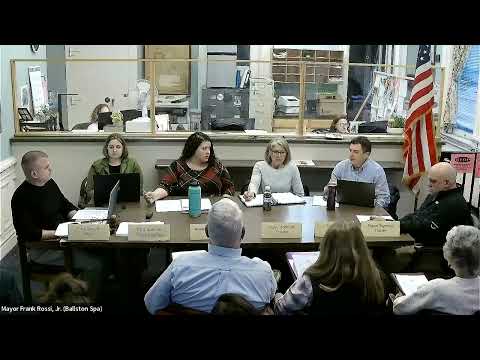
Ballston Spa trustees set zoning-code timeline, sparking debate over public comment method and ZAC role
Summary
Trustees for the Village of Ballston Spa reviewed a proposed schedule to adopt a new zoning code and debated how to collect and publish public comments.
Trustees for the Village of Ballston Spa reviewed a proposed timeline for adopting a new village zoning code and exchanged heated comments about how the public’s feedback should be collected and published.
The village attorney presented a schedule that would aim to complete the bulk of the code review by mid‑July, a timetable she said was driven by statutory steps and required referrals. She said the timeline assumes a public workshop on April 3, a comment period to April 21 and subsequent legal review and board consideration before any public hearing.
Why it matters: The code would replace the village’s zoning rules and affect development standards, short‑term rentals, and planned development districts. Several residents and members of the Zoning Advisory Committee (ZAC) told trustees they need more time to review the draft and to finish the ZAC’s work. At least two ZAC members and multiple residents said the committee had not completed its assignment and that the board should allow the ZAC to finish its recommendations before the board finalizes the code.
Residents raised concerns about the public comment method the ZAC had been using. ZAC members and commenters described a Google form/process used to collect detailed public feedback; other trustees and the village attorney said the board needs a single public record that can be posted on the village website and handled in a way that keeps personally identifying data private while still being accessible. The village attorney outlined a process used by state agencies: receive comments (by email or form), redact identifying information, paste verbatim comments into a running “findings” document, and post that document online.
Trustees and residents disagreed over whether a consultant‑hosted Google collection is sufficiently transparent or foilable (subject to Freedom of Information requests). Supporters of the Google approach said it enables easier submission and broad participation; critics said some residents lack familiarity with Google tools and worried about access and archival control. Several speakers urged the board to ensure older residents and those without internet access have a clear, accessible way to comment.
Board members acknowledged specific topics likely to need more time — short‑term rentals, accessory dwelling units and planned development districts — and said those could be handled as separate local laws if necessary. The village attorney and the consultant said they expected some items would need additional study and might follow the main code adoption on their own schedule.
The board did not adopt a final deadline at the meeting. Trustees were told the proposed timeline is a working Gantt chart and that dates could shift, but that having a target date was intended to keep the process moving rather than leaving it open‑ended.
Proponents of extended review requested at least one more explicit meeting to resolve the ZAC’s status and to let the ZAC finish any outstanding work. Some ZAC members said they had not been formally asked whether the committee considered its work completed and asked that the board invite the ZAC to complete its assignment.
What’s next: Trustees expect a public workshop and consultant presentation on April 3; the board and the attorney will continue to coordinate on how to receive, redact and post public comments and to schedule any additional meetings needed to allow the ZAC and the public adequate time for review.