Get Full Government Meeting Transcripts, Videos, & Alerts Forever!
Get email alerts on the Trash Recycling topic
No spam. Unsubscribe anytime.
Tiverton residents press council on proposed switch to automated trash bins; town outlines savings rationale
Summary
Public commenters and councilors debated a proposed shift from red-bag pay-as-you-throw system to wheeled automated cans; residents raised accessibility, cost and wind-related litter concerns while town staff described contract savings from automation.
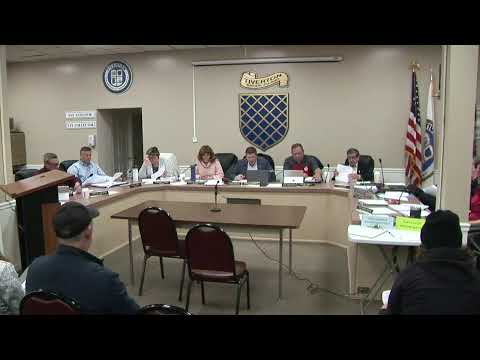
Tiverton residents used public comment at the March 24 council meeting to press officials for clarity on a proposed overhaul of the town’s trash and recycling program, including a potential switch from the current red-bag system to a wheeled-bin automated collection model.
Several speakers said the new program as described on the agenda could be impractical for residents who live on unpaved roads or in small developments. Ron Marsh described his situation: eight households in his small off‑East Road development drive a quarter-mile to a paved route for collection and said 65‑ or 95‑gallon wheeled containers wouldn’t fit in their cars. “It would be close to an impossibility if we had to push 95‑gallon buckets on dirt roads every week,” Marsh said.
Dan Darren and other commenters raised concerns about windblown recycling and large bins toppling in storms; Darren said the current system works for many residents and that automated bins seemed “a solution in search of a problem.” Another resident, Maureen Morrow, countered that existing curbside recycling bins frequently blow open and spill, and said volunteers currently shoulder most street‑side litter cleanup.
Town officials responded that the current trash contract costs about $1.2 million and the proposed automated collection estimate was about $1.3 million — a roughly $100,000 up‑front delta — but anticipated operational savings from truck automation and reduced manual labor. A council member explained, “There are significant savings…where the truck can attach to the barrels and put the trash in,” adding those efficiencies would lower contract costs over time.
Speakers asked for a survey and more neighborhood outreach. Town staff said the council had authorized a citizen survey to gather resident input before taking further steps. Officials also noted that DPW will evaluate special accommodations for dwellings not served by town vehicles.
Why it matters: Changes to pay‑as‑you‑throw systems and automated collection can shift costs between municipal budgets and residents, and can create accessibility issues for households with limited vehicle access or unpaved roads.
What’s next: The council said it would pursue further public engagement, including a citizen survey, and evaluate how the proposed contract and container distribution would affect residents who are not on paved routes.