Get Full Government Meeting Transcripts, Videos, & Alerts Forever!
Get email alerts on the Open Government Notices topic
No spam. Unsubscribe anytime.
Guam lawmakers debate allowing government notices on local news websites; sponsor moves bill to third reading
Summary
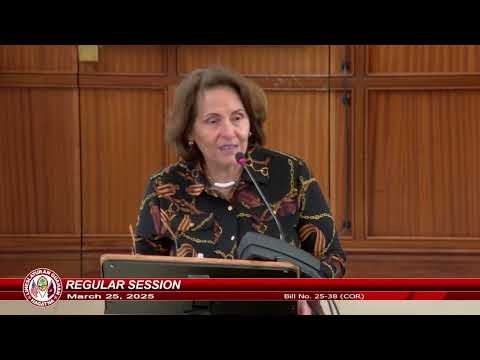
A motion was made on the floor to move bill number 25‑38 COR — an act to amend section 8104 of chapter 8, title 5, Guam Code Annotated — to third reading after debate about new eligibility criteria for digital outlets and concerns about access for residents without broadband.
A motion was made on the floor to move bill number 25‑38 COR — an act to amend section 8104 of chapter 8, title 5, Guam Code Annotated — to third reading after debate about new eligibility criteria for digital outlets and concerns about access for residents without broadband.
Sponsor Senator Tina Rose Munya Barnes said the legislation would “expand the definitions of public notices to include electronic newspapers, websites, and other, eligible, media platforms” and argued the change would inform more residents while saving the government money. She cited testimony from local outlets saying digital readership outpaces print and noted examples in committee testimony that a website averaged about 9,700 unique visitors per day compared with about 3,000 printed copies for the newspaper PDN.
The bill, as presented on the floor, incorporated two committee amendments: a requirement that an eligible outlet must have been in business on Guam for five years, and a requirement that an outlet submit third‑party verification showing an audience equal to at least 15% of Guam’s population. Senator Barnes said those amendments were added from public‑hearing testimony and the committee markup.
Other senators raised concerns during floor debate. A senator who identified themselves only in the transcript as "Senator (name not specified)" argued that adopting digital outlets now would exclude residents in areas with limited broadband and senior residents who rely on traditional newspapers. That senator said, “This is not a problem that will be solved overnight,” and warned that relying on bloggers or social media to satisfy notice requirements could disenfranchise people without reliable internet access.
On process, a separate point of order questioned whether the committee report accompanying the bill met standing rules: the senator said the committee report did not show where the public‑hearing notice was published and that a long segment of the committee discussion was not transcribed in the written report, leaving the record incomplete. A representative (identified in the transcript as a committee or counsel speaker) responded that CORE had cleared the committee report as meeting requirements and that the committee questions and answers were accessible in the digital video record.
The presiding officer recessed the session and set continuation for 9 a.m. the following day. The transcript contains no recorded roll‑call vote on advancing the bill to third reading during the excerpt provided.
Why it matters: The measure would change what media qualify to carry statutorily required government notices under Guam’s open‑government framework, potentially expanding placement to verified online outlets and lowering per‑notice cost, according to sponsor testimony and committee witnesses. Opponents on the floor warned the change could leave behind residents without reliable internet access and seniors who rely on print notices.
Next steps: The bill was moved on the floor toward third reading; the session recessed and floor consideration was to continue the next day. No final passage or vote outcome on adoption was recorded in the provided transcript excerpt.