Get Full Government Meeting Transcripts, Videos, & Alerts Forever!
Get email alerts on the Tourism topic
No spam. Unsubscribe anytime.
Visitor and Convention Bureau reports budget growth, outlines Denver air service campaign and summer events
Summary
The North Bend-area Visitor and Convention Bureau told the City Council its annual budget has grown since 2017, summarized lodging-tax splits, estimated a conservative advertising return on investment and previewed promotions tied to new daily Denver flights, a May conference and summer events.
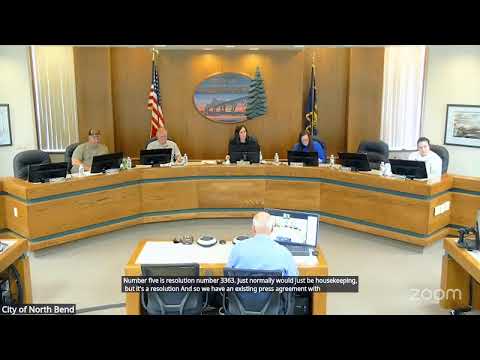
The Visitor and Convention Bureau provided a semiannual briefing to the North Bend City Council on March 24, reporting growth in its budget, describing how lodging-tax revenue is split between taxing entities and the bureau, and outlining a series of advertising and events campaigns timed to new direct air service and regional conferences.
The bureau representative told the council, “When I started in 2017, our annual budget was about $360,000. We are now at 1.577 million,” and said that the increase is tied to lodging-tax growth and an expanded service area that now includes Coos County and Charleston-area lodging receipts. The representative said current collections are about 62% of budgeted income and about 45% of budgeted expenses to date.
The presentation framed tourism as an economic driver for local businesses and jobs. The bureau estimated that Coos County tourism is a $14 billion industry for Oregon, supporting roughly 118,000 jobs statewide; county visitors spend about $330 million (new 2024 figures expected in May), supporting about 3,800 jobs. For Coos Bay, North Bend and Charleston combined, the bureau estimated they capture roughly 40% of county visitor spending—about $148 million—supporting about 2,100 local jobs.
The bureau described how lodging-tax collections are allocated. It said local lodging taxes historically were 7% with cities keeping the majority share; a 2003 state law and a 2019 local increase altered the distribution so that, on combined city lodging-tax rates of 9.5%, taxing entities keep about 61% while the bureau receives about 39%.
The bureau reported a conservative attribution of visitor spending to its advertising: it estimates about 15% of area visitor spending (roughly $20 million) is attributable to bureau advertising and marketing, producing about a $27.50 return on investment to local businesses and tax collections.
Looking ahead, the bureau outlined four near-term priorities: (1) an advertising push to promote new daily Denver flights that will operate May 22 through Oct. 26 (the bureau said flights will go daily during that period), (2) promotional and hospitality support for the League of Oregon Cities conference hosted locally in May (the bureau plans 300 welcome bags and said the luncheon on May 7 will be covered by the bureau with Todd Davidson from Travel Oregon as keynote), (3) hosting the Oregon Regional Special Olympics track-and-field and bocce events on June 21 (the bureau said organizers will need 75–100 volunteers), and (4) a website redesign to add accessibility features funded partly by a Travel Oregon grant.
The bureau also listed recent marketing activity—storm-watching promotions, winter ice-rink and event advertising, and routine use of QR-coded print placements directing readers to video and web content—and noted plans to emphasize signature annual events such as the crab feed and clambake music festival. The representative said the bureau will run a large advertising campaign in the Denver market to attract direct-fly visitors who previously would have driven from Portland or Eugene.
The bureau asked councilors to note the travel-and-tourism luncheon on May 7 and invited city officials to attend; the bureau representative said it covers the cost of lunch. The council had no formal action during the briefing; the bureau closed after questions.