Get Full Government Meeting Transcripts, Videos, & Alerts Forever!
Get email alerts on the Budget topic
No spam. Unsubscribe anytime.
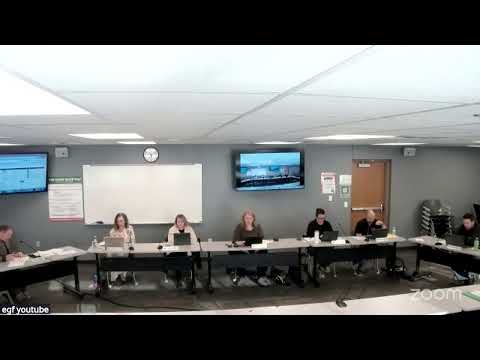
East Grand Forks board approves revised FY26 budget, adds two elementary FTEs and a half counselor
Summary
The East Grand Forks School Board approved a revised fiscal year 2026 budget by voice vote, adopting projections that staff said include about $33.2 million in total revenue, a planned increase in elementary staffing and a modest draw on reserves.
The East Grand Forks School Board approved a revised fiscal year 2026 budget by voice vote after extended discussion of revenue assumptions, staffing and capital needs.
Board members voted to adopt the revised budget as presented; the vote was taken by voice and the motion carried.
The revised budget projects roughly $29 million in general fund revenue and about $33.2 million across all funds, an increase from last year of about $755,000, according to staff presentations. The budget document on file with the board shows an anticipated increase in total expenses of about $984,000 and projects the district's fund balance moving from approximately $3.6 million to roughly $3.4 million under the adopted plan.
District staff told the board that about 80% (approximately 82% by staff estimate) of expense increases are driven by salaries and benefits. Enrollment for the budget year was calculated at an average daily membership of 2,028, a figure that includes early-childhood and special-education counts. Staff noted that compensatory revenue is in transition in Minnesota as the state moves many districts from paper applications to direct certification, which can change compensatory and related funding county by county.
On staffing, the adopted budget includes the addition of two full-time equivalent positions at the elementary level and a half-time counseling position (staff explained a full-time position has been posted and the current arrangement effectively creates a half-time opening in the career academy). The board discussed that those hires are reflected in the approved budget but that hiring steps and any subsequent adjustments would follow normal board approvals when necessary.
The budget also sets aside $250,000 for technology on an annual basis, with staff noting uncertainty about device pricing and timing. The district's E-rate federal funding was discussed; this is the final year of the current E-rate five-year cycle and the budget includes the district's estimated share for access-point replacement. Other line items noted in the presentation include an increase to the district's TRA (Teachers Retirement Association) contribution, a built-in payroll share for the state's paid family and medical leave program (staff said the district's minimum share is 0.44% of payroll), ongoing science curriculum costs, a bus on order to be accepted July 1, and a $60,000 allowance to increase the suburban fleet.
Board members and staff flagged several long-term capital concerns that are not funded in the revised operating budget, including future turf replacement for the football field (staff cited a ballpark estimate near $1 million and said the turf is beyond half of its life expectancy), boilers (South Point and New Heights were identified as upcoming projects), playground finish work and sound/camera/phone-system upgrades in aging buildings. The board discussed options for meeting those needs, including an operating levy, facility referendum or targeted capital planning, and set a short-term work plan to develop options and cost estimates.
As a next step, the board scheduled a special work session to begin planning levy and facilities options on 2025-03-31 at 5:30 p.m. (the board also noted a regular meeting scheduled for 2025-04-14 at 5:30 p.m.). Staff emphasized the budget retains the district within policy ranges for unassigned fund balance for now but warned reserves would shrink if additional unbudgeted costs arise.
The budget motion and approval were handled as a formal board action; the board did not record a roll-call tally in the public transcript and conducted a voice vote.