Get Full Government Meeting Transcripts, Videos, & Alerts Forever!
Get email alerts on the School Sustainability Programs topic
No spam. Unsubscribe anytime.
Eagle View students run schoolwide recycling, organics and share‑cart pilot; program funded by Scott County grant
Summary
Eagle View Elementary’s student green team described a schoolwide recycling and organics program funded by a Scott County recycling grant, with 12 student volunteers who meet weekly and manage classroom sorting, a tilt cart and a new food share cart to reduce waste.
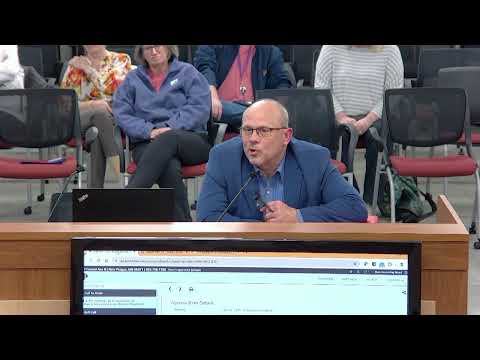
Eagle View Elementary’s Green Team outlined an in‑school recycling and food‑recovery program to the New Prague Area Schools board on March 24, describing a grant‑funded system of classroom recycling bins, organics collection and a student‑run “share cart” that redistributes unopened food to Students in need.
Mr. Dipperner, an Eagle View staff member who presented the group, said the program began after the school received a Scott County recycling infrastructure and education grant that supplied recycling bins, an organics collection pilot and educational support. "We applied for a Scott County recycling infrastructure and education grant a couple of years ago. This is our second year of being able to utilize that," he said.
Program details and student role
The Green Team has 12 students who meet every Wednesday and voluntarily give up part of recess to collect recycling, sort classroom materials and move the school’s tilt cart to the loading dock, students told the board. Students said teachers sort classroom recycling into items such as paper (no shredded paper) and place bins outside classrooms for collection.
"We go and we split up in groups and spread around the school to gather all the recycling," student Robbie told the board. The team described bringing sorted materials to a large tilt bin and using custodial loading‑dock access for pick‑up.
Organics and share cart
The grant also funded an organics pilot; staff said organics are collected separately and sent to receiving farms. The school introduced a share cart with two sections — one for nonperishable items and one for milk or sealed beverages — that gives students who are still hungry an option. Students and staff monitor the cart so children take only what they need; teachers perform evening room checks when students travel with the group on field trips.
Demcon partnership and education
Crystal McNally, who works at Demcon, provided classroom education and video demonstrations about the recycling‑sorting process. Students told the board they learned that nonrecyclable items (snack wrappers, shredded paper) damage equipment, and that automated sorter robots at recycling facilities remove improper items. One student recounted videos showing "a robot picker" that removes improper items and noted the surprising items that sometimes appear in recycling.
Outcomes and next steps
The school has added outdoor recycling stations for events, printed recognition for teachers who improve sorting, and plans Earth Day cleanup activities. Staff said they will order shirts for Green Team members and continue monthly work with the Demcon educator.
Ending
Board members praised the student involvement and the custodial and staff efforts that make the program work. The Green Team’s presentation highlighted practical steps small elementary schools can take to reduce waste while teaching stewardship and providing food‑security supports for students.