Get Full Government Meeting Transcripts, Videos, & Alerts Forever!
Get email alerts on the Facilities And Security topic
No spam. Unsubscribe anytime.
Facilities task force urges continued maintenance, new security upgrades; district staff to cost options ahead of potential fall referenda
Summary
A 35‑member facilities task force recommended New Prague Area Schools prioritize ongoing building maintenance and upgrades to safety and secure entries, and urged transparent community outreach while district staff prepare cost estimates for tiered security improvements ahead of possible fall 2025 referenda.
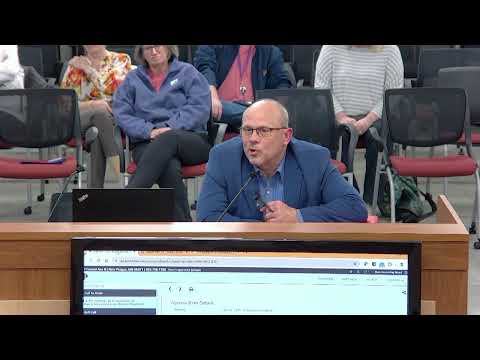
A volunteer facilities task force that met five times this winter recommended that New Prague Area Schools focus its next capital priorities on continued long‑term maintenance and upgrades to safety and building access, a task force presentation to the school board said March 24.
The group — which included parents, business leaders and district staff — flagged mechanical systems, roofs, paving and ADA upgrades as the district’s most pressing maintenance items and recommended a phased approach to safety and security improvements that could include secure vestibules, zoning of interior access and upgraded classroom locks.
"The two most critical items to take a look at for the long term are continued maintenance on the buildings as well as upgrading the safety and security," said Mr. Boothie, the facilities task force facilitator, summarizing the group’s findings. "Depending on available funding, some of that could be phased in over time, could be summer projects as far as maintenance goes in the district."
Why it matters: the district’s presentation and the group’s discussion make clear there is a gap between the district’s state long‑term facilities maintenance (LTFM) funding and the level of deferred maintenance identified. A district representative briefed the board that the district receives roughly $1.5 million a year for long‑term facilities maintenance (about $500,000 of that is dedicated to the fitness and aquatic center) and that the task force reviewed a deferred‑maintenance estimate on the order of about $65 million over the next 10 years.
Task force process and priorities
Wold Architects and members of the task force provided tours, data and prioritization exercises during five meetings. Participants repeatedly said school buildings generally appear well maintained but that accumulated deferred maintenance and aging systems — especially in older buildings such as Falcon Ridge and the high school — warrant planning.
"Physical conditions and safety and security easily resonated at the top of that list," said Yvonne of Wold Architects, describing the group’s exercise results. "If we're only going to do one thing we have to take care of what we have and we have to make sure that it's safe and secure."
The task force also weighed curricular space needs and community‑use facilities, but those items ranked below maintenance and security. The group noted the district currently has adequate capacity — enrollment is not driving an immediate need for additional seats — so capacity does not require near‑term action.
Security options and next steps
The task force recommended the district consider three tiers of security work: (1) secure entry vestibules that create a controlled entry sequence; (2) zoning that limits access to portions of buildings; and (3) upgraded classroom locks to allow faster lockdowns. Presenters described the secure‑vestibule approach as creating an outer weather vestibule and an inner secured sally‑port, with offices adjacent to entries when feasible.
District leadership said it will return to the board in April with cost estimates broken down by the three security layers and with further detail on phasing. "My one action item is to cost out three different layers of potential safety and security upgrades — entrances, zoning and locks — and to bring that to you in April," Superintendent Tony Volmuth told the board. Volmuth also repeated that the district would examine all funding sources, including LTFM, capital bonds and a potential referendum if community priorities point in that direction.
Community engagement and transparency
The task force recommended sustained community engagement and transparent public materials, including tours for citizens and regular updates on the district website and local paper. Brent Quast, a parent and local banker who represented the community group at the board meeting, said members leaned toward conservative, clearly prioritized requests rather than large, unfocused proposals.
Board and staff context
Board members and staff praised the task force process and the facilities and maintenance work performed by district operations staff. The presentation emphasized that while some security improvements could be done as summer projects, other items would require budgeting decisions and possibly voter approval. The board did not approve any funding or a referendum at the March 24 meeting; staff were asked to provide the requested cost data and to continue the outreach timeline discussed during the meeting.
What comes next
District staff outlined a timeline: staff and family surveys in April, a possible community survey in May, and a board decision about whether to pursue a fall 2025 operating or capital referendum by June. Volmuth told the board that the timeline is compressed if the board wants to pursue an autumn ballot question and that June would be the preferred decision point to allow community engagement and planning.
Excerpted quote: "There is a pretty big delta between things that we need to do as well as the available resources that we have," a district representative said when describing the LTFM funding and deferred‑maintenance figures.
Ending
The task force report leaves the board with a prioritized list of maintenance and security items, a request for cost estimates on three security tiers, and a community engagement plan. The board will consider the cost information and survey feedback before deciding whether to place a question before voters in fall 2025.