Get Full Government Meeting Transcripts, Videos, & Alerts Forever!
Get email alerts on the Municipal Budgeting topic
No spam. Unsubscribe anytime.
Redondo Beach city manager seeks commission input as budget pressures mount
Summary
City Manager Mike Wazanski asked the Public Works and Sustainability Commission for feedback as staff prepares the FY 2025–26 budget, citing pension costs, harbor fund pressures and a large capital program; commissioners asked about EV charging revenue, crossing guard funding and training dollars.
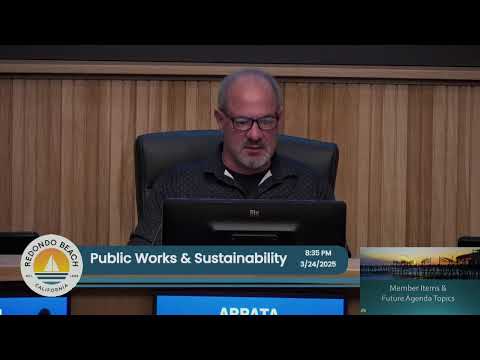
City Manager Mike Wazanski told the Redondo Beach Public Works and Sustainability Commission that staff is seeking commission input for the fiscal year 2025–26 budget and expects to deliver a charter‑required presentation to City Council in mid‑May.
Wazanski said the city will largely absorb routine cost increases but faces specific pressure points, including a supplemental unfunded accrued liability from CalPERS that he estimated at about $4,200,000 for the year and continuing support for harbor uplands and tidelands enterprise funds that have required general‑fund supplements. He also described a large capital program—“I think we’re up to about 120 active projects” —and said staff typically builds 20–25 projects a year while designing another 15–25.
The city manager said property‑tax assessed valuations appear to be growing about 5%–5.3% year‑over‑year, which he estimated would amount to roughly $2 million in additional revenue next year. He said staff will prioritize absorbing ongoing costs to maintain structural balance rather than propose large new commitments.
Commissioners pressed a number of topic‑specific questions. Commissioner Anderson asked whether gas‑tax declines from electrification affect city revenue and whether the city receives any direct revenue from electric vehicle charging. Wazanski replied that the state collects the gas tax and the city has not seen a precipitous drop, and that the city does not receive a dedicated excise on EV charging but can collect utility‑user tax revenue when charging increases residents’ electricity use. He said the city has pursued grants to add public chargers but with limited success and that short‑term installations are more likely at city facilities as fleet electrification proceeds.
Commissioner Laffis asked whether the school district is contributing to expansion of the crossing‑guard program. Wazanski said the city has formally requested participation and that school officials are considering it; he said the district currently contributes to the school resource officer program but had not yet committed to crossing‑guard funding.
On staff development, Wazanski said travel and training budgets cut during the COVID period have been restored to near pre‑COVID levels and that the city has set aside $80,000 this fiscal year to develop an in‑house contract management training program in partnership with Pepperdine University to improve contracting practices.
Wazanski closed by asking commissioners for project‑level input on capital projects and the active‑transportation network as staff finalizes budget priorities.
Ending: The commission voted to receive and file the budget‑input report; members did not amend the staff recommendation and no fiscal actions were adopted at the meeting. Staff said budget response requests from Council will follow the staff presentation in May, and that the city will continue to pursue third‑party grant funding for capital projects.