Get Full Government Meeting Transcripts, Videos, & Alerts Forever!
Get email alerts on the School Finance topic
No spam. Unsubscribe anytime.
Finance committee hears budget update; staff flags ESSER cliff, MPSERS and health-insurance uncertainties
Summary
At its March 24 meeting the Grand Rapids Public Schools finance presenter reviewed fund accounting, COVID-era ESSER spending, retirement and health-insurance pressures and contingency planning ahead of Lansing budget decisions.
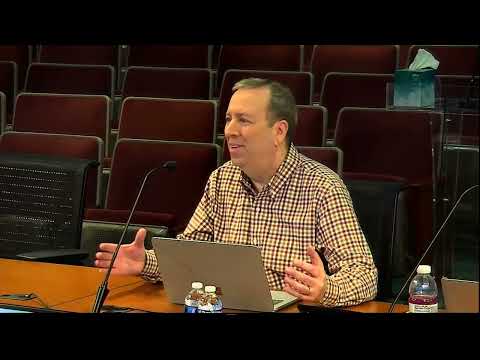
Rhonda Griggs, presenting for district finance staff to the Grand Rapids Public Schools Finance Committee on March 24, reviewed the district’s fund accounting, COVID-era federal grants, projected use of fund balance and several state-level uncertainties that could affect next year’s budget.
Griggs told the committee the district used funds from multiple COVID-era grants over recent years and said, “We did fully expend all of our our COVID funding.” She described the ESSER grants and related federal funding as temporary and said the district has focused on one-time uses where possible to avoid unsustainable operating commitments.
Griggs said changes in retirement and health-insurance policy remain risks. She described a state law change that this year reimbursed employees for a 3% contribution and noted, “As of 10/01/2025, employees will stop making that contribution.” She also said the district’s contribution rates to the Michigan Public School Employees’ Retirement System (MPSERS) and related allocations are changing and will affect the district’s net per-student position.
On health insurance, Griggs reviewed Public Act 152’s hard-cap framework and explained the district currently pays slightly above the hard cap. She told the committee the pending House bill discussed during the presentation — cited in the meeting as House Bill 6,058 — contained provisions that could raise employer costs, but she said the bill remained “in limbo.”
Griggs summarized proposed state budget activity: she said the governor’s proposed budget includes a 4.1% increase in the foundation allowance (to about $10,000 per pupil in the governor’s proposal) and additional ongoing mental-health funding; she contrasted that with a recently passed House continuation budget that the presenter said omitted many federal dollars and other categorical funding the district relies on.
Griggs reviewed the district’s revenue and expense drivers, noting salaries and benefits are the largest expenditure category and that the district is managing draws on fund balance. She told the committee the district’s amendment 1 shows a planned use of fund balance for the year and reminded members of the board policy target for fund balance (displayed in the materials) and the state’s typical 5% guidance.
Committee members asked questions about contingency planning, capital-project timing and the mechanics of MPSERS passthrough allocations. Griggs said the district will adopt a budget in June using best available Lansing estimates and will bring budget amendments if state action or revenue estimates change. “We can amend it any time,” she said, describing the district’s ability to revise budgets after adoption.
No committee vote was taken on budget items at the March 24 meeting; the session was a presentation and Q&A.
Griggs and committee members discussed capital-project timing tied to past bond issuances and market timing for future bond sales; she said the district expects to spend down the first bond series over the coming years and will work with its financial adviser on timing for future series.