Get Full Government Meeting Transcripts, Videos, & Alerts Forever!
Get email alerts on the K 12 Budget topic
No spam. Unsubscribe anytime.
Bethlehem Area SD projects roughly $10 million shortfall for 2025-26; officials weigh fund balance, taxes and cuts
Summary
District officials laid out a preliminary 2025-26 budget that shows a near $10 million gap driven by rising expenses, cyber-charter tuition and federal funding uncertainty, and discussed using fund balance, targeted cuts and a possible tax increase to balance the books.
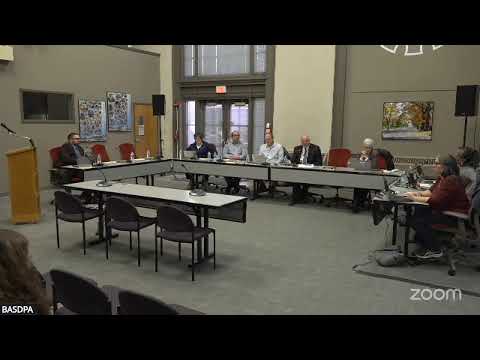
Bethlehem Area SD officials told a March 24 budget workshop that preliminary numbers for the 2025-26 fiscal year show a budget gap of nearly $10 million and that the district will consider a mix of fund-balance use, local tax increases and expenditure reductions to reach a balanced budget.
“Our goal for this evening is to, boil it down to, the key decisions that are ahead of us,” said Dr. Silva, introducing the district’s early budget review and timeline for the coming months. District presenters said they expect a proposed final budget in May and a board review and vote in June, with more refined estimates to be returned to the finance committee.
The nut of the problem, presenters said, is faster expense growth than revenue growth. The district’s preliminary revenue estimate—using a 4% local tax increase for planning—puts local revenue at about $240,714,000 and total revenue including state and federal sources at roughly $366,000,000. Projected expenses, however, outpace that, producing a near $10 million shortfall unless the district draws more fund balance, raises more local revenue or cuts expenditures.
Federal funding and charter tuition emerged as key pressure points. Presenters said the district receives about $7,500,000 in federal funds—about 2% of the budget—that are highly leveraged for programs such as IDEA, Title I–IV and English learner supports. Officials warned that if federal reimbursements were cut, the district would either “pull fund balance to make up for the federal loss, or ... reduce expenditures,” in the words of a board speaker during the discussion. Presenters also said cyber-charter enrollment and tuition have risen: cyber enrollment was reported at 509 students this year with a projection of 538 next year, and current cyber tuition paid by the district is about $15,002.76 per pupil. The governor’s proposed charter reform would fix cyber tuition at $8,000 per student and, if enacted as proposed, could produce an estimated $3.4 million in savings—an item the district said it has not yet assumed in the 2025-26 baseline.
District officials summarized other assumptions and constraints: a projected unassigned fund balance of about $16,000,000 (board policy targets 3–5% of budget and state guidance caps at 8%), prior uses of fund balance of $7,000,000 in 2022-23 and $6,400,000 in the current year, and a budget reserve figure presented around $3,000,000. Presenters and board members said those prior fund-balance draws cannot be relied on indefinitely and that continuing to use large amounts of fund balance would reduce the district’s flexibility on future borrowing and operations.
On the revenue side, presenters outlined the governor’s budget proposals and their district impacts: a statewide $75,000,000 Basic Education Funding (BEF) package that would translate to approximately $680,000 for the district, modest increases in special education funding (presenters cited roughly $207,000 for the district under the governor’s numbers), and facility and mental-health investments. However, presenters cautioned that much of the net new funding in the governor’s proposal is routed through “adequacy” allocations that do not benefit every district equally; netting the governor’s proposal against changes in other lines produced roughly $4.6 million of potential new state funding for the district in the presenters’ estimate, with about $4.5 million of that coming from adequacy.
On local options, the district’s planning scenario already assumed a 4% tax increase for preliminary modeling. Presenters described the district’s ability to raise revenue via millage: an illustrative 1% tax increase would generate roughly $1.9 million; a 4.8% increase, discussed as an outer example, would generate about $9.5 million (presenters noted average taxpayer impacts in Northampton and Lehigh counties when showing those scenarios). Officials cautioned that even a near-maximum increase would not fully replace a large federal funding loss.
Board members pressed on programmatic tradeoffs. Presenters said most spending is in instruction and instruction support (instruction was shown as the largest expenditure category), and that discretionary spending is limited. Items flagged for potential reduction included professional development and substitute costs tied to PD (the district said some substitute teacher spending is driven by districtwide training days for new teachers), vacancies and recently grant-funded positions converted to permanent status, and equipment/capital cycles. Multiple board members emphasized the district’s obligation to maintain services for students even if outside funding declines: as one presenter summarized, “the needs haven't really changed. You just lost the funding.”
The district did not adopt any budget motions at the workshop. Presenters said they will return with refined numbers, recommendations on how much fund balance to use, and options for expenditure reductions and local revenue adjustments. Next public meetings identified in the presentation are April 7 (followed by an executive session on personnel, facilities and curriculum) and a voting meeting on April 28.
Ending: The finance team asked trustees to consider their tolerance for fund-balance use and tax increases and said the administration will bring back a narrowed set of options. Until state and federal funding questions are resolved, presenters said they will continue to model multiple scenarios and urge community advocacy for stable state funding.