Get Full Government Meeting Transcripts, Videos, & Alerts Forever!
Get email alerts on the Redevelopment Pilots topic
No spam. Unsubscribe anytime.
Bayonne council approves multiple redevelopment financial agreements after lengthy public debate over PILOTs and school funding
Summary
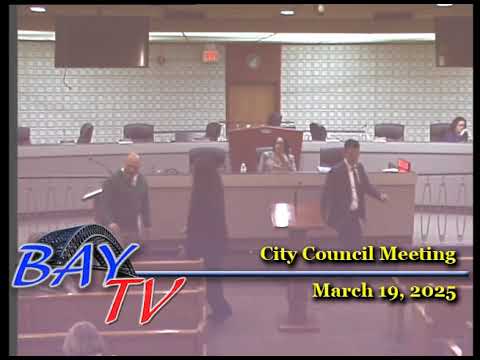
The Bayonne Municipal Council on March 19 approved a package of redevelopment financial agreements that include multi‑decade PILOT schedules after extended public testimony and a financial presentation by NW Financial Group.
The Bayonne Municipal Council on March 19 approved a package of financial agreements tied to multiple redevelopment projects after extended public comment and a presentation by NW Financial Group that examined whether the projects could proceed under conventional property taxes.
The council considered and voted to approve second readings and final passage of several ordinances authorizing financial agreements for redevelopment parcels across the city, including projects at Avenue F, Avenue C, Des Moines/West 50 Fourth Street and a 14‑story mixed‑use proposal at 26 North Street. Consulting analyst Daniel Banker of NW Financial Group reviewed developers’ pro forma assumptions and the effect of 25‑year PILOT schedules on developer returns and municipal receipts.
Why it matters: the agreements change how new developments will be taxed for decades and include contractual phase‑ins of conventional taxes. Council members and residents repeatedly pressed how much additional money the city — and the school district — would receive under the PILOTs, and whether the incentives remain necessary as the local rental market strengthens.
Banker summarized his firm’s analysis of multiple projects and explained the metrics used to evaluate the “but‑for” case for PILOTs: net project value at stabilization, yield on cost and internal rate of return (IRR). For one rental project reviewed by NW Financial, he said conventional taxes produced “a project that has a negative value of $5,800,000,” an IRR near zero and a yield on cost about 4 percent. “Under the pilot… the IRR is 6 percent,” he said, and the debt‑service coverage ratio — a lender metric — improved from about 0.95 under conventional taxes to roughly 1.24 under the proposed PILOT, a level bankers said would make financing likely.
Banker gave project‑specific examples during the hearing: one site that now generates roughly $25,000 in annual taxes was projected at stabilization to produce about $183,000 in annual tax‑equivalent payments under the proposed PILOT; with a projected 50% lease‑up in year one, he estimated the city’s share could rise to roughly $111,000 in that first year, from about $11,000 today. For a second project (445–461 Avenue C), he said the site currently generates about $23,500, with an estimated stabilized pilot of $236,000 (city share roughly $229,000 under the developer’s assumptions). For a for‑sale condo project on Des Moines/West 50 Fourth Street, Banker said the current tax on the site is $49,293 and that the projected pilot, if units sold at the developer’s assumed prices, would total about $218,000 annually.
Residents and some council members voiced concern about the length and structure of PILOTs and the effect on the Bayonne School District. Sharon Nedrowski, who spoke during multiple items, told the council: “If that is true, there’s no need to give pilots for incentives. Incentives are meant to offset risk of not being able to rent at market value.” Jacqueline Weimer, a council member who represents the ward that includes several of the parcels, pressed staff and NW Financial for plain‑language answers about year‑one receipts and occupancy assumptions.
Council members debated tradeoffs. Some members said projects would not build without incentives because of flood‑plain rebuilding costs, higher interest rates and elevated construction costs; others said the market is maturing and the city should reassess routine use of multi‑decade PILOTs. Several council members and residents asked the administration to ensure that the contractual 10% voluntary allocation from PILOT receipts to the Board of Education — language that appears in the city’s financial agreements — actually flows to the Board as intended. Director Schellinger (planning/administration) explained that the agreements include language directing the municipal council to adopt a resolution each year to remit the voluntary payment to the Bayonne School District, and that the city would “accrue that money on an annual basis” and apply it “off the top” to the school levy.
Council action and next steps: the council approved final passage on the items heard at the meeting (detailed in the Votes at a glance below). One ordinance (O3, adopting a redevelopment plan for 415 Agnes Street) was postponed to the April 16 meeting. Several developers’ representatives, the city’s planning director and NW Financial answered questions from council and residents about unit mixes, expected lease‑up schedules and how PILOT calculations treat condos sold to private owners versus rental projects.
Votes at a glance (ordinances heard March 19): - O2 (adopt redevelopment plan: 28–34 East 20 Second Street, Block 212 Lots 30/30.01/30.02): motion for final passage — council voted Aye (Booker, Carroll, Perez, Weimer, LaPalouse); outcome: approved. - O3 (adopt redevelopment plan: 415 Agnes Street, Block 232 Lot 10): motion to postpone second reading and public hearing to April 16 — motion passed (Booker, Carroll, Perez, Weimer, LaPalouse); outcome: postponed. - O4 (approve financial agreement: 111 Avenue F Partners Urban Renewal LLC / 100–111 Avenue F): final passage — council voted Aye (Booker, Carroll, Perez, Weimer, LaPalouse); outcome: approved. - O5 (approve financial agreement: 445–461 Avenue C Urban Renewal LLC): final passage — council voted Aye (Booker, Carroll, Perez, Weimer, LaPalouse); outcome: approved. - O6 (approve financial agreement: Des Moines Residents Urban Renewal LLC / 1099–1105 Avenue C & West 50 Fourth Street): final passage — council voted Aye (Booker, Carroll, Perez, Weimer, LaPalouse); outcome: approved. - O7 (approve financial agreement: 26 North Avenue Urban Renewal LLC / 26 North Street): final passage — council voted Aye (Booker, Carroll, Perez, Weimer, LaPalouse); outcome: approved.
What council recorded in the meeting minutes: each ordinance was presented for second reading and public hearing; council opened the floor for public testimony, heard comments and technical presentations, and recorded roll‑call votes as shown above. O3 was postponed by motion and recorded as such.
What was not decided: council did not change the underlying statutory phase‑in options in the state redevelopment statute (those remain outside local control); the council directed staff to provide additional information on how the annual “10%” voluntary allocation to the Board of Education is implemented administratively.
Speakers quoted in this report spoke during the items described above and are recorded in the meeting transcript.