Get Full Government Meeting Transcripts, Videos, & Alerts Forever!
Get email alerts on the Public Safety topic
No spam. Unsubscribe anytime.
City presents 45‑day public‑safety review: violent crime down 19% year‑to‑date; nine strategies proposed
Summary
City staff presented a 45‑day review translating prior public‑safety discussions into nine proposed strategies. The report showed an 11% decrease in overall crime year‑to‑date, including a 19% drop in violent crime and a focus on geographic hot spots, repeat offenders, and youth/young adults.
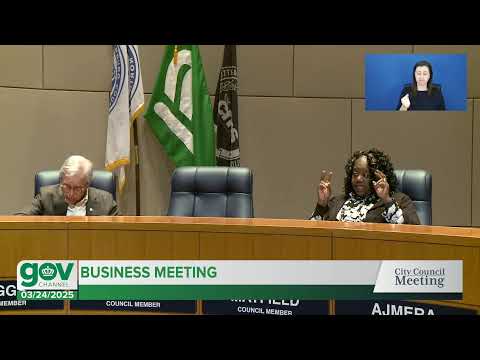
City staff presented a 45‑day follow‑up on March 24 summarizing data and proposed actions intended to translate earlier public‑safety discussion into concrete steps. Sean Heath from the city manager’s office led the presentation and described nine prioritized strategies for council feedback.
Heath said year‑to‑date crime comparisons (January 1–March 17, 2025 vs. the same period in 2024) showed overall crime down 11%, violent crime down 19%, and property crime down 9%. Staff emphasized three recurring themes emerging from the data: geographic concentration of crime and nuisance locations; an outsized role for repeat offenders (66% of violent‑crime arrestees had a prior arrest in 2024; the average number of prior arrests among violent‑crime arrestees was 5.6); and disproportionate arrests among youth and young adults (ages 10–25 account for ~20% of population but nearly 50% of violent arrest activity, per the presentation).
Heath summarized nine planned strategies grouped into city investments, evidence‑based programming, and state policy items. Highlights included: - Planning for potential increases in CMPD sworn positions starting in FY2027 to sustain response times and expand violent‑crime units; - A staff working group exploring a local nuisance‑property enforcement option modeled broadly on how the city adjusted noise enforcement (city said North Carolina statute Chapter 19 Article 1 is cumbersome for their needs); - A proposed RFP and pilot for drone use as first‑responder aerial support (RFP and funding discussion under way); - Expanding hospital‑based intervention (Atrium’s Project Boost) and considering extended hours; - Funding a youth‑led social‑norms campaign (FY25 budget included funding); - Stepped‑up reentry services and partner coordination; and - State legislative advocacy including House Bill 50 / Senate Bill 320 (retention of long‑service officers), and advocacy for additional resources for the district attorney, courts and public defenders.
Council reaction was robust and mixed. Councilmember Lewana Mayfield pressed staff for more community engagement and said she is not comfortable advancing some measures — particularly drone deployment — without broader council and community conversation and more details on privacy/technology safeguards. Councilmembers called for community surveys of residents and small businesses to better understand police‑community interactions before advancing certain steps. Others, including Councilmembers Tarek Bakari and Malcolm Graham, applauded the data‑driven approach and urged the city to maintain momentum and implement the recommended measures with sustained oversight. Councilmembers asked for a timeline, clear metrics, and continuous progress reporting; several urged greater focus on property‑crime trends and nuisance locations as near‑term targets.
Heath said staff and partners will continue work on the RFPs and programming, that some items are already funded in FY25, and that staff will seek council feedback on priorities and provide ongoing updates.
Why this matters: the review combines short‑term operational proposals and longer‑term state advocacy. It links crime reductions in early 2025 to continued investments and calls for targeted interventions for repeat offenders and youth. The discussion also highlighted community concerns about surveillance technologies and the importance of transparency and public engagement.