Get Full Government Meeting Transcripts, Videos, & Alerts Forever!
Get email alerts on the Gateway Redevelopment topic
No spam. Unsubscribe anytime.
Jamestown hears update on Gateway redevelopment; $640,000 in HOME funds proposed for site remediation
Summary
City council heard a detailed presentation on the Gateway redevelopment project, including remediation needs, unit set‑asides for service providers, cost increases and a proposed $640,000 allocation of HOME funds for site work; developers and staff will return for a public hearing next week.
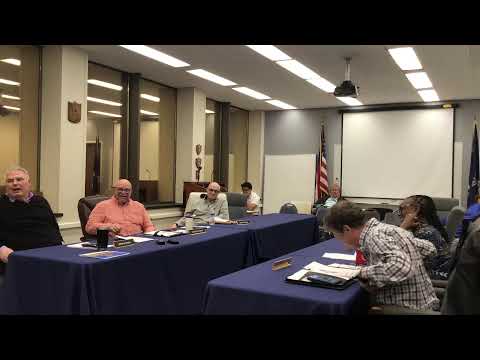
Jamestown City Council members on March 24 heard a presentation on the Gateway redevelopment project and were asked to consider using $640,000 in HOME funds to support site remediation and preparation work.
Project representatives said the redevelopment will include residential units reserved for service‑provider referrals, significant brownfield remediation and historic‑preservation work that has driven up costs. Steve Alt, a project representative, said the primary funding source is the New York State Housing Finance Agency and that the agency indicated it could close in the first quarter of next year. “Our project is actually coming in under 5%,” Alt said, referring to the market‑study capture rate used by the state agency.
The proposal matters because the site was previously used by a hardware finishing operation and requires soil remediation and asbestos abatement before renovations. Presenters told the council the increased project cost—from earlier estimates near $42 million to a current figure cited as $77 million—owes largely to remediation, energy‑efficiency upgrades required by financing rules and historic‑preservation constraints imposed by National Park Service review. Those constraints include keeping large, original windows and using higher‑performance exterior insulation, which the presenters said is more expensive.
Project details presented to the council include a residential component with units reserved for people coming through partner service providers: presenters said 40 units have been set aside for Estelle’s clients and 16 units for the YWCA, which works with women and children exiting emergency shelters. Presenters stated that the units will be offered at or below 60 percent of area median income, and that tenants in the special‑needs units will be charged no more than 30 percent of their income for rent. Representatives said other first‑floor space will be for nonprofit or educational tenants and that operators such as Community Helping Hands, Chautauqua County Mental Health Association and St. Susan’s Soup Kitchen already occupy or plan to occupy ground‑floor space.
Council members pressed presenters on several topics: how households with zero income would be housed, tenant screening, security and the potential burden on police if calls for service increase. Alt and other presenters said caseworkers will be assigned to special‑needs tenants and that the project budget includes funding for 24/7 security and overnight caseworker coverage; evictions would follow city nuisance and landlord‑tenant procedures if problems cannot be resolved by caseworkers.
Council members also raised the number of units and demolition trade‑offs in the city. Presenters said earlier plans discussed using demolition funds to remove units elsewhere in Jamestown; one council member noted that $350,000 was identified in city records as a sales‑contribution toward demolition and that at current demolition costs (roughly $33,000–$38,000 per three‑bedroom house, as cited in the meeting) that amount would cover far fewer demolitions than originally discussed. Presenters said the city has and will continue to coordinate with the Chautauqua County Land Bank on demolition and infill housing plans.
On funding, city staff identified the $640,000 as a proposal to assemble HOME funding from multiple prior annual allocations for site work at the Gateway location and said the dollars are intended specifically for site preparation and remediation to coordinate with an existing Middlebrook site project. Staff described HOME and CDBG requirements and noted HUD HOME funds must be used for low‑ and moderate‑income households. Staff also said other programs exist for modest owner‑occupied repairs (CDBG, weatherization programs and an Access to Home grant funded by Medicaid), but that the proposed HOME allocation is not an eligible source for those owner‑occupied repair programs.
Council members requested additional cost‑per‑unit and cost‑per‑square‑foot breakdowns for the next meeting; a presenter said he would obtain per‑unit and per‑square‑foot construction estimates from the general contractor for the council’s next meeting. Presenters also said the contractor projects about 14 months for construction once work begins.
No formal vote on the HOME allocation occurred during the work session. Council members were told the project team will return next week for a public hearing and that a resolution or formal financial action would be considered in upcoming meetings.
The discussion included several community concerns: an alderperson asked whether the $640,000 would be better spent on small repairs for low‑income homeowners; staff responded that existing programs address some owner‑occupied needs but have waiting lists. Council members also asked about tenant vetting, out‑of‑state applicants, and how the project will address the site’s food‑access issues; presenters said discussions about a mobile market and partnerships with the public market remain possible.
The Gateway representatives also summarized prior planning work: planning‑commission diligence, site visits to similar projects in Buffalo and Syracuse, and earlier design revisions to improve bus circulation and tenant safety. Presenters said key legal and technical consultants on the project include environmental counsel Adam Walters, tax counsel Ray Reichardt and real‑estate counsel Vince Hanley. The project team said it will return for a public hearing next week and that closing with the New York State Housing Finance Agency is targeted for its February board meeting, with construction projected to take about 14 months once started.