Get Full Government Meeting Transcripts, Videos, & Alerts Forever!
Get email alerts on the Transgender Rights topic
No spam. Unsubscribe anytime.
California Assembly adopts Transgender Day of Visibility resolution after hours of debate
Summary
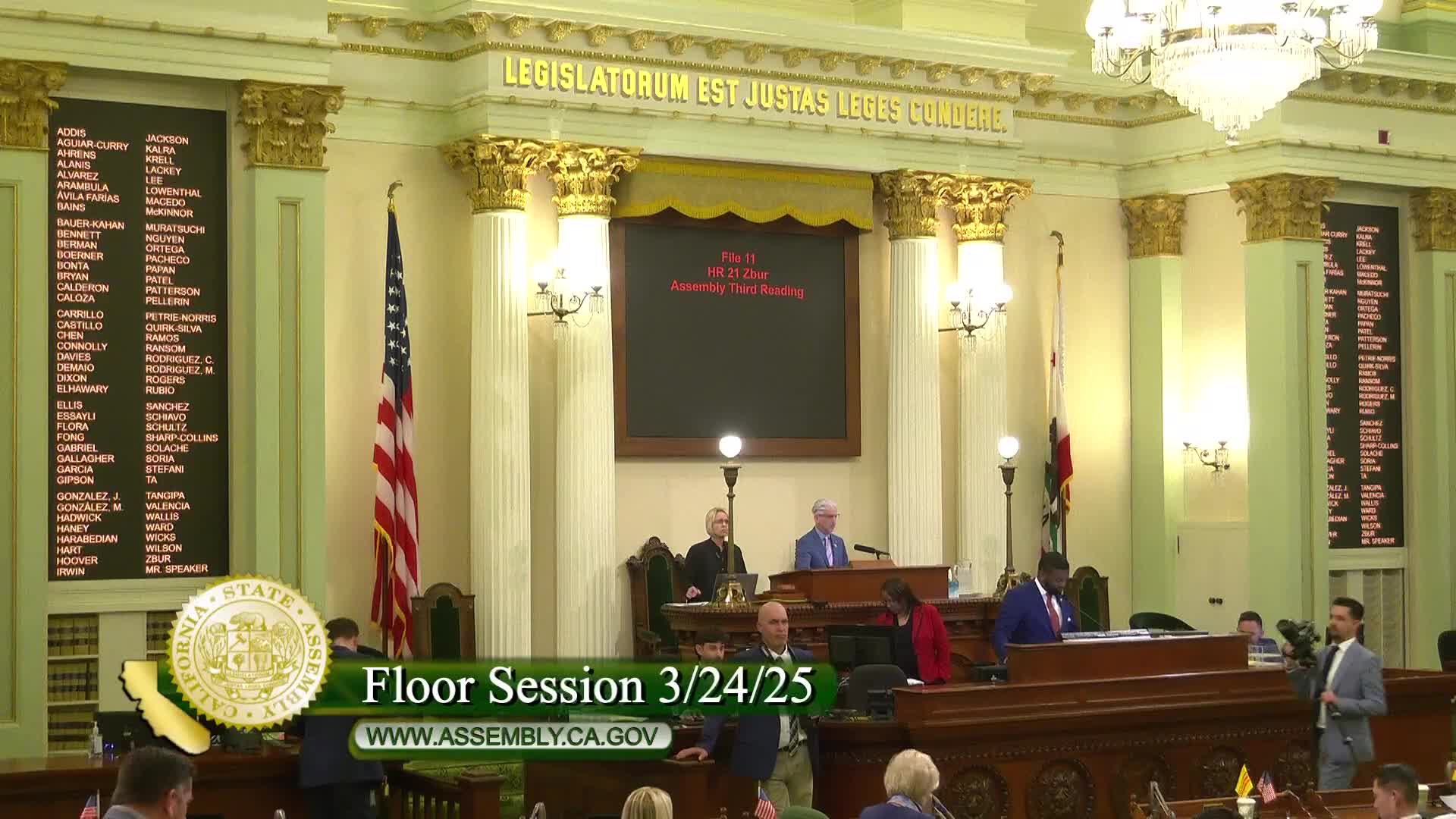
The California State Assembly on March 6 adopted House Resolution 21, designating March 31 as Transgender Day of Visibility, after extended floor debate that included sharply contrasting remarks and a voice vote to approve the resolution with 54 coauthors.
The California State Assembly adopted House Resolution 21 on March 6, designating March 31 as Transgender Day of Visibility in the state and affirming support for transgender, nonbinary and intersex Californians.
HR 21’s passage came after more than an hour of floor remarks both in support of and opposed to the honorary resolution. Assemblymember Zach Zbor introduced the measure on behalf of the Legislative LGBTQ Caucus and asked colleagues to vote “aye” to recognize the week and the March 31 observance.
Supporters said the resolution is a symbolic but important affirmation for communities they described as facing heightened hostility. “Transgender people are our neighbors. Transgender people are our friends. Transgender people are our congregants and parishioners,” Assemblymember Zach Zbor said on the floor. Assemblymember Matt Haney said, “We see you. We value you. And this body will protect you.” Assemblymember Bill Bonta and others cited research and health data in urging support; Bonta noted studies linking acceptance with reduced suicide risk for transgender youth. Assemblymember Buffy Wicks, speaking for the Black Legislative Caucus, added that visibility “is power” and cited historical leaders such as Marsha P. Johnson.
Opponents and skeptical speakers said the resolution, while honorary, touched on politically charged issues and that some floor remarks in support of it were divisive. Assemblymember De Maio said the resolution “does not unite us. It divides us,” and criticized some supporters’ broader policy positions. Assemblymember Acele and others urged cooler rhetoric and proposed more detailed policy discussions on specific issues they raised, such as girls’ athletics and Title IX compliance.
After debate, the Assembly opened the roll for coauthors and recorded 54 members as coauthors of HR 21. The chamber then approved the resolution by voice vote. The clerk announced, “All those in favor say aye. All those opposed no. The ayes have it. The resolution is adopted.”
HR 21 is an honorary, nonbinding resolution recognizing Transgender Week of Visibility and does not by itself change statute, regulation, or funding. Proponents and opponents both acknowledged that the resolution’s effect is symbolic and that policy changes would require separate legislation.
Speakers during the debate referenced several figures and data points on the record: supporters cited estimates that more than 1,000,000 Americans and roughly 300,000 Californians identify as transgender or gender nonconforming, and witnesses on the floor said that anti-LGBTQ measures have been widely introduced in state legislatures around the country. Those figures and claims were presented from the floor as context for the resolution; the resolution itself does not enact any policy.
The Assembly’s adoption of HR 21 follows a session in which members also took up other ceremonial resolutions and procedural motions. The formal passage of HR 21 was a voice vote; no recorded roll-call tally for yea/nay votes was provided in the transcript.