Get Full Government Meeting Transcripts, Videos, & Alerts Forever!
Get email alerts on the Mineral Leases topic
No spam. Unsubscribe anytime.
Bill would set minimum 10-year primary term for mineral leases on state trust lands
Summary
Sen. Tony Tzczak sponsored Senate Bill 520 to standardize mineral lease terms for metallic and nonmetallic minerals on state trust lands by setting a primary term of not less than 10 years and allowing extensions for time lost to permitting or litigation. Proponents said the change brings Montana in line with surrounding states to attract mining,
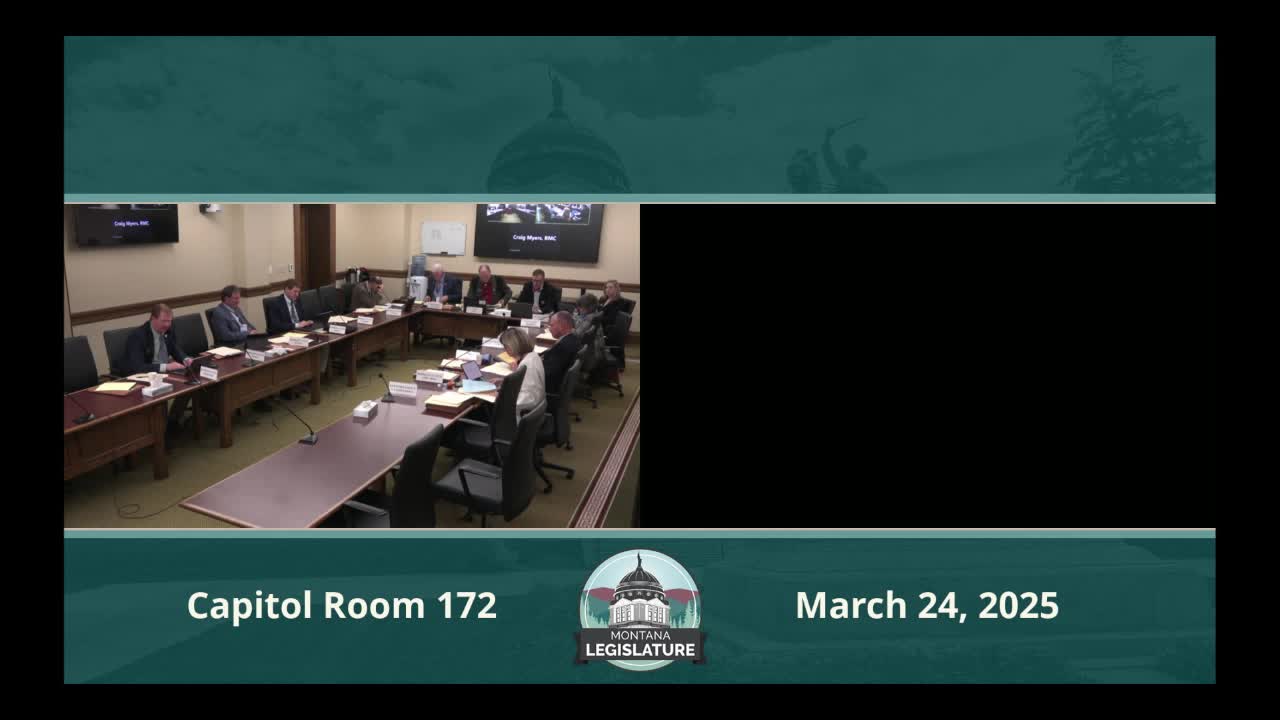
Sen. Tony Tzczak opened a hearing on Senate Bill 520, which would revise the terms of mineral leases on state trust lands to provide a primary lease term of not less than 10 years and permit continuing extensions for time lost to permitting or legal challenges.
Tzczak said Montana lacks lease-term protections that neighboring states provide and that a defined term would encourage investment and exploration that could generate revenue for schools and jobs. "The 10 years is gonna give some incentive for companies to come in and look at that," he said in closing.
Proponents included Matt Vincent of the Montana Mining Association, who said an undefined primary term put Montana at a competitive disadvantage and that many Western states use defined 10-year terms. The Montana Contractors Association and statements "on behalf of Madam Secretary Christy Jacobson" were also recorded in support.
Opponents raised statutory drafting and public-interest concerns. Derf Johnson of the Montana Environmental Information Center asked the committee to clarify a provision that automatically extends the primary term for the period a permit is "subject to challenge"; he argued the current drafting could extend leases for any litigation rather than only permit-related suspensions and recommended linking extensions to permit suspensions or stop-work orders. Johnson also urged preservation of the existing public process that determines whether geological or commercial information is confidential, saying the bill's language could improperly withhold geological information the public needs for assessing environmental and bonding risks.
Committee members asked technical questions about whether the bill applies to oil and gas (it does not) and whether the bill aligns with existing oil, gas and coal lease statutes. Members noted potential drafting problems: representatives pointed out the bill's text uses "not less than 10 years" while existing oil-and-gas statutes use a primary term "not more than 10 years," and asked the sponsor and counsel to review the alignment.
Informational witnesses included Trevor Taylor. The committee discussed whether confidentiality provisions should read "may" or "shall" when protecting proprietary geological data; proponents and committee members discussed existing DEQ rules on confidentiality and whether the bill should adopt a "shall" standard to ensure predictability for applicants.
Sen. Tzczak said the bill is intended to provide certainty for companies to justify the up-front investment required for exploration and permitting; he urged a do-pass recommendation.
No committee vote was recorded during the hearing.
Speakers quoted or cited in this report are drawn from the hearing record: Senator Tony Tzczak (sponsor); Matt Vincent (Montana Mining Association); Derf Johnson (Montana Environmental Information Center); Trevor Taylor (informational witness).