Get Full Government Meeting Transcripts, Videos, & Alerts Forever!
Get email alerts on the Trust Lands Cabin Sales topic
No spam. Unsubscribe anytime.
Bill would restore lesseerights for longstanding cabins on state trust lands
Summary
Sen. Laura Smith introduced Senate Bill 500 to restore a prior process that lets longtime lessees of state trust cabin or home sites match the highest bid when the state solicits those leases for sale.
Sen. Laura Smith introduced Senate Bill 500 to restore a prior process that lets longtime lessees of state trust cabin or home sites match the highest bid when the state solicits those leases for sale.
Smith said the bill would return the sale process to how it operated previously and protect "legacy family" cabins that have been in families for generations. "That's why I call this bill the Montana Family Legacy Cabin Act," she said.
The sponsor said the bill responds to people who worry they could be "priced out" of land where they have lived and improved a cabin, and said she believes the current statute may discourage lessees from entering the voluntary sale program.
Opponents emphasized the State Land Board's fiduciary duty to obtain the full market value of school trust lands. "The full market value," said an opponent testifying on behalf of the State, citing Article X and the trust duties that govern state trust lands. He told the committee that nine parcels that went to competitive bid produced almost $450,000 more than the minimum bids required and argued that there is no requirement that a lessee put a lease into the sale process.
Ryan Weiss, deputy administrator for State Trust Lands at the Department of Natural Resources and Conservation, described the cabin-site sale program the 2013 Legislature created. He said the process is voluntary, typically takes "between nine and 12 months on average," requires an appraisal and land board approval, and includes a preliminary approval with a set minimum bid at the appraised value, followed by an auction and final sale. Weiss said the lessee who nominates a lot may become the high bidder in many cases and that lessees who think the appraisal is too high can withdraw before competition or request an administrative hearing. Weiss gave recent sale counts: 29 lots sold in 2023, seven in 2024 and two so far this year.
Committee members questioned when a lease becomes a sale and whether lessees keep compensation for improvements; both Weiss and the sponsor confirmed lessees receive credit for improvements and that the current statutory process includes appraisal and a minimum bid. Committee members also asked how frequent competitive overbids had been; Weiss said many lessees who nominate lots were the high bidders and that some nominated lots did not sell when lessees withdrew over appraised values.
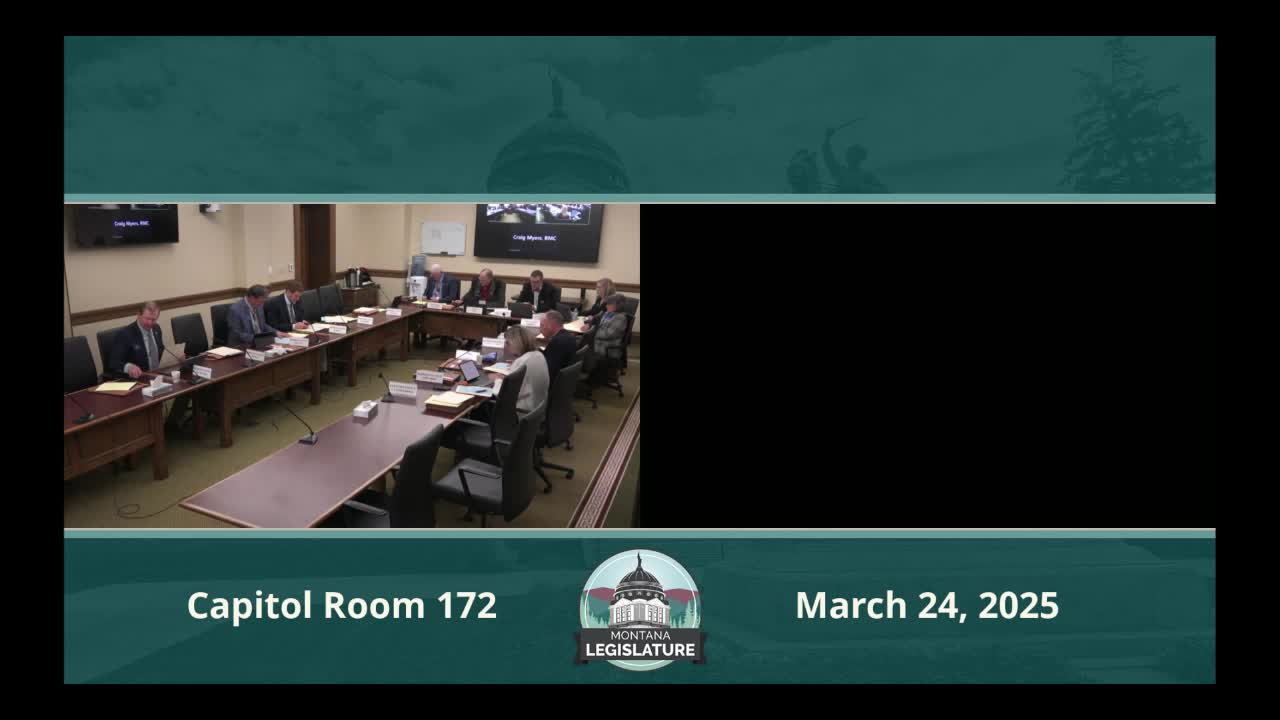
No action was taken on SB 500 during the hearing. The committee closed the public hearing after opponents and staff finished answering questions.
Votes/Action: Hearing only; no committee vote or formal action recorded.
Speakers quoted or cited in this report are drawn from the hearing record: Senator Laura Smith (sponsor); an opponent who spoke "on behalf of the State" (opponent representative); and Ryan Weiss, deputy administrator, State Trust Lands, Montana DNRC.
Ending: The committee closed the hearing on SB 500 and proceeded to the next bill on the calendar.