Get Full Government Meeting Transcripts, Videos, & Alerts Forever!
Get email alerts on the Land Use Zoning Termination topic
No spam. Unsubscribe anytime.
Bill would let county commissioners terminate citizen-initiated zoning districts; opponents warn of property-rights loss
Summary
House Bill 614 would allow county commissioners to terminate citizen-initiated zoning districts if a county opts into the Montana Land Use Planning Act or creates a larger zoning district covering the same area; the Senate committee heard the bill and extensive public opposition.
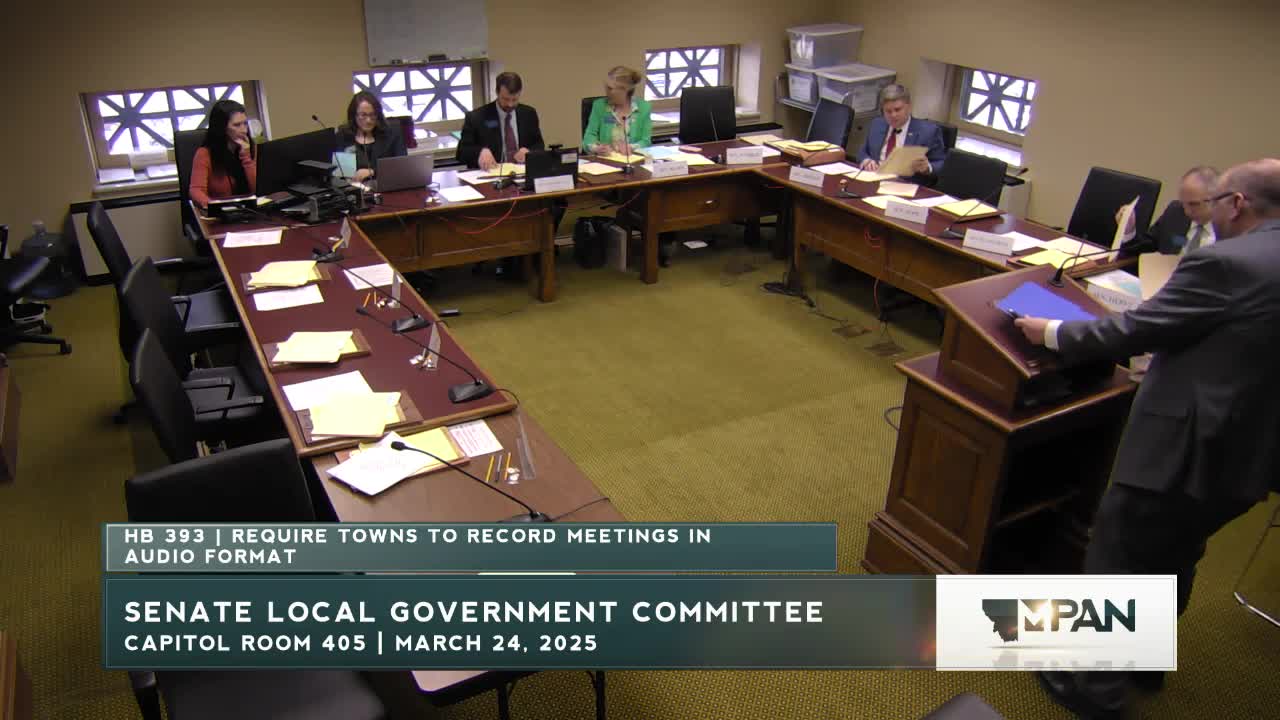
House Bill 614, introduced in the Senate Local Government Committee by Representative Greg Overstreet, would permit county commissions to terminate citizen-initiated zoning districts after notice and a public hearing if one of two conditions is met: the county has opted into the Montana Land Use Planning Act (MALUPA) or the county has established a larger zoning district that encompasses the area in question.
Proponents said the change provides a clear, administrative path for counties struggling with a patchwork of many small, distinct zoning districts. "Counties are looking for solutions to this situation and...dissolving the old underlying districts," said a proponent, who described how some counties have dozens of separate zoning districts. The proponent told the committee that Gallatin County has 22 zoning districts, Ravalli County 44, Lewis and Clark County 37 and Missoula County 31, and said complying with new legislative mandates across many small districts can require dozens of hearings and separate legal notices.
Ross Butcher, a Fergus County commissioner speaking for the Montana Association of Counties, said HB 614 provides "a straightforward process to allow county commissioners to terminate citizen initiated zoning districts when the county commissioners are seeking a more comprehensive approach to zoning in the county or if the county intends to opt in to the land use planning act." He emphasized the proposal includes notice and public hearings.
Opponents — including residents of part 1 and part 2 zoning districts, local association representatives and conservation groups — said the bill would undermine the protections that citizen-initiated zoning districts were created to provide. Matt Elsasser, deputy director of Upper Missouri Waterkeeper, said the measure is "a threat to due process, public notice, and participation in property rights."
Multiple residents testified that citizen-initiated part 1 and part 2 zoning districts were created after a lengthy public process to protect agricultural heritage, habitat, wildfire resilience and property values. "These zones are time tested, effective part of managing growth," said an opponent representing a Spring Hill planning-district property-owners group. Charles Howe, a Spring Hill resident and former local fire chief, described wildfire risks near national forest boundaries and said local zoning helped provide fire protections.
Several opponents urged keeping the current referendum process for termination in place. One suggested an amendment to let counties initiate a termination process but preserve the referendum as the final decision; another suggested a protest provision instead of replacing the citizen vote. Committee members asked technical questions about statutory consistency: a senator asked why the bill includes a three-year bar on filing a subsequent petition to terminate a district; a committee witness clarified the three-year provision aligns part 2 termination language with existing part 1 statute so that, if a referendum fails, petitioners must wait three years before re-filing.
Sponsor Representative Overstreet said the bill is optional for counties and emphasized that where strong local opposition exists commissioners are unlikely to use the authority. He closed by saying the measure is intended to give counties tools to reduce administrative duplication while protecting public process.
The committee did not take a formal vote during the hearing.