Get Full Government Meeting Transcripts, Videos, & Alerts Forever!
Get email alerts on the Transparency Public Meetings topic
No spam. Unsubscribe anytime.
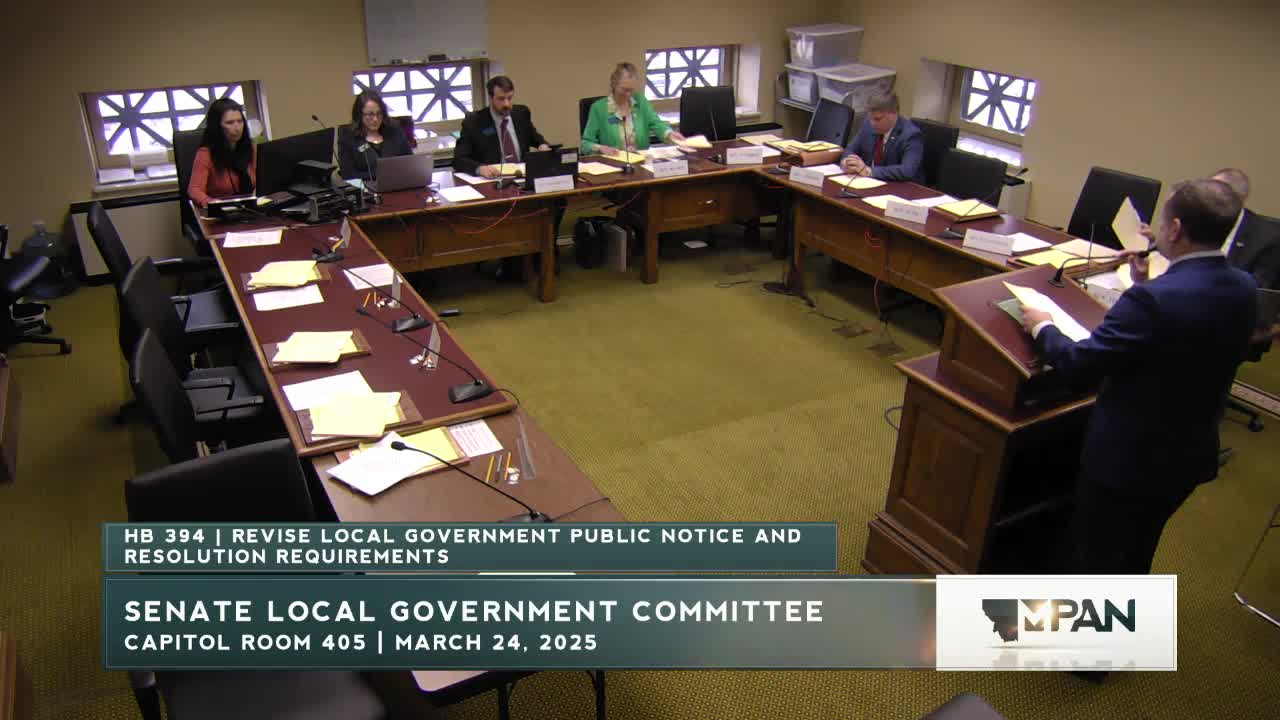
Committee hears bill to extend audio/video recording requirement to small towns
Summary
House Bill 393 would expand last session's public meeting audio- and video-recording requirement to include towns with populations between 300 and 1,000. Sponsor Brad Barker and the Montana League of Cities and Towns said technical concerns were addressed; no opponents testified.
Representative Brad Barker opened testimony on House Bill 393, which would add towns to the state law that requires public meetings of local governments to be recorded and made publicly available.
"House bill 393 is just an addition to the audio and video recording bill that I did for, transparency last session," Barker said, noting the current change narrows the bill to include towns (defined in testimony as jurisdictions of about 300 to 1,000 people). He told the committee he and the League of Cities and Towns had consulted about technical capacity and that the changes intend to address earlier concerns about smaller jurisdictions' ability to implement recording and publishing requirements.
Jennifer Olson, government affairs director for the Montana League of Cities and Towns, appeared as an informational witness and told the committee she is available to answer technical questions. Barker told senators that feedback since last session has been largely positive; he said complaints have decreased in some places after the earlier audio/video bill was enacted. No opponents appeared in person or online during the hearing.
Senators asked procedural and enforcement questions; one senator joked about spelling the sponsor's name as part of committee levity. Barker closed by noting he would accept questions later and thanked the committee. The committee took no formal action during the hearing.