Get Full Government Meeting Transcripts, Videos, & Alerts Forever!
Get email alerts on the Property Law topic
No spam. Unsubscribe anytime.
Committee advances squatter-removal bill with affidavit process, perjury penalty; passes 9-3
Summary
Senate Bill 157 would create a defined "squatter" offense and allow property owners to submit an affidavit that triggers a 48-hour law-enforcement response; the committee accepted amendments adding a civil penalty for false affidavits and passed the bill 9-3.
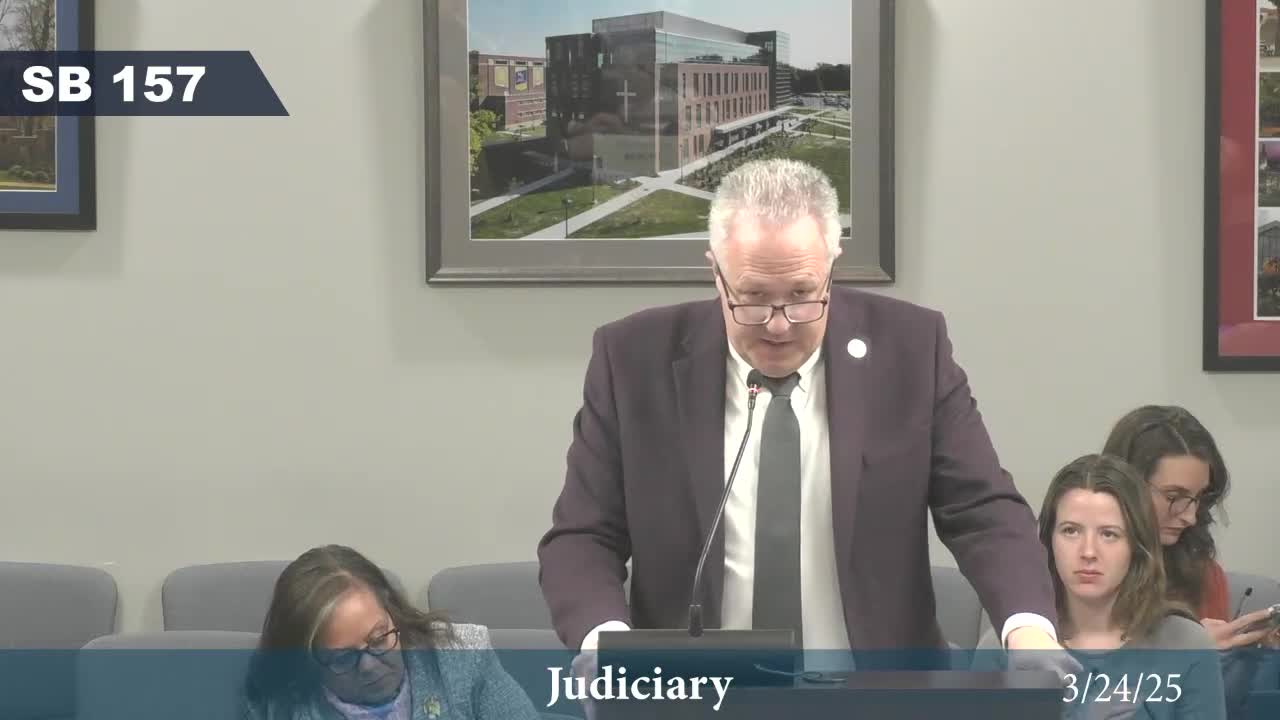
Senator Gaskell presented Senate Bill 157 to the House Judiciary Committee, describing a compact statutory process to expedite removal of people occupying property without any lawful rental agreement or permission. "The first thing in section 2 of the bill we define what squatter is," Gaskell told the committee, adding the bill would not change trespassing law or landlord-tenant eviction processes.
Under the bill as discussed, a property owner who discovers a person occupying property without a rental agreement, permission or other property interest could execute an affidavit under penalty of perjury attesting to those facts. Once law enforcement receives the affidavit, the bill requires an officer to respond and gives the officer up to 48 hours to dispatch to the property unless a higher public-safety priority delays response. If the officer finds credible evidence that the occupant is an invitee, a tenant or otherwise lawfully present, the officer would not remove the person; otherwise the officer may remove the person and may arrest if probable cause exists for other offenses or outstanding warrants. The bill also provides civil immunity for officers and agencies relying on an affidavit.
Committee amendments and debate: Chairman Jeter offered and the committee accepted two drafting amendments to narrow ambiguity and reduce on-scene evidentiary burden on officers. One amendment struck the word "written" so officers may rely on credible evidence that is not necessarily in writing (e.g., voicemail or other corroboration). A second amendment gave law enforcement discretion to allow an on-site affidavit and added a civil penalty for knowingly filing a false affidavit, addressing concerns that owners could misuse the process to circumvent eviction law. Representative Rosen Bauer offered an amendment to create a judicial emergency possessory order procedure; the author and chair opposed that approach because it would re-introduce a lengthy eviction-like judicial route rather than the limited, expedited process the bill seeks to create.
Witnesses included law-enforcement and property-industry stakeholders and the Indiana Sheriffs Association testified neutral, expressing manpower and property-storage concerns for sheriffs' offices. The Indiana Apartment Association told the committee it supports this version of the bill. Committee members discussed real-world examples of squatters and the challenge law enforcement faces distinguishing trespassers, holdover tenants and true squatters in the field.
Committee action: after debating amendments and taking testimony the committee voted to pass SB 157; the roll-call vote recorded in the transcript was 9 yes, 3 no. The committee adopted amendments discussed above before passage.
Why it matters: SB 157 creates a statutorily defined middle path to remove people who occupy property without permission while attempting to preserve judicial remedies for legitimate tenant disputes and to add penalties for fraudulent affidavits.