Get Full Government Meeting Transcripts, Videos, & Alerts Forever!
Get email alerts on the Energy Feasibility Studies topic
No spam. Unsubscribe anytime.
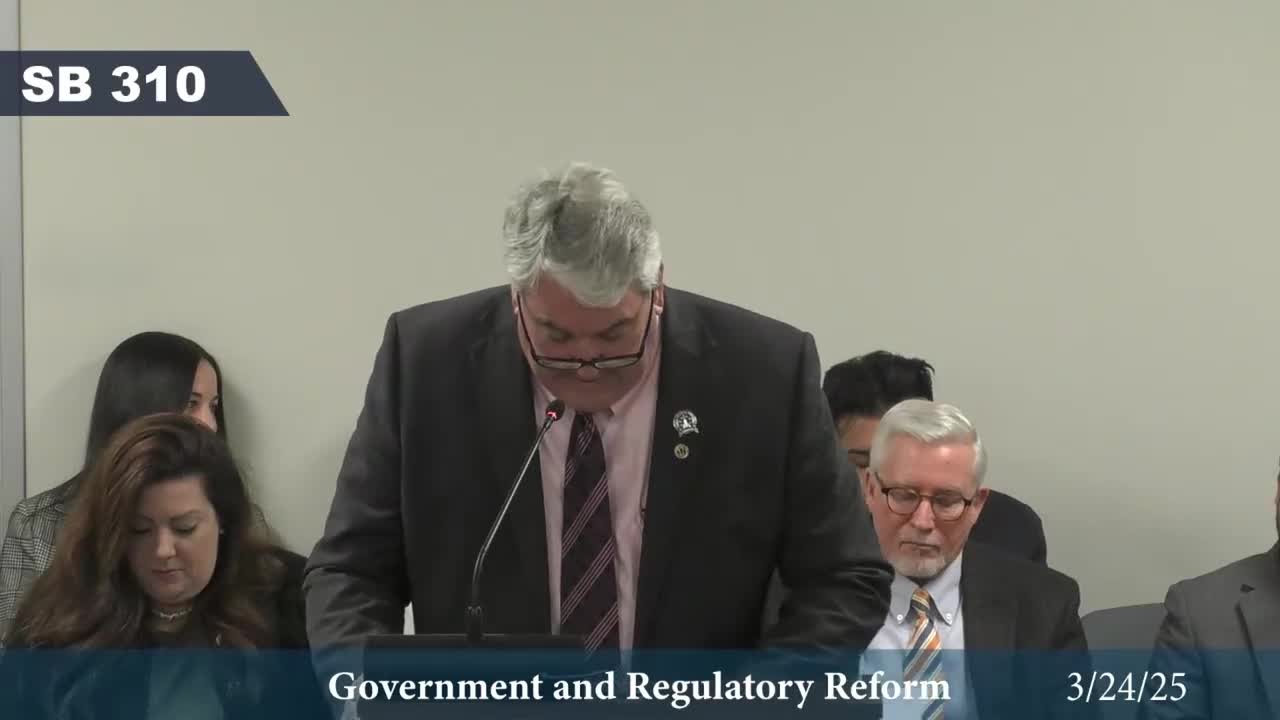
Committee approves amended bill to fund feasibility studies for state building energy audits
Summary
The House Government Regulatory Committee voted to pass an amended bill directing the Department of Administration to conduct feasibility studies — not full ASHRAE Level 3 audits — of certain state buildings, with an amendment capping initial studies below $100,000. Environmental groups and architects testified in support.
The House Government Regulatory Committee voted to pass an amended bill that would authorize preliminary feasibility studies of state buildings’ energy performance rather than immediately commissioning comprehensive ASHRAE Level 3 energy audits.
Sponsor Senator Zay presented Amendment 1, which she said “attempts to address the fiscal that came out in the fiscal note. And, the fiscal note speaks to a ASHRAE level 3 energy audit. And, that's not the intent of the legislation. It's more of a feasibility study and to keep the cost down under a hundred thousand so it will not be, recommitted.”
Zay told the committee the measure is intended to position the state “in the position of leadership” by starting with preliminary walk-throughs to determine whether a more in-depth audit is appropriate. “This would be a preliminary step to a full fledged audit,” she said.
Three witnesses testified in support: Lindsay Hake for Citizens Action Coalition (also speaking on behalf of Indiana Conservation Voters and Earth Charter Indiana), David Van Gilder of the Hoosier Environmental Council, and Jason Shelley, executive director of the American Institute of Architects in Indiana.
Hake said energy efficiency is the cheapest kilowatt and supported the bill’s approach. Van Gilder told the committee that “studies indicate that quite often in government buildings, 30% of the energy cost can be saved once, the identifiers of the, wastage are, highlighted.” He said retrofits, including LED lighting, have produced large and ongoing energy and maintenance savings in Allen County’s courthouse. Shelley urged the committee to measure energy use before making policy decisions, saying, “It's kinda hard to figure things out unless you measure it first.”
Senator Zay said the Department of Administration would have a role in carrying out the feasibility studies and that the amendment narrows the proposal to capital billing and the government center, while keeping the initial step affordable. The transcript records LSA (Legislative Services Agency) estimates in the fiscal note that a full in-depth audit could be costly, with Zay saying LSA had estimated costs “up to a million dollars.” The amendment, Zay said, is intended to limit the initial expense.
After testimony and brief questioning, a committee member moved to pass the bill as amended and the committee called the roll. Representatives recorded as voting yes were: Hatcher, Bartlett, Harris, Campbell, Karakoff, O'Brien, Engleman, Schonkweiler, Jordan, King, Green and Abbott. Representative Miller was excused. The clerk announced a tally of 12 in favor; no no votes or abstentions were recorded in the transcript.
The amendment changes the bill’s required work from conducting an ASHRAE Level 3 energy audit to performing a feasibility study to determine whether and where a full audit is warranted and to keep initial costs below the threshold that would require recommittal, according to the sponsor’s explanation.