Get Full Government Meeting Transcripts, Videos, & Alerts Forever!
Get email alerts on the Constitutional Amendments topic
No spam. Unsubscribe anytime.
House passes bill defining limits for Article V convention commissioners after extended debate
Summary
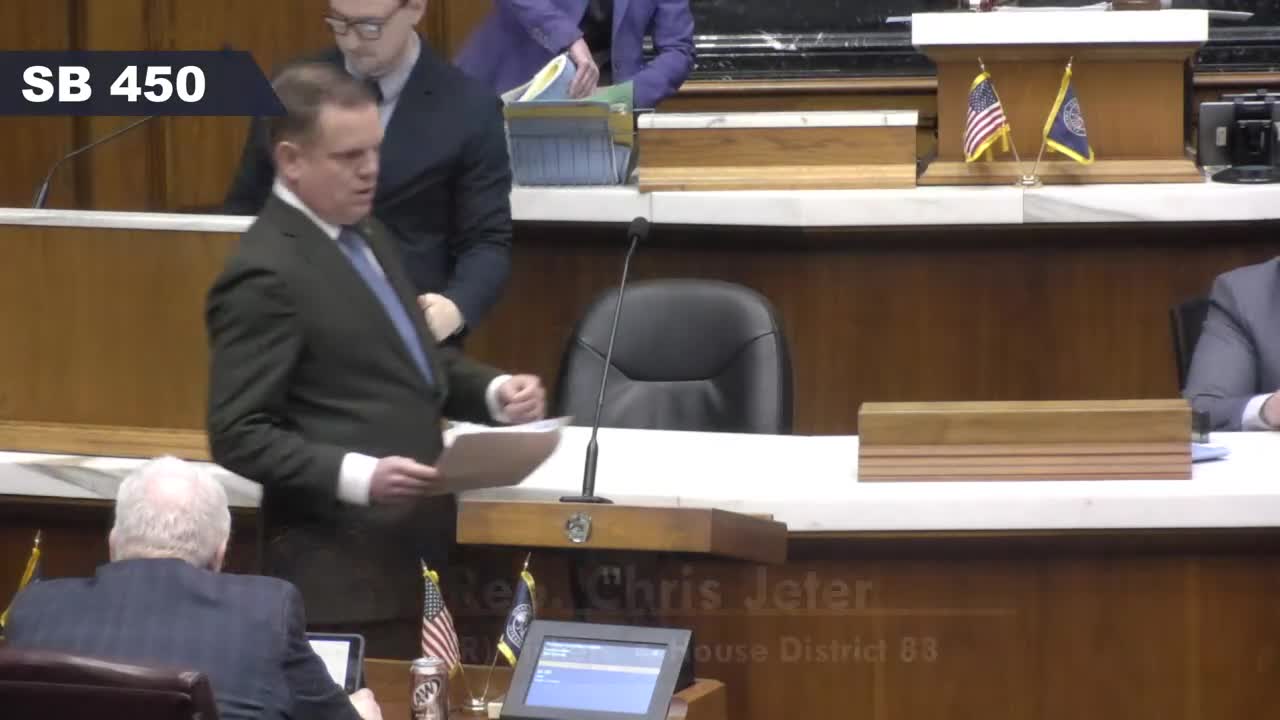
The House approved Senate Bill 450, which changes terminology from "delegates" to "commissioners," sets residency and conduct requirements, and lists constitution provisions commissioners may not vote to amend. The bill passed after extensive floor debate, 69-27.
The Indiana House passed Senate Bill 450, a measure that revises statutory guidance related to an Article V constitutional convention. The bill—among other changes—renames the state's participants from "delegates" to "commissioners," increases the number of appointees, sets residency and conviction limits, requires appointment of a chair, and lists certain U.S. Constitution provisions commissioners may not vote to amend. The House recorded a roll call of 69 yeas and 27 nays.
Representative Geter, the bill's sponsor on the floor, said the legislation "cleans it up, keeps it tight" and described the changes as a response to recent state resolutions calling for an Article V convention. He said the measure is intended to narrow the commissioners' authority and to provide guidance should enough states arrive at a convention.
Opponents warned the statutory restrictions would be ineffective or could produce criminal penalties for commissioners who vote on matters outside the list. Representative Prior called the policy a ‘‘slippery slope’’ and argued that opening the Constitution to amendment via a convention could threaten longstanding rights and structures. Representative Delaney and others argued the bill either does nothing enforceable at a federal convention or could make commissioners felons under current state law if they voted on forbidden topics.
Supporters, including Representative Smaltz, argued the statute provides a lawful method for the state to instruct its commissioners and to try to prevent a "runaway convention." Representative Geter said he expected further refinements and signaled plans to sponsor additional changes, including adding the Tenth Amendment to the protected list in a future proposal.
The House voted on final passage by roll call; the clerk reported 69 ayes and 27 noes. The bill passed and will proceed in the legislative process.
The debate on this measure occupied substantial floor time and involved multiple members raising constitutional and enforcement concerns.