Get Full Government Meeting Transcripts, Videos, & Alerts Forever!
Get email alerts on the Energy Policy topic
No spam. Unsubscribe anytime.
House approves bill classifying natural gas and propane as 'clean' energy
Summary
The Indiana House passed Senate Bill 178 to categorize natural gas and propane as eligible within the state's definition of clean or green energy, a move supporters said would qualify those fuels for federal programs and critics warned could prolong reliance on fossil fuels. The bill passed on a roll call, 73-20.
The Indiana House on third reading approved Senate Bill 178, a measure that would add natural gas and propane to the state's list of energy sources characterized as ‘‘clean’’ or ‘‘green,’’ and make those fuels eligible for certain federal clean-energy programs. The bill passed on a roll call of 73 yeas and 20 nays.
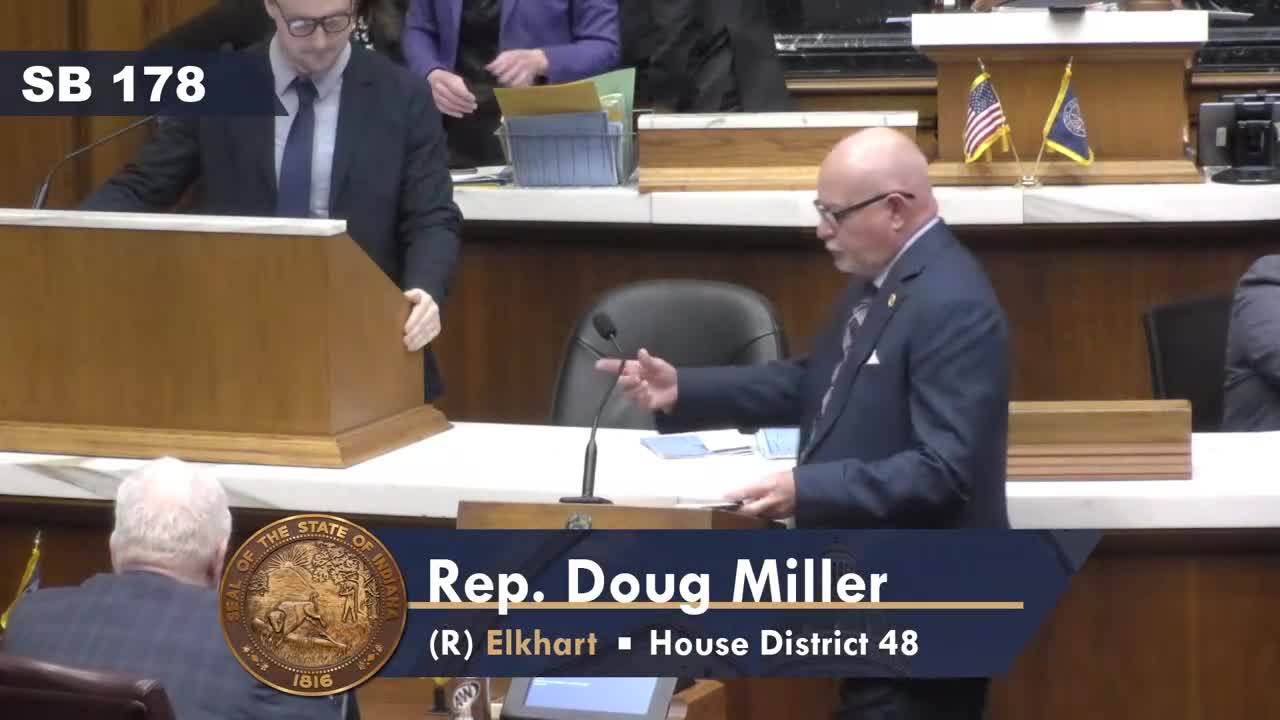
Proponents said the bill updates the state's energy classification to reflect fuel sources that produce lower emissions compared with coal and to make those sources eligible for federal programs. Representative Miller, who spoke in favor of the bill, said it "provides that natural gas and propane become cataloged with others currently listed as clean or green energy" and that it "does not impact any energy source currently listed there such as solar, wind, nuclear, battery, and hydro." Miller identified co-sponsors Representative Prescott, Representative Burton and Representative Abbott.
Opponents described the measure as a redefinition that could delay a transition toward renewable sources. Representative Pierce called the bill "a little bit Orwellian" and said "cleaner is not clean," arguing the classification risks prolonging investment in fossil-fuel infrastructure. Pierce raised concerns about methane leakage during extraction and the long-term costs ratepayers could face if utilities build large gas plants that later become stranded assets.
Representative Burton, speaking in favor, said constituents are focused on utility bills and backed the bill as a pathway that could help by creating eligibility for programs that affect costs for ratepayers.
The House voted by recorded roll call; the presiding clerk reported 73 yeas and 20 nays and the bill passed. The bill will proceed according to the legislature's calendar for further action.
Votes and formal actions recorded in the transcript are described below.