Get Full Government Meeting Transcripts, Videos, & Alerts Forever!
Get email alerts on the Election Security topic
No spam. Unsubscribe anytime.
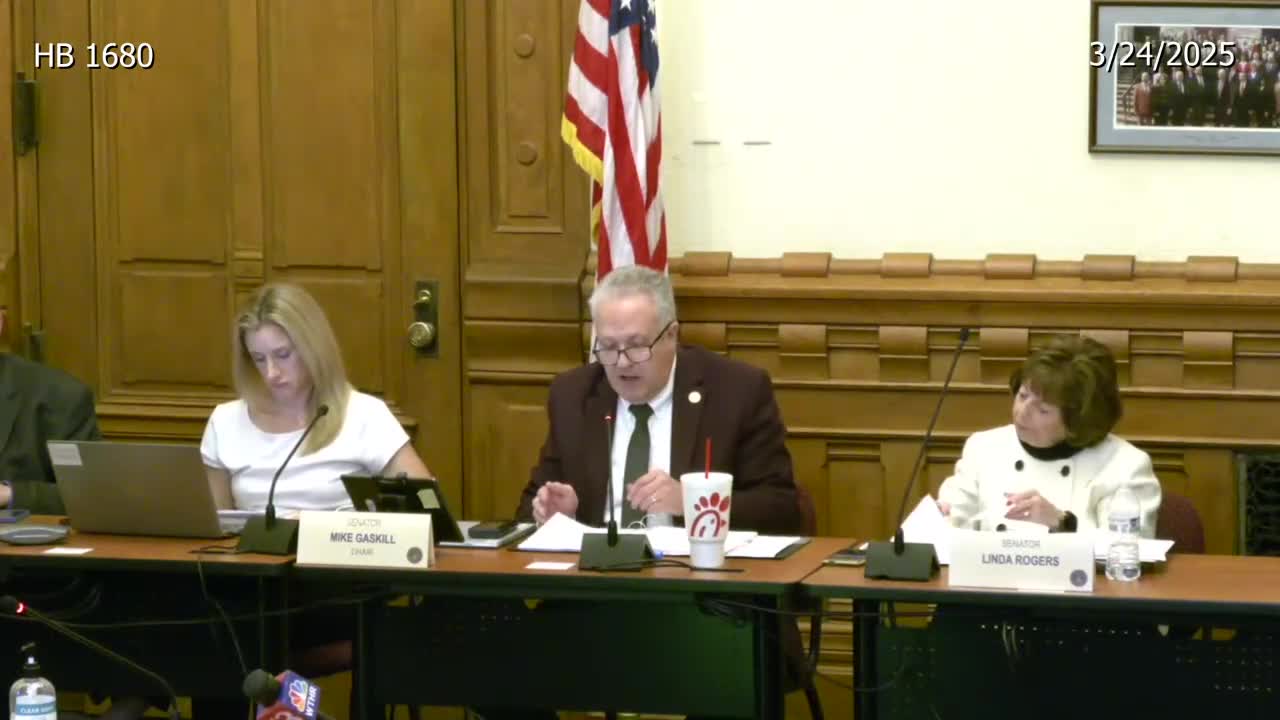
Panel debates broad election security, registration and absentee rules in House Bill 16‑80
Summary
House Bill 16‑80 contains multiple changes: county disclosure of IT providers, expanded challenger/observer mobility at vote centers, proof‑of‑citizenship notices tied to temporary credentials, prohibiting PO boxes as residence addresses, limits on registration assistance, procedural audits by the Secretary of State and stricter absentee envelope
House Bill 16‑80, labeled "Election Security and Transparency" in the synopsis read to the Senate Elections Committee, bundles numerous changes to registration, absentee and election‑day procedures and drew detailed opposition from voting‑rights groups and caution from bipartisan election administrators.
Sponsor language presented a multi‑part synopsis that includes requiring counties to submit information about their information‑technology providers to the Secretary of State; allowing poll book holders, challengers and watchers to enter, leave and reenter multiple polling places on election day (intended to accommodate vote centers); requiring counties to request proof of citizenship when a registrant used a temporary credential; prohibiting listing a post office box or commercially available mailing box as a resident's address; restricting pre‑filling of voter registration forms by third parties; permitting the Secretary of State to enter memoranda of understanding with other states to share voter‑registration data for maintenance; and allowing the Secretary to order procedural audits of county election procedures after an election.
Opponents — including Common Cause Indiana and the League of Women Voters — raised three primary concerns in testimony: (1) a proof‑of‑citizenship requirement aimed at people who used temporary credentials could disproportionately burden naturalized citizens and may conflict with federal law; (2) provisions limiting assistance to people filling out registration forms could harm voters with disabilities or limited English proficiency; and (3) an absentee‑envelope provision that would require an accurate date on a signature and leave no cure process risks improperly rejecting ballots.
"This provision likely violates federal law," Julia Vaughn of Common Cause told the committee about the proof‑of‑citizenship element, adding there is no evidence of widespread noncitizen registration. Barbara Tully of the League of Women Voters warned the PO‑box prohibition could disenfranchise unhoused voters who use a shelter or nonprofit address for mail.
Bipartisan election officials expressed operational concerns and sought clarifications. Angie Nussmeier, Democratic co‑director of the Indiana Election Division, said the proposal to let the Secretary of State conduct procedural audits would permit the office to select any county and audit past elections without the county election board or an underlying contest: "This allows the Secretary of State to cherry pick any of the 92 counties to perform a procedural audit, at any time," she said. Nussmeier also flagged the absentee envelope date rule and urged an opportunity for voters to cure errors.
Keegan Prentice and Brad King (Republican co‑director) representing the Secretary of State's Office and the Republican co‑director of the Election Division respectively said their offices support many provisions, including improved contact with county IT providers for cybersecurity, clarifying registration and challenger procedures for vote centers, and rules to prevent knowingly false petitions or registration forms from being accepted.
Committee members sought detail about safeguards for interstate data sharing MOUs, how assistance restrictions would be interpreted, and mechanisms for curing absentee envelope problems. Multiple witnesses urged amendments to add cure procedures for absentee envelopes and to limit burdens on citizens who naturalized but have not yet updated credentials at the Bureau of Motor Vehicles.
No vote was taken; the committee held HB 16‑80 for amendment and vote next week. The hearing record shows strong disagreement between voting‑rights advocates and the Secretary of State's office about the breadth of procedural authority and the potential voter impacts of some registration rules.