Get Full Government Meeting Transcripts, Videos, & Alerts Forever!
Get email alerts on the Consumer Products Gas Cans topic
No spam. Unsubscribe anytime.
Committee approves resolution urging return of vented gas cans
Summary
The Indiana Environmental Rules Committee voted unanimously to pass a nonbinding resolution urging federal lawmakers to consider restoring vented gas cans, with sponsor Senator Toms saying the cans were safer and more convenient for many users.
The Environmental Rules Committee unanimously passed a resolution urging lawmakers to support reinstating vented gasoline cans that Senator Toms said were removed from the market because of concerns about vapor emissions.
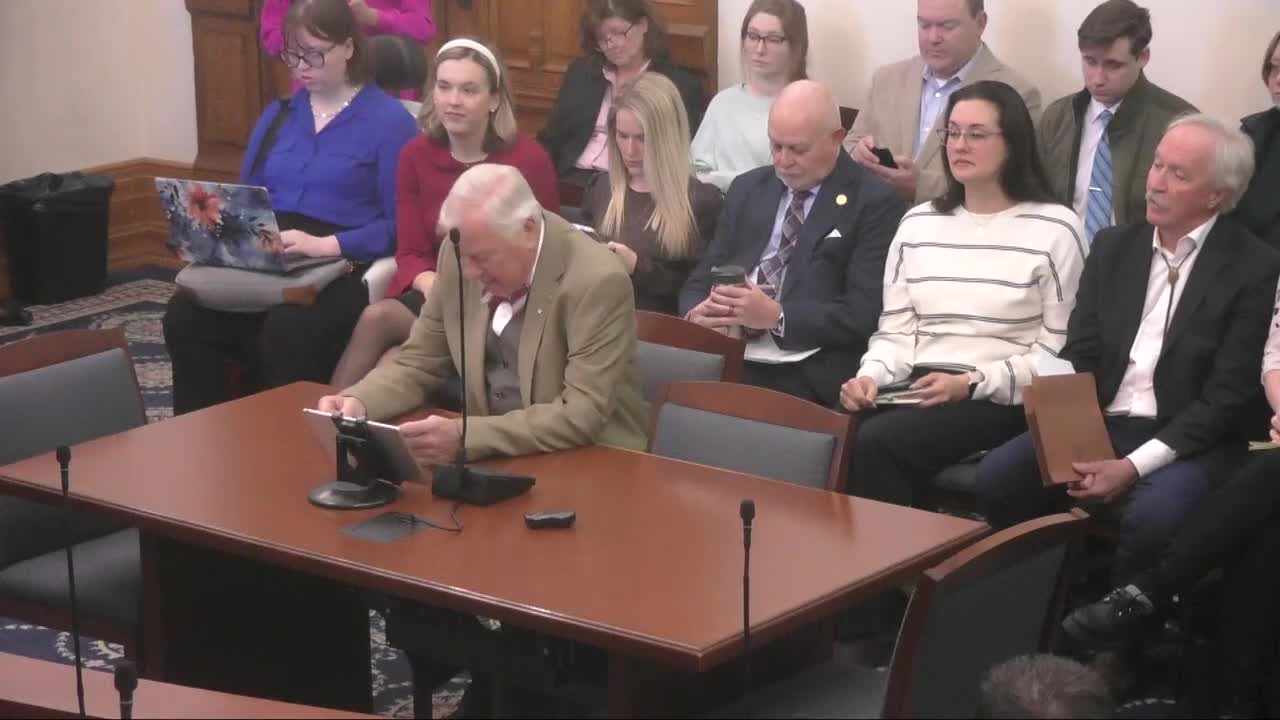
Senator Toms introduced the resolution during the committee meeting and described the vented gas can as a “trustworthy, reliable tool” that made everyday tasks—filling lawn mowers, chainsaws or helping a vehicle that had run out of gas—easier. “What I'm trying to do with this resolution is to get back something that worked very useful,” Toms said. “I'm hoping that if we get this resolution through, ... we get it in front of our congressional delegation.”
The sponsor tied the measure to a wider, largely symbolic campaign: he said he would distribute the resolution to Indiana's U.S. senators and hoped to send it on to the president. He referenced historical restrictions on similar products and argued the revised cans sold today are harder to use and more prone to spilling. “If you try to do it on your own, you probably won't pour the first 2 gallons on your shoes,” he said, describing the usability problems with current can designs.
Committee members offered brief remarks and then moved to a vote. The roll call recorded the committee's affirmative votes and excusals; the chair announced, “Resolution passes seven-zero.” The committee made no binding regulatory change; the resolution is a formal expression of the committee's position and does not change state or federal law.
The resolution's text and any steps for further transmission to Congress were not read in full at the meeting; the sponsor said he would present the full text on the chamber floor and expected additional supporters to sign on.
Votes at a glance: the committee recorded a 7-0 passage on the resolution; the transcript lists multiple “Aye/Yes” votes during the roll call and the chair declared the resolution passed unanimously.
The measure is nonbinding and advisory: it asks other branches and federal officials to consider the policy change rather than creating a new regulatory requirement in Indiana.
The committee moved to the next agenda item following the vote.