Get Full Government Meeting Transcripts, Videos, & Alerts Forever!
Bipartisan working‑group backs optional ranked‑choice voting for primaries and caucuses; lawmakers debate education and municipal options
Summary
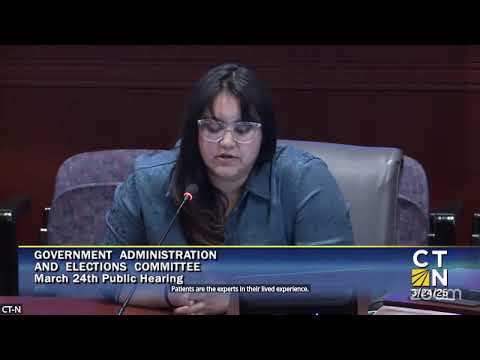
A bipartisan governor’s working group and dozens of witnesses urged the Government Administration and Elections Committee to let parties and municipalities opt into ranked‑choice voting for primaries, caucuses and presidential preference ballots, while members pressed for public education, municipal options and funding.
A multi‑partisan governor’s working group on ranked‑choice voting (RCV) recommended allowing party caucuses, conventions and primaries to opt into RCV; the committee heard extensive testimony supporting that approach and discussing implementation details.
Senator Tony Huang, co‑chair of the working group, told the committee the proposal is optional — parties and municipalities would choose whether to adopt RCV — and emphasized the need for public education and funding so the rollout avoids voter confusion and administrative missteps.
“Those three things — optional adoption, education, and funding — were the focal points of the working group,” Senator Huang said. Other co‑chairs and presenters, including former Secretary of State Miles Rapoport, Governor Lamont’s working‑group co‑chairs and municipal officials, described evidence from other states and cities that RCV can increase majority support for winners, reduce negative campaigning and expand viable choices for voters.
Why it matters: RCV changes how votes are tabulated (instant runoff in a single election cycle instead of separate runoffs) and can affect candidate strategy and turnout. Proponents said RCV can produce winners with broader support; skeptics raised questions about voter confusion, post‑count audits and how RCV would interact with Connecticut’s fusion/cross‑endorsement rules.
Key testimony and concerns - Working‑group endorsement: Senator Tony Huang, Senator Kathy Austin, and Vice Chair Monte Frank described eight public informational hearings and broad expert input; they recommended an opt‑in model for parties and primaries and urged funding for implementation and voter education. - Municipal option requested: Several municipal officials and town leaders urged adding a municipal general‑election option so towns that want to experiment with RCV can do…
Already have an account? Log in
Subscribe to keep reading
Unlock the rest of this article — and every article on Citizen Portal.
- Unlimited articles
- AI-powered breakdowns of topics, speakers, decisions, and budgets
- Instant alerts when your location has a new meeting
- Follow topics and more locations
- 1,000 AI Insights / month, plus AI Chat