Get Full Government Meeting Transcripts, Videos, & Alerts Forever!
Get email alerts on the Long Term Care Reform topic
No spam. Unsubscribe anytime.
Committee advances long‑term care bill after extended testimony on resident protections and staffing
Summary
Senate File 1918, a broad package of long‑term care reforms including limits on mandatory arbitration in assisted living, stronger anti‑retaliation measures, and clarifications on electronic monitoring and hospice rights, moved out of committee without recommendation after hours of testimony.
Senators voted to pass Senate File 1918 out of the Human Services Committee without recommendation and referred the bill to the Judiciary and Public Safety Committee after extended testimony from long‑term care advocates, providers and industry representatives.
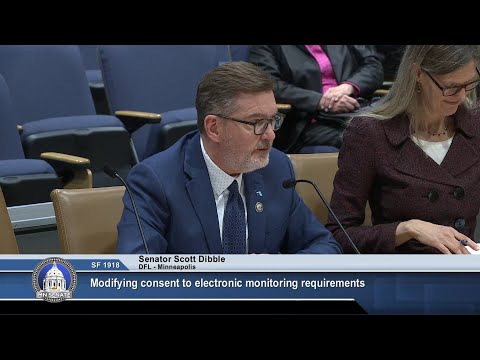
Senator Scott Dibble, the bill sponsor, described a multi‑topic measure that addresses nine areas of long‑term care law. Key provisions covered in committee testimony included: a prohibition on making arbitration agreements a mandatory condition of admission in assisted living facilities; strengthened protections against retaliation for residents and families who report concerns; rules clarifying when a health care agent can restrict visitation; and an attestation pathway for electronic monitoring when a resident lacks capacity.
Advocacy groups testified the bill is needed to protect resident rights and address reported gaps in care. Suzanne Scheller, legal adviser to Elder Voice Advocates, told the committee that assisted‑living arbitration agreements were being used as a condition of admission and said families and residents report retaliation when they speak up. Chris Sundberg, executive director of Elder Voice Advocates, cited federal inspection results and state civil monetary penalties when arguing for stronger accountability and higher fines.
Provider groups expressed concerns about some provisions. Kyle Berndt and Erin Hubert, representing the Long Term Care Imperative, opposed parts of the bill that they said could create redundant penalties, expand obligations without additional funding, or unintentionally exclude advanced practice registered nurses from assisted‑living definitions. They recommended additional technical revisions to avoid workforce impacts.
Committee members discussed hospice rights and the availability of pain medications, visitation disputes involving health care agents, and training and staffing implications. Senator Maquade and others urged careful drafting to avoid unintended consequences that could increase costs or reduce access to care in rural communities.
The committee adopted an A‑1 amendment and ultimately moved the bill to Judiciary and Public Safety without recommendation, allowing additional review and technical work to continue. Supporters and opponents said they expected further negotiations, and several members urged the bill’s authors and stakeholders to refine definitions and training language before further consideration.