Get Full Government Meeting Transcripts, Videos, & Alerts Forever!
Get email alerts on the Driver Medical Review topic
No spam. Unsubscribe anytime.
Committee adopts amendment to change medical-review rules for drivers with seizure history; bill moves to Ways and Means
Summary
The House Transportation Committee adopted a DE1 amendment to House File 639 that directs the Minnesota Commissioner of Public Safety to revise rules for drivers who have experienced loss of consciousness due to medical conditions. The amended bill was referred to the Ways and Means Committee.
The House Transportation Committee on March 24 adopted an author27s amendment to House File 639 and voted to move the bill to the Ways and Means Committee.
The amendment (DE1) restructures rulemaking directions to the Minnesota Department of Public Safety and adds a fiscal appropriation for rulemaking costs. Mr. Burris, a staff member who walked the committee through the amendment, said the changes "make technical structural changes to the direction given to the Department of Public Safety on the rulemaking" and that the amendment also clarifies that certain revised rules do not apply to some commercial driver27s license holders. The amendment adds an $11,000 appropriation for fiscal year 2026 from the driver and vehicle services operating account to cover rulemaking costs.
Representative Joy Murphy, who carried the bill, said the legislation would let the commissioner update existing rules about when physician review is required after a loss of consciousness caused by medical conditions such as epilepsy or seizure disorders. Under the proposal, a physician could confirm a person27s eligibility to drive without further periodic medical review if the person meets long-term stability criteria. Murphy described two paths: for a single event, a person who has been medication-free and event-free for five years and whose physician states they are no longer at risk would no longer be required to submit the periodic physician statement; for multiple events, the analogous stability period would be 10 years.
Testifier Jonathan Lemke described his own experience. "I have not had a seizure since May 2003 or almost 22 years. I've been off all anti seizure medication since October 2009," Lemke said. He told the committee that his neurologist released him from care in 2009 and does not require follow-up visits, but Lemke continues to be required to obtain and file a periodic physician statement. "I don't understand how requiring me every 4 years to have a neurologist fill out a form for a medical condition that I do not have and that he is not treating me for helps keep the driving public safer," Lemke said, adding that the visits impose co-pays and take clinicians27 time.
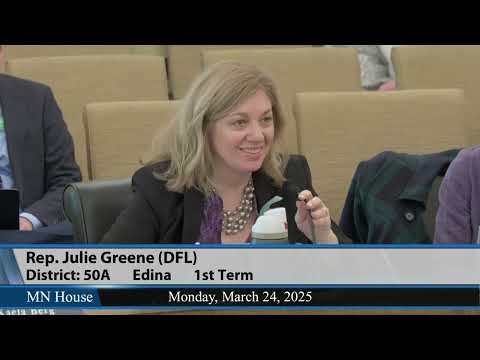
Representative Green asked whether being released by a neurologist meant the risk of recurrence was similar to the general population; Lemke replied, "Short answer, correct." Committee members raised no objections to the amendment.
The committee adopted the DE1 amendment by voice vote and then approved Representative Murphy27s motion to move House File 639, as amended, to Ways and Means.
If the bill proceeds, the Department of Public Safety would begin rulemaking under the updated direction and use the $11,000 appropriation for the administrative costs identified in the fiscal note.