Get email alerts on the Mental Health And Justice topic
No spam. Unsubscribe anytime.
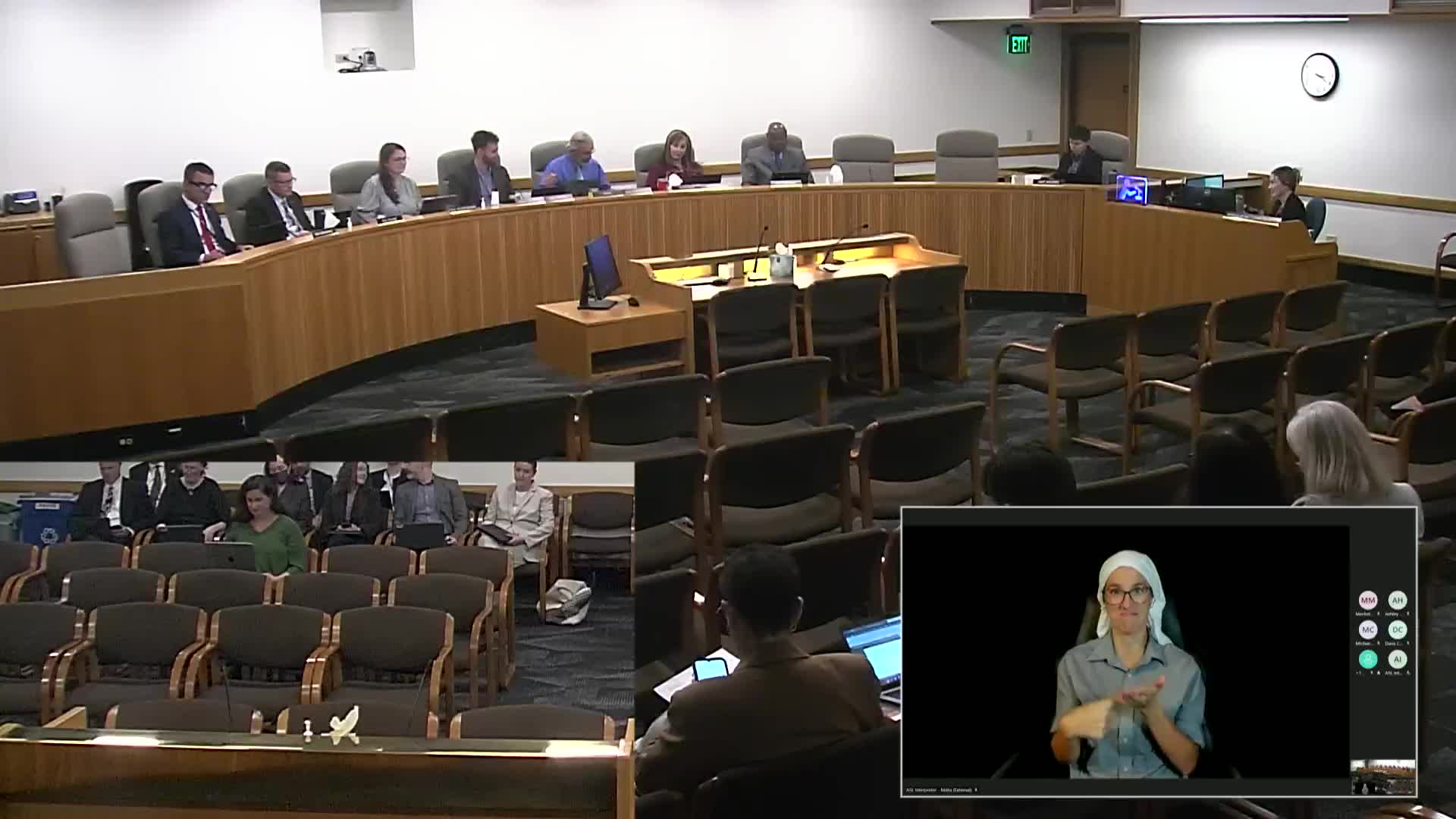
Public testimony split as Senate Judiciary holds hearing on shortening maximum commitments for those found GEI
Summary
The Senate Judiciary Committee on March 24 heard sharply divided testimony on Senate Bill 1114, which would shorten the maximum period of commitment for people found guilty except for insanity (GEI) in some cases and provide a post-conviction relief process for people adjudicated GEI before the bill’s effective date.
The Senate Committee on Judiciary held a public hearing on Senate Bill 1114 on March 24, hearing competing testimony from patients, defense advocates and victims about a proposal to shorten the maximum period of commitment for individuals found guilty except for insanity (GEI).
Staff opened the hearing by describing SB 1114 as a measure that would reduce the maximum time a person found GEI may be committed to a state hospital or conditionally released — from the maximum sentence of the crime to the presumptive sentence under sentencing guidelines in certain circumstances — and establishing a post-conviction relief process for persons found GEI before the bill’s effective date.
Supporters who spoke in person or remotely included people currently or formerly under Psychiatric Security Review Board (PSRB) jurisdiction and defense advocates. Maylene Browning, legislative director for the Oregon Criminal Defense Lawyers Association, told the committee the bill addresses “an issue that we’ve long wanted to see addressed,” saying GEI commitments can exceed the sentences a person would have received through the ordinary criminal process. Two people who identified themselves as current or former PSRB clients described long stays, recovery and readiness for community reentry: Michael Reed said he could be kept under PSRB jurisdiction into his 50s because of a measure-11 maximum he described as disproportionate to the facts of his case; Ashley Hunt described being told she would be released quickly after a GEI plea but instead receiving a 20-year PSRB sentence.
Reverend Luke Walters, who said he has spent many years under PSRB supervision, urged the committee to recognize that “full recovery is real.” Witnesses who supported the bill asked for clearer alignment between GEI jurisdiction lengths and sentencing guidelines in nonviolent cases and for more transparent information to defendants considering a GEI plea.
Opponents included the Multnomah County District Attorney’s Office (represented by Senior Deputy District Attorney Melissa Marrero) and a representative of the Oregon District Attorneys Association (ODAA). The DA’s office said GEI adjudication is not a conviction and that current PSRB jurisdiction is based on clinical determinations of whether a person remains affected by a qualifying mental disorder and whether they pose a substantial danger. ODAA cautioned the bill’s look-back provision could allow many currently supervised individuals to seek relief and potentially be discharged before PSRB clinical findings supported release; the witness cited PSRB’s on-record jurisdiction population of 588 individuals and urged the committee not to weaken public-safety protections.
A victim represented by Dana Cline described a 2018 attack that seriously injured her daughter and said the family relied on the secure treatment and oversight PSRB and the Oregon State Hospital provided; she told the committee the prospect of early release was “gut-wrenching and terrifying.”
Committee members did not vote on the bill in the hearing; the chair closed the public hearing and encouraged witnesses to submit written testimony into the legislative portal. Several senators asked that written statements be placed in the record.
AI generated
The text on this page is AI generated. Summaries, highlights, analysis, and video transcripts are all produced from the original source material.
AI can make mistakes, so if you spot one, and we will fix it for everyone.
Note: the source content is unaltered by us. Any content source we link to, be it a video, an audio recording, or a document, is presented exactly as its publisher released it. That publisher is usually a government body, sometimes an individual official or another organisation.