Get Full Government Meeting Transcripts, Videos, & Alerts Forever!
Get email alerts on the Crisis Response Reform topic
No spam. Unsubscribe anytime.
Committee advances resolution honoring crisis‑negotiator David Meyer
Summary
The House Rules Committee heard testimony in support of House Concurrent Resolution 29, honoring the late Lieutenant David Meyer for his work changing crisis response practices in Portland and across Oregon; the committee advanced the resolution to the floor with a B adopted recommendation.
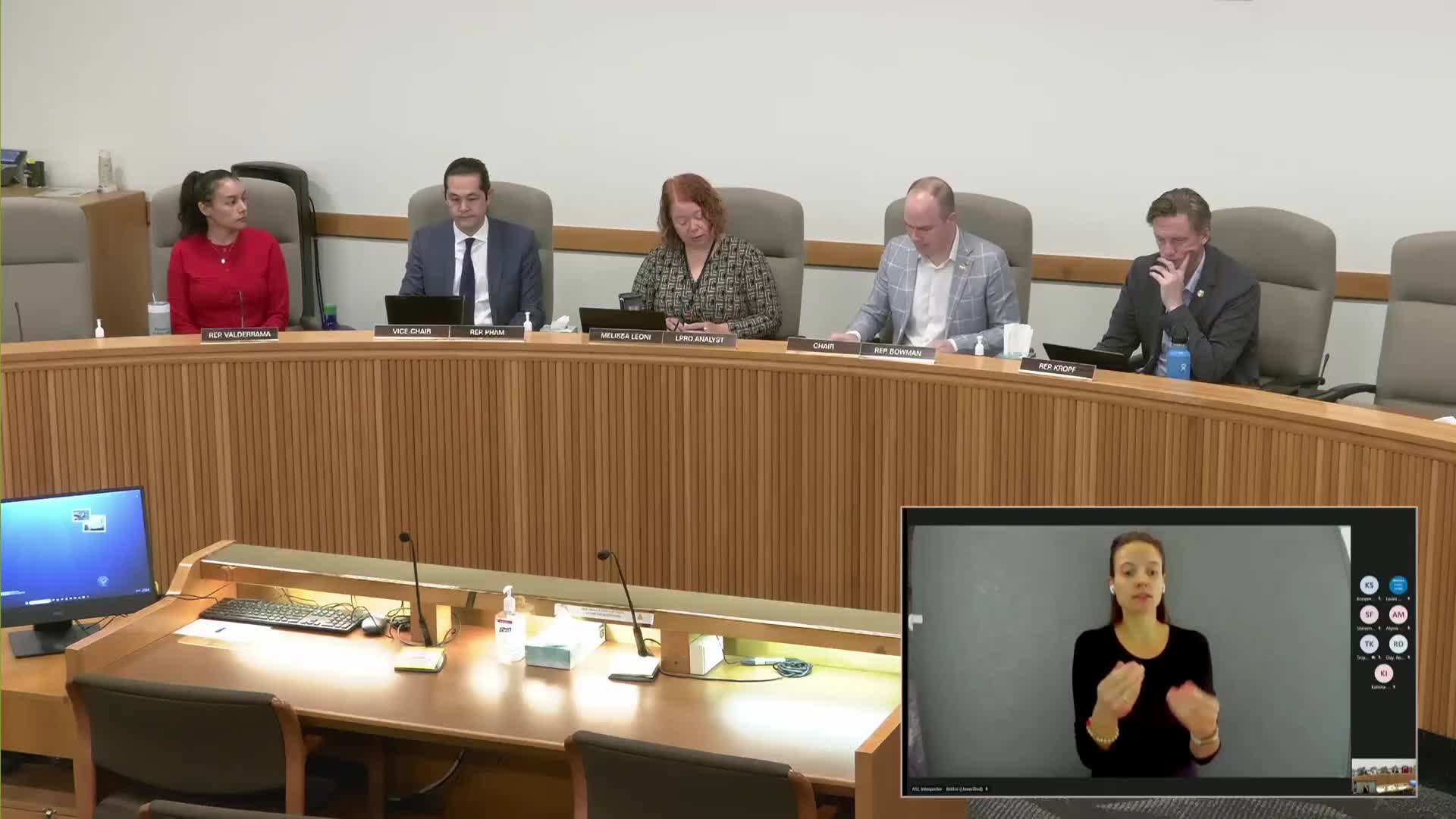
The House Rules Committee held a public hearing March 24 for House Concurrent Resolution 29, which honors the life and career of David Todd Meyer (1967–2024) and recognizes his contributions to crisis response and de‑escalation training.
Representative Jeff Helfrich (R‑House District 52) testified he had worked with Meyer and described Meyer's role in reshaping mental‑health crisis response, saying Meyer "asked, why? Why respond to suffering with confrontation instead of care?" Troy King, a retired Portland police officer who trains crisis negotiators nationwide, told the committee Meyer's approach has influenced agencies across the country.
Alyssa Meyer, identified in committee testimony as David Meyer's daughter, spoke about her father's personal qualities and public service. Robert (Bob) Day, identified as Chief Robert Day, provided a historical perspective on Portland's hostage/crisis negotiation team and credited Meyer with shifting the team's focus and training approach so that negotiators and tactical teams coordinate and the crisis negotiation team often drives incident response to allow time for de‑escalation.
Committee staff noted a fiscal impact statement that HCR 29 carries "no fiscal and no revenue impact." Vice Chair Pham moved to advance the resolution; the roll call recorded several affirmative votes with a number of members excused. Chair Bowman announced, "Aye. Motion is adopted. Representative Helfrich will carry that one as well." The committee closed the work session and advanced HCR 29 to the House floor.
Testimony presented the resolution as recognition of Meyer's influence on both officer safety and outcomes for people in crisis; witnesses characterized his reforms as having shaped statewide and national practice in crisis response and negotiation.