Get Full Government Meeting Transcripts, Videos, & Alerts Forever!
Get email alerts on the Wildlife Management topic
No spam. Unsubscribe anytime.
Debate over livestock and community protection districts: supporters cite local control, opponents warn of lethal federal wildlife-services practices
Summary
House Bill 2403, which would authorize voluntary livestock and community protection districts to fund local predator-management services, drew hours of pro and con testimony in committee on March 24.
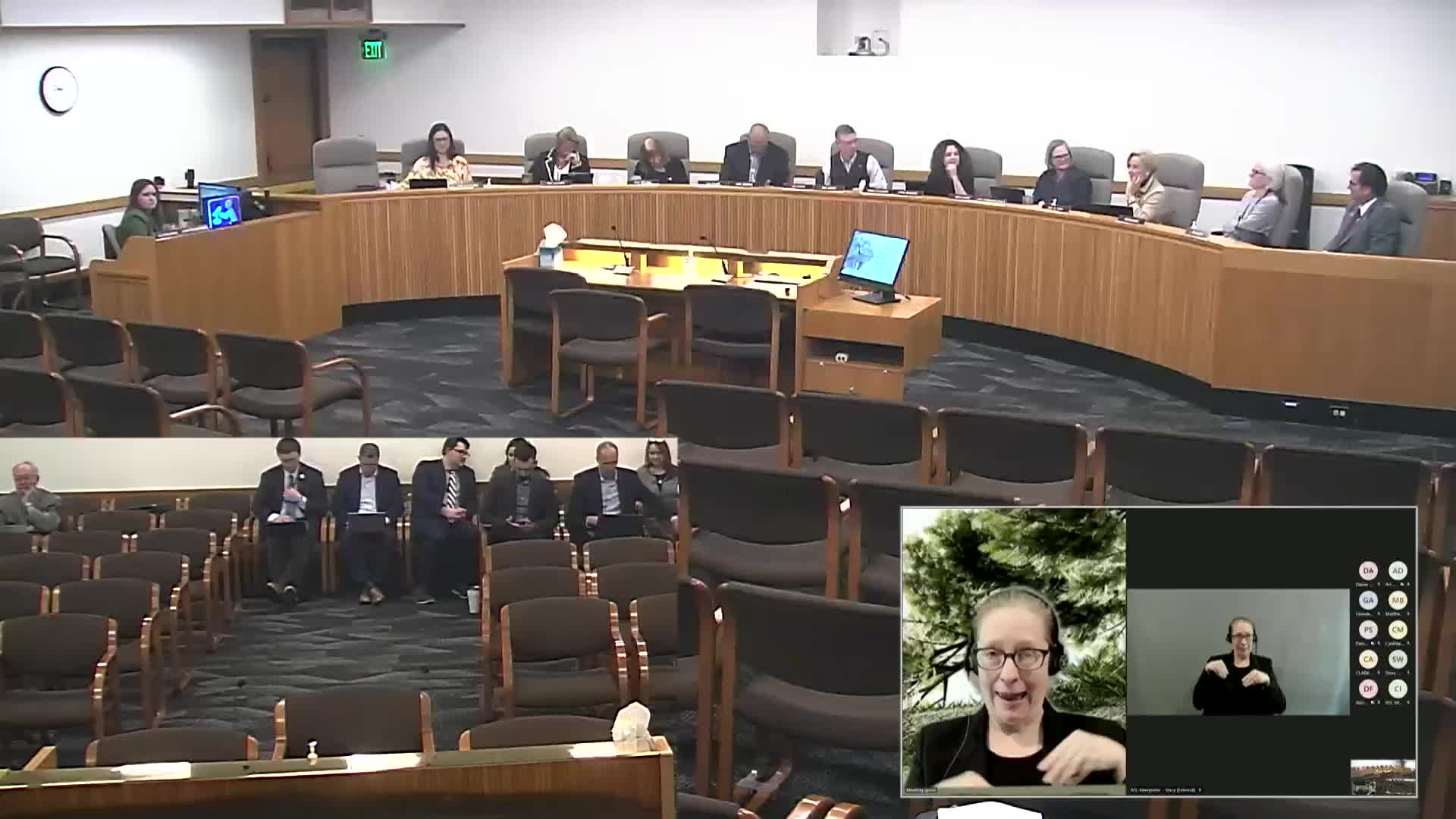
House Bill 2403 drew a lengthy public hearing March 24 in the House Committee on Agriculture, Land Use, Natural Resources and Water. The bill would authorize voluntary local formation of livestock and community protection districts (sometimes called predator-control districts) that could assess landowners who opt in to raise funds for services that prevent, reduce, and mitigate animal damage to property and livestock.
Why it matters: The measure addresses growing conflicts between rural landowners and wildlife and would restore an option that lapsed after the legislature allowed voluntary predator districts in 2015 and did not renew the program in 2022. Proponents say local funds and locally governed programs will let counties contract for professional services (including both nonlethal and lethal methods as permitted by law). Opponents said the measure would enable further funding of the U.S. Department of Agriculture’s Wildlife Services program, which they said relies heavily on lethal and inhumane techniques.
What happened in committee
- Sponsors and supporters — including Rep. Todd Nash (Senate District 29 introduced in committee by sponsors), Representative Bobby Levy, the Association of Oregon Counties, Oregon Farm Bureau, the Oregon Hunters Association and farm families — testified in favor and described local losses to livestock and crops. Several witnesses said federal Wildlife Services staffing and funding had declined and that counties need local tools to address on-the-ground conflicts.
- Opposition testimony came from Humane Voters Oregon, Oregon Wildlife Coalition, and Humane Society/Wildlife program staff, who urged rejection. Witnesses cited Wildlife Services’ historical use of traps, snares, aerial gunning and den-gassing and argued the bill lacks requirements prioritizing nonlethal measures and oversight of how district funds would be spent.
- Neutral testimony: The Oregon On-site Wastewater Association registered neutral and urged caution about statutory changes being applied broadly.
Key clarifications from testimony
- Formation criteria noted in prior versions: a district requires at least 10 landowners encompassing at least 10,000 acres (testimony cited the standard used previously in the law).
- Definition changes: Testimony and sponsors noted the bill uses the predatory-animal list in ORS 497.655 and adds bears; the bill explicitly excludes beavers and game birds from district authority.
- Use of funds and agencies: Proponents expect districts to contract for professional services to provide education, nonlethal deterrents and, if necessary and lawful, targeted lethal removal. Opponents argued the funds would institutionalize Wildlife Services’ lethal methods without a requirement to prioritize nonlethal approaches first.
Representative comments and examples
- Matthew Brady, a fifth-generation producer, described livestock losses and said he relied on Wildlife Services field agents when his flock experienced multiple depredation events.
- Brian Posowitz of Humane Voters Oregon said the bill would likely fund Wildlife Services, which in recent years reported thousands of animals removed in Oregon; he said the program “overemphasizes the killing of wildlife” and cited aerial gunning, neck snares and den gassing as concerning methods.
- Lauren Kenzie of the Oregon Farm Bureau said federal Wildlife Services funding and staff are declining and that voluntary districts are a locally controlled mechanism for producers to solve real financial losses; she emphasized nonlethal tools but said the districts should have the ability to contract for services that work in each situation.
Next steps: The committee took testimony but did not advance the bill out of committee that day. Sponsors asked the committee to consider the voluntary model as a locally controlled option to respond to wildlife-livestock conflicts while advocates urged a broader stakeholder process on humane, effective alternatives.
Ending: The public record showed sharply divided views between rural producers seeking locally funded services and animal-protection groups calling for statutory safeguards and prioritization of nonlethal, scientifically supported measures.