Get Full Government Meeting Transcripts, Videos, & Alerts Forever!
Get email alerts on the It Projects topic
No spam. Unsubscribe anytime.
Oregon Revenue Agency pivots to in‑house rebuild after vendor fails to deliver 'Elvis' industrial valuation system
Summary
Department of Revenue officials told the General Government Subcommittee they will abandon their external vendor and use the Gentax platform and internal staff to complete the Electronic Valuation Information System ("Elvis"), keeping the $14 million appropriation but extending the schedule and shifting resources.
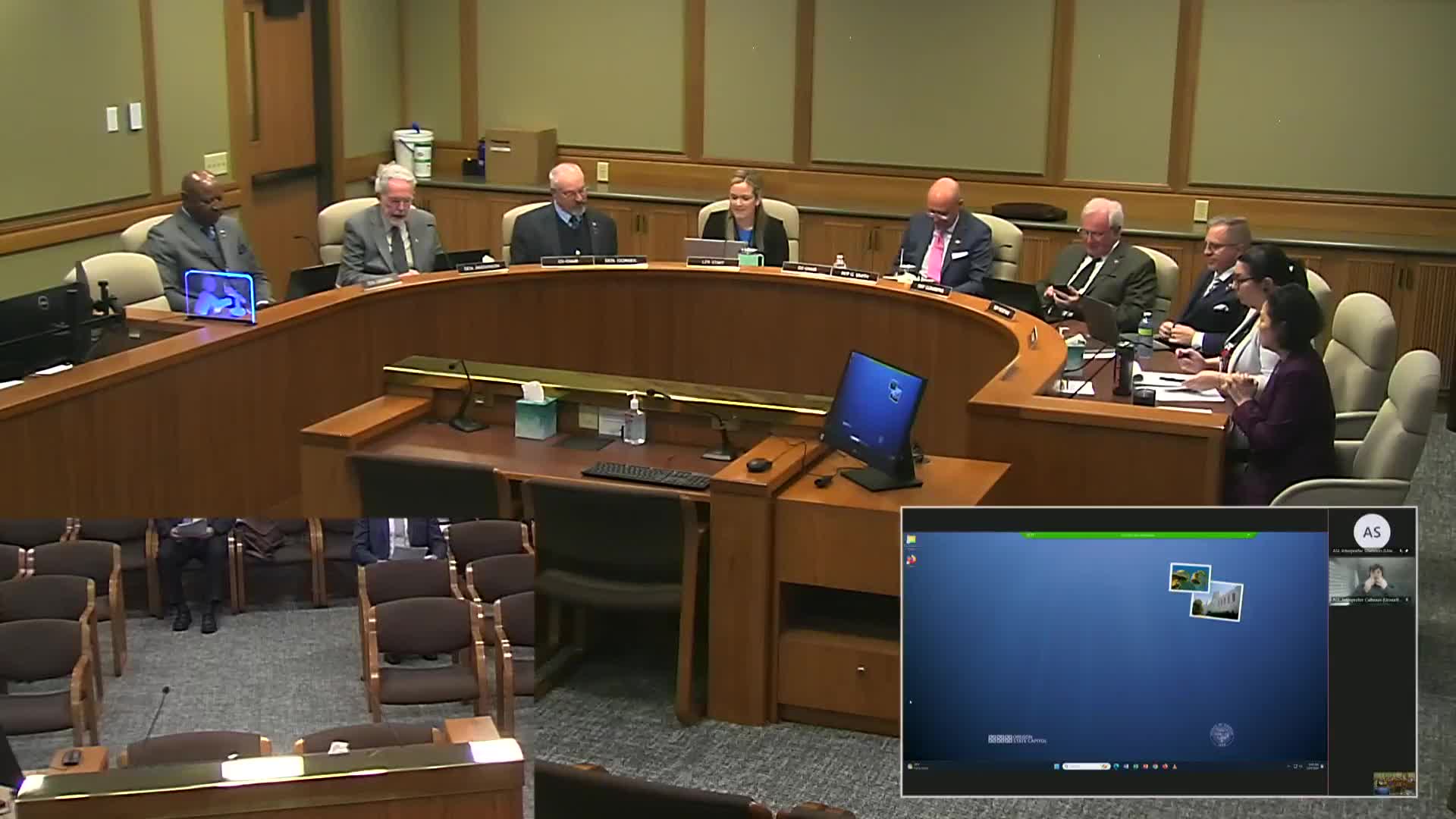
Betsy Einholt, director of the Oregon Department of Revenue, told the General Government Subcommittee on March 24 that the department is abandoning its external vendor and will rebuild the second phase of the Electronic Valuation Information System, known as Elvis, on the agency's existing Gentax platform using in‑house staff.
The update matters because Elvis is intended to automate valuation of industrial property — a process the department says affects more than 800 sites and generates roughly $800 million in tax revenue per biennium for counties — and the shift affects project timing, staffing and contract resolution.
Einholt told the committee Elvis is the final piece of a decade‑long IT modernization effort. Brahm Ekstrand, property tax division administrator, described the industrial valuation work Elvis is meant to support: the division values both real and personal property for industrial sites, tracking potentially hundreds of thousands of individual assets at large facilities and producing values that counties use to bill taxpayers. "Elvis will be instrumental in centralizing the data as well as providing much needed automation to what is currently an entirely manual process," Ekstrand said.
John Dolan, chief information officer for the Department of Revenue, said the Elvis project consists of two parts. The central assessment portion was funded by a 2021 legislative appropriation of $4.2 million and was implemented on Fast Enterprises' Gentax system; that phase was completed on time and under budget in 2023. The second part — the industrial property valuation system — was approved by the 2023 Legislature with a $14 million appropriation and originally contracted to a different vendor.
Dolan said the vendor missed a major September 2024 deadline, failed to meet the planned January go‑live, and produced an increasing number of quality problems. "By January 2025 it was clear that we needed to go in a different direction. We parted ways with the vendor and pivoted to our contingency plan," Dolan said. The department stopped future vendor payouts when it became clear the vendor would not meet obligations.
Under the pivot, which Dolan called "plan B," the department will leverage work already completed and build the needed functionality inside Gentax with internal staff. Dolan said the budget for the industrial portion remains $14 million overall; the department has spent $6.9 million to date and reported roughly $5.4–$5.5 million paid to the vendor in question. The revised schedule targets delivering the functionality needed to process annual industrial returns for the 2026 tax season by January 1, 2026, with phase 2 (on‑site appraisal processes) by December 2026.
Dolan said plan B will require three additional full‑time equivalent positions drawn from existing internal personnel, and that several smaller modernization projects (LegOps, an access‑control project called RCA, and certain finance automations) will be deferred until after January 2026 while staff focus on Elvis. He said the Elvis project will remain a level 3 oversight project under the EIS/LFO stage‑gate process, with independent quality assurance and monthly reporting; the department plans to extend the QA contract through 2026 to match the revised schedule.
Committee members asked about contract remedies and next steps. When asked if the contract included penalties for missed dates, Dolan said he was not aware of pecuniary penalty provisions in the contract but confirmed the department halted vendor payments and is negotiating contract termination terms with assistance from the Oregon Department of Justice. "We are in discussions with the vendor right now to terminate the contract and are working on the terms of that," Dolan said.
Members also pressed whether intellectual property or integration restrictions would hinder the in‑house rebuild. Dolan said the department had been "very clear about IP on the project" and that no integrations had been written that would prevent the department from completing the work internally.
Officials told the committee they will complete a root‑cause analysis and a third‑party "lessons learned" review to inform future procurements and contract language. The department said it will provide follow‑up reports to the subcommittee and share contract‑termination outcomes once negotiations conclude.
Officials did not present any formal votes or motions during the informational hearing. The department emphasized schedule and budget continuity (the $14 million appropriation remains) while acknowledging the project timeline will extend and staffing and deliverable sequencing will change.
The department also reminded members that a public tour of the Department of Revenue processing center was scheduled for March 25 at 7:45 a.m.; attendees were asked to bring photo ID for check‑in.