Get Full Government Meeting Transcripts, Videos, & Alerts Forever!
Get email alerts on the Public Safety Fire topic
No spam. Unsubscribe anytime.
Harrisburg fire chief details 2024 workload, staffing changes and federal reimbursements
Summary
Chief Enerlein presented the Bureau of Fire's 2024 year-end report, citing 3,516 calls, 281 fire incidents, an average response time of 4:56, recruitment to fill vacancies, multiple retirements and federal reimbursements for Task Force deployments.
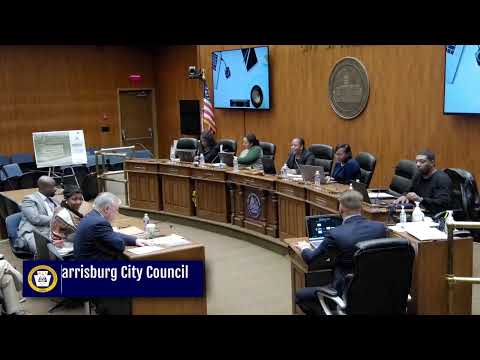
Harrisburg Fire Bureau Chief Enerlein presented the bureau's 2024 annual report at the March 24 legislative session, summarizing staffing, call volume, grants, mutual-aid activity and reimbursements for interstate deployments. The chief outlined recruitment to fill vacancies, recent retirements, equipment purchases and a significant number of mutual-aid responses to neighboring jurisdictions.
Chief Enerlein reported that the bureau's complement as of Dec. 31, 2024 was 93 firefighters with seven vacancies at year end; seven recruits had entered the academy two weeks before the meeting and were expected to be on the street by mid-June 2025. The bureau recorded six retirements in 2024; three resignations also occurred. On call volume, the bureau responded to 3,516 incidents in 2024, of which 281 were fire-related incidents. Average response time for city incidents was reported as 4 minutes, 56 seconds.
The chief described a persistent operational cost: false alarms and false calls accounted for about 26% of calls. He said the bureau is implementing a new records-management system that will require self-reporting from alarm-service providers and could help reduce repeat false-alarm activity.
Chief Enerlein reviewed grants and reimbursements. He said the bureau spent approximately $12.67 million running the bureau in 2024 against a $13.39 million budget and noted reimbursements tied to Pennsylvania Task Force 1 deployments: a $150,910.63 reimbursement related to one deployment and a larger reimbursement of approximately $290,077.79 tied to Hurricane Helene. The chief said those federal reimbursements offset overtime and deployment costs and that the city expects additional reimbursements from other 2024 storm responses.
Equipment and training updates included in-house annual hose and ladder testing, replacement of breathing apparatus components, purchases funded by State Fire Commissioner awards and planned purchases of new dry suits and a utility terrain vehicle (UTV). The bureau placed three new fire apparatus in service in 2024, including Tower 1 and Wagon 3; Deputy Chief and crews were arranging warranty inspections and finalization for one apparatus.
Chief Enerlein flagged two fire fatalities in 2024 and described ongoing work with building codes and housing to address illegal clubs, boarding houses and condemned properties that complicate emergency response. Mutual aid provided by Harrisburg to neighboring municipalities was high: the bureau provided 522 mutual-aid responses in 2024, with Swatara Township and Steelton among the largest users of city aid.
Council members thanked the chief for his presentation and asked follow-up questions about ambulance response (ambulance services are provided by Community Life Team EMS/UPMC and do not accompany every fire response), overdose response (police carry naloxone; most firefighters are EMTs), and the bureau's training and adoption of new technology. The chief said the department is approaching use of artificial intelligence cautiously and emphasized investments in training consistency across platoons, which he said has improved since creating a deputy chief of training position.
No formal council action was taken on the report; the presentation was received for the public record and will be published on the city website with redactions as required.