Get Full Government Meeting Transcripts, Videos, & Alerts Forever!
Get email alerts on the Juvenile Special Education topic
No spam. Unsubscribe anytime.
ODE outlines juvenile-detention education and special-education supports, including IDEA and vision programs
Summary
Department presenters described the Juvenile Detention Education Program and Youth Corrections Education Program, their instructional alignment with districts, and summarized state roles in administering IDEA funds and vision/visual-impairment supports.
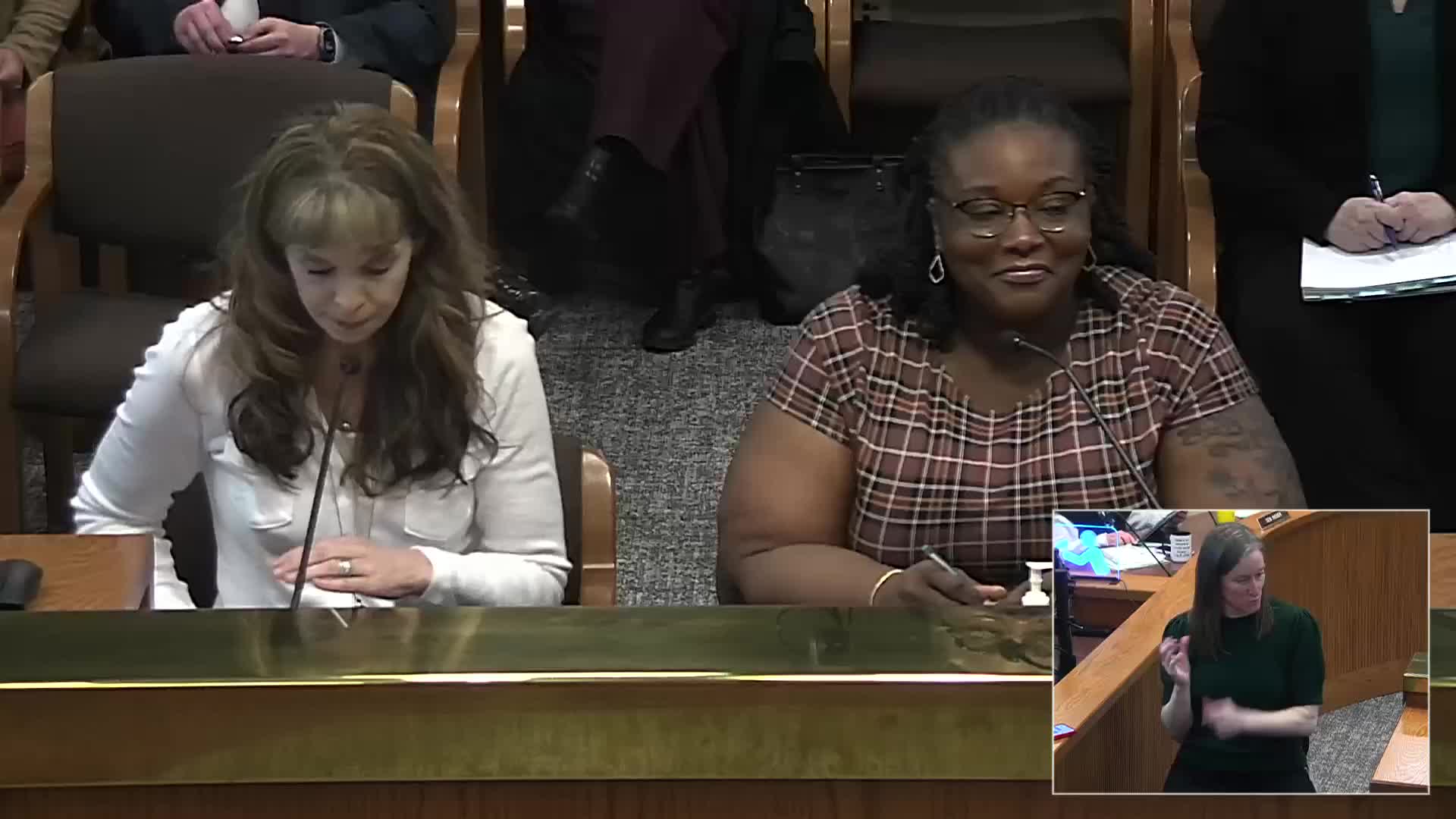
Oregon Department of Education officials briefed the Education Subcommittee on March 24 about educational programs serving students in juvenile detention and the state’s responsibilities for special education funding and services.
Ramonda Olaloye, assistant superintendent for the Office of Enhancing Student Opportunities, resumed the presentation on the Juvenile Detention Education Program (JDEP) and the Youth Corrections Education Program (YSEP). She said JDEP funds schooling for students housed overnight in county-operated juvenile detention facilities and includes reentry transition specialists to connect students with education or workforce preparation after exit. Olaloye said many students entering the programs have been truant and that enrollment and transition supports are critical for long-term success.
Committee members asked about instructional alignment and duration. Olaloye said programs aim to align instruction with students’ home districts and, by statute, roughly 5.5 hours of education should be provided per day; in practice instruction often averages about 2.5 hours per day depending on student needs.
On special education, ODE staff explained the state’s role under the Individuals with Disabilities Education Act (IDEA). The department allocates annual federal IDEA funds based on federal formulas and monitors maintenance-of-effort (MOE) requirements. Elliott and other presenters said the current statewide special-education service-level (CSL) cited in the presentation is $245,000,000 and that districts must maintain prior-year state spending levels to avoid potential reductions in federal funds.
ODE also described the blind and visually impaired student fund, which supports Teachers on Special Assignment, Braille and accessible-material services, and conference support for teachers of students with visual impairments. Presenters noted vision screening reimbursement programs to detect common vision issues early and improve classroom participation.
Committee members pressed about licensed-teacher coverage in juvenile-detained classrooms and grant reporting for special-education services. ODE staff said they would follow up with additional detail on staffing and that IDEA compliance, IEP development and federal fiscal requirements remain the responsibility of local districts with state oversight and the allocation of federal funds.
The presentation was informational; no formal actions or votes were taken.