Get Full Government Meeting Transcripts, Videos, & Alerts Forever!
Get email alerts on the School Facilities topic
No spam. Unsubscribe anytime.
ODE details school facilities grants, broadband fund and new statewide facility assessments
Summary
ODE officials described the TAP grants, the Oregon School Capital Improvement Matching Grant ("AWESOME"), the Connecting Oregon Schools Fund for broadband, school safety technical assistance and an accelerated statewide facilities assessment.
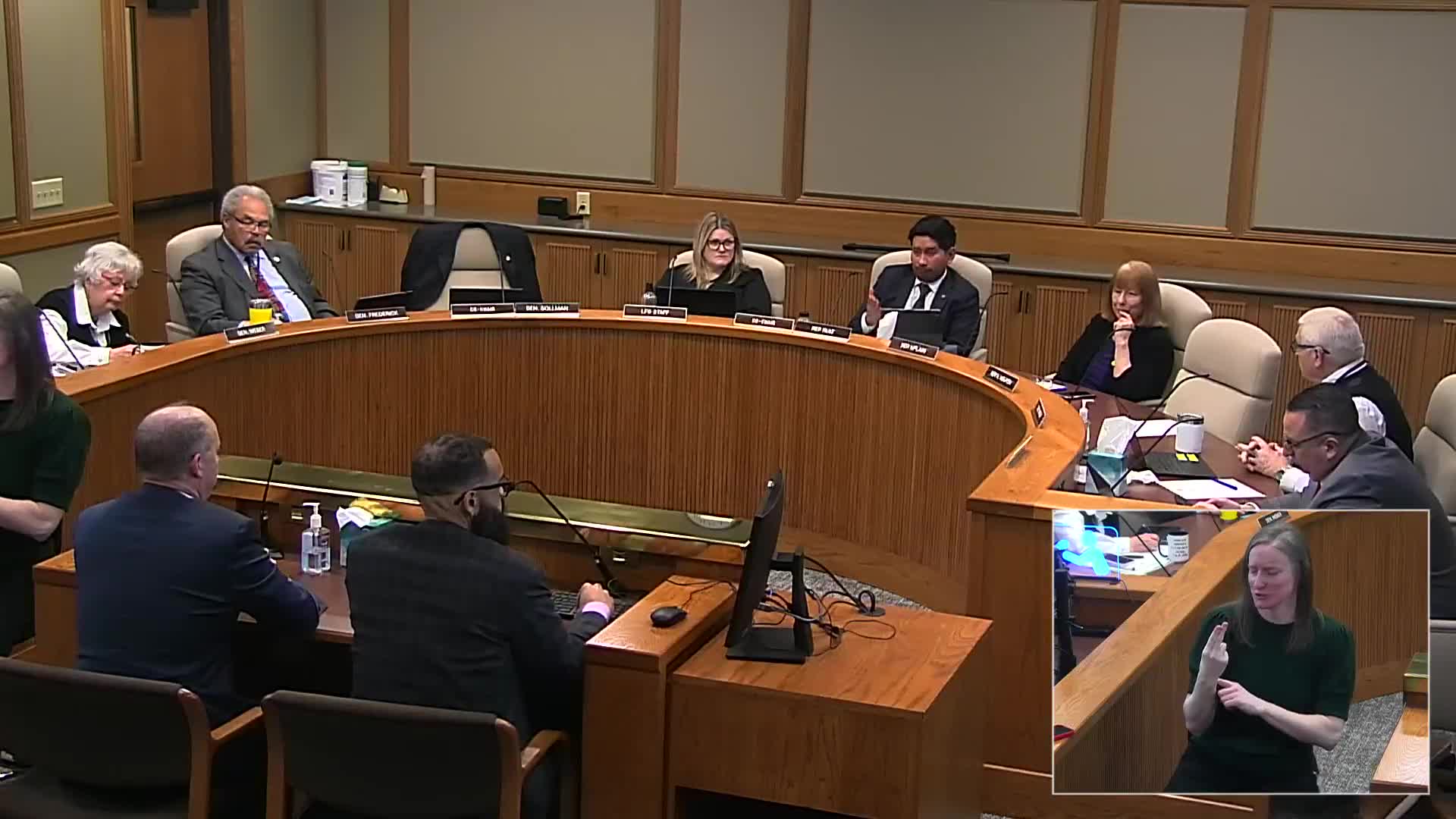
Oregon Department of Education staff told the Education Subcommittee on March 24 about several facility programs that aim to help districts repair buildings, improve safety and expand broadband to schools.
Michael Elliott and colleagues outlined the technical-assistance program (TAP), which offers planning grants to districts — long-range facility plans and facility assessments capped at $40,000 each, seismic-assessment grants up to $25,000 and asbestos-hazard assessments up to $25,000. Elliott said TAP grants are prerequisites for the larger Oregon School Capital Improvement Matching Grant (commonly called the AWESOME program).
The AWESOME program provides state matching grants to districts that pass local general-obligation bonds, with matching awards up to $12 million and a formula that prioritizes districts with lower assessed value per student, higher poverty and lower ADMW. Elliott said the department is seeking $108.9 million in Article XI-Q general obligation bonds in the governor’s recommended budget, and additional lottery funding could raise the program total in the 2025–27 biennium.
ODE also described the Connecting Oregon Schools Fund (COSF), a bond-funded program that offers state matching funds to help districts take advantage of federal E‑Rate special construction funding administered by USAC. The goal is to achieve near-zero construction cost to districts by combining federal and state matches; ODE is also using program funds to cover E‑Rate consultant fees and to provide gap funding for districts with lower federal discount rates.
School safety and emergency management was presented as a technical-assistance program (not a grants program) that provides regional coordinators and consultants to help districts build and exercise emergency operations plans. The program is funded through a carve-off of the State School Fund and supports field coordinators and travel.
The department reported it has begun a statewide facility assessment of roughly 5,000 education facilities, accelerated with federal Supporting America’s Schools Infrastructure funds, with the goal of finishing the first round by mid‑2026. The assessment is intended to quantify deferred maintenance statewide to guide future funding decisions.
On environmental health, ODE described ongoing lead-in-water testing under the Healthy and Safe Schools program. The department has tested about 25,000 samples so far in a six‑year cycle, receives EPA grant funding and provides districts $40 per sample to help cover collection and administrative costs. ODE also said it has Wind (WIFIA-like) federal funds available to help districts remediate fixtures that test above the 15 parts-per-billion level.
Committee members asked about grant calculation, prioritization, and the timeline for construction projects. ODE acknowledged program timelines and federal processes can take multiple years and that they are refining prioritization and match formulas to increase equity.