Get Full Government Meeting Transcripts, Videos, & Alerts Forever!
Get email alerts on the Urban Reserves topic
No spam. Unsubscribe anytime.
City officials and conservation groups debate SB 11‑29 changes to urban reserve prioritization
Summary
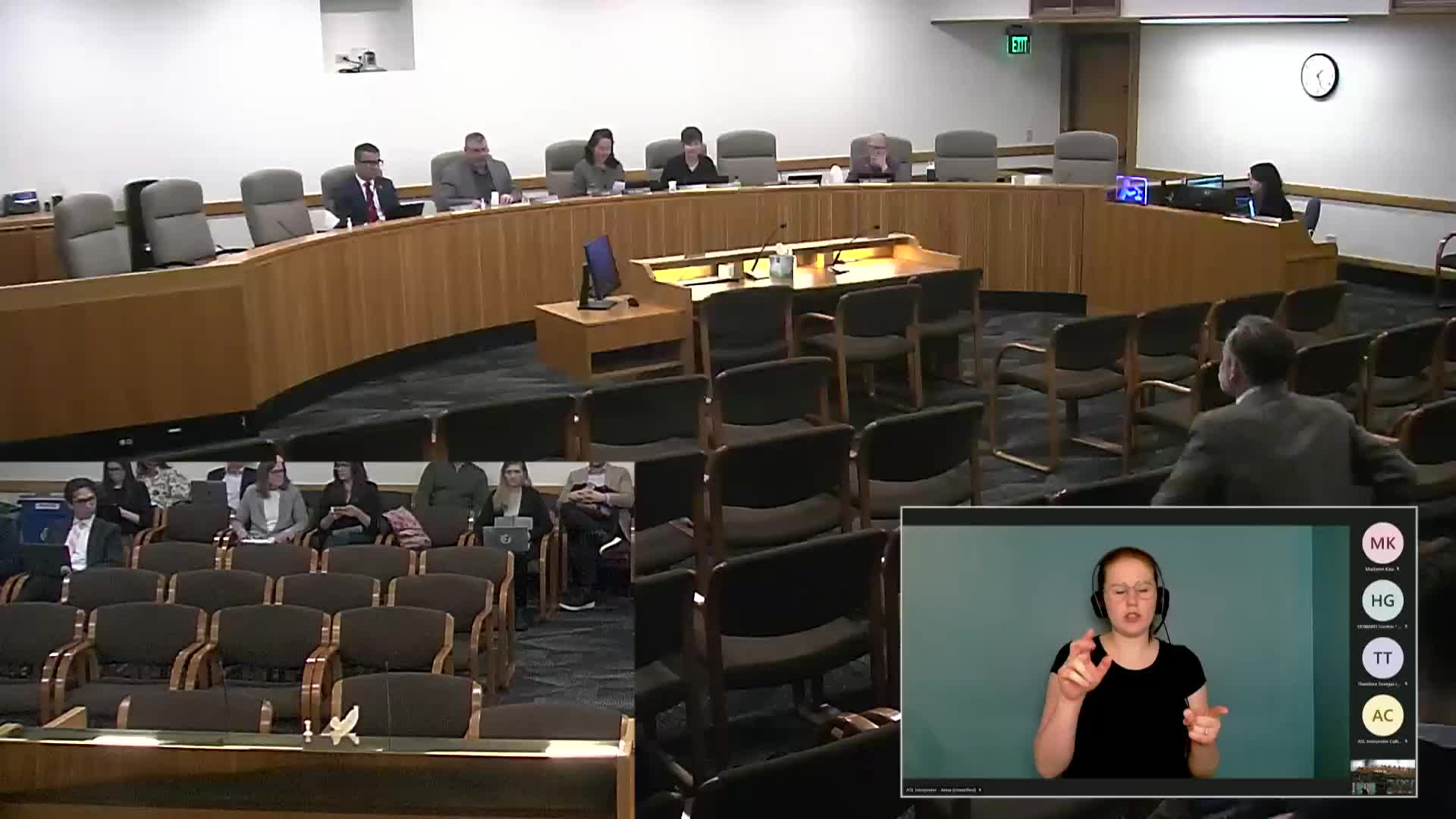
At a March 24, 2025 public hearing, the committee heard testimony on SB 11‑29, a bill directing changes to how the Land Conservation and Development Commission prioritizes land for urban reserves; speakers disagreed on whether the concerns should be addressed by statute or through DLCD rulemaking.
Senate Bill 11-29 was the subject of a public hearing on March 24, 2025, before the Senate Committee on Housing and Development. The bill would direct the Land Conservation and Development Commission (DLCD) to amend administrative rules to prioritize certain lands—including some exclusive farm use (EFU) lands with poor soils or limited water rights—when adding land to urban reserves; it also would allow local governments to deprioritize land unlikely to be suitable for housing.
Why it matters: Urban reserves are a long-range planning tool that help cities hold and prepare land for future expansion beyond 20-year urban growth boundary (UGB) planning. Changes to the criteria for which lands are prioritized for reserves affect farm and forest protections, infrastructure costs and future housing supply.
Eric Chancellor, representing the City of Bend, described the city's concerns about misalignment between statute and DLCD rules and proposed limited changes focused on rule alignment rather than changing statutory priorities. Chancellor said the goal is to allow consideration of the relative urbanizability of different nonresource lands and to replace the statutory test of whether land "can be served" with whether it can be "cost effectively" served by infrastructure to avoid converting resource lands for costly, low-yield urbanization.
Conservation and agricultural interests opposed statutory changes. Jan Lee, President of the Oregon Association of Conservation Districts, said SB 11-29 "would erode those long standing goals" for protecting farm and forest lands, warned that some specialty crop soils could be mislabeled as low quality and described a concern that a provision based on "recent active farm use" could let buyers let land lie idle to increase priority for urban reserve addition.
Central Oregon LandWatch and 1000 Friends of Oregon expressed caution and requested that concerns be addressed through DLCD's ongoing rulemaking rather than by statute. Corey Harlan, Central Oregon LandWatch, said LandWatch "strongly supports the use of urban reserves" but opposed statutory changes that would alter prioritization. Mary Kyle McCurdy of 1000 Friends emphasized that urban reserves are intended for long-range planning and noted that once land is placed in an urban reserve, it becomes part of the pool from which future UGB expansions may draw.
Committee exchange clarified technical points. Committee members and witnesses discussed examples of existing urban reserves (Redmond, Madras, Newberg, Ontario, Sandy; more recent examples include Grama Pass, Woodburn and Eugene), the 2011 DLCD rulemaking that tightened the process, and how fragmented rural subdivisions and multiple ownerships can make urbanization expensive and yield few housing units.
What comes next: Testimony urged resolving technical issues through DLCD's rulemaking process rather than statutory change; several witnesses said a dash-1 amendment was in development and stakeholders awaited its text. The committee closed the public hearing on SB 11-29 with no committee vote recorded that day.