Get Full Government Meeting Transcripts, Videos, & Alerts Forever!
Oregon APD details $6.9 billion budget, HCBS compliance needs and workforce investments at informational hearing
Summary
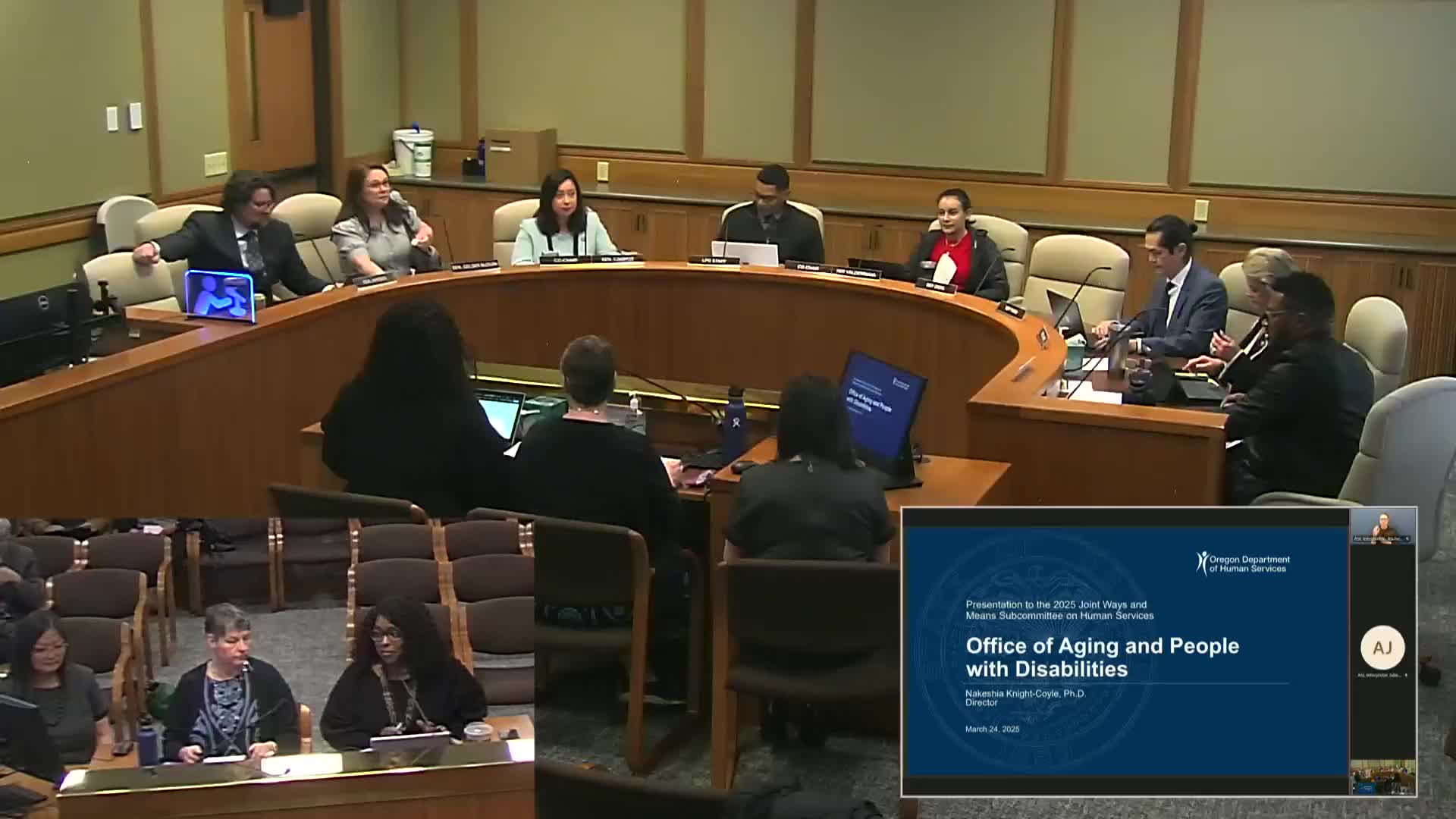
Dr. Nikisha Nye Coyle, director of the Oregon Department of Human Services’ Office of Aging and People with Disabilities (APD), told the Joint Interim Subcommittee on Human Services on March 24 that APD’s budget is about $6.9 billion and that federal compliance and workforce shortages are driving major program and staffing requests.
Dr. Nikisha Nye Coyle, director of the Oregon Department of Human Services’ Office of Aging and People with Disabilities (APD), told the Joint Interim Subcommittee on Human Services on March 24 that APD’s budget is about $6.9 billion and that federal compliance and workforce shortages are driving major program and staffing requests.
APD’s budget request and policy option packages are focused on three priorities: safety, improved access for people with behavioral health needs, and service excellence through greater equity and data-driven oversight. “We are over 3,000 operators working across APD and area agencies on aging offices,” Dr. Nye Coyle said, listing providers and the long-term care workforce among those APD supports.
Why it matters: APD accounts for roughly 31% of the Oregon Department of Human Services’ global budget and administers Medicaid long-term services and supports, Older Americans Act programs, Oregon Project Independence and adult protective services. Dr. Nye Coyle warned that failure to meet new Centers for Medicare & Medicaid Services HCBS access rules could put federal funding for these services at risk.
Key figures and scope - APD’s biennial budget is “just shy of $7,000,000,000,” the director said; APD’s funding mix is about 59% federal, 35% state general fund and 6% other funds. - APD and area agencies on aging serve more than 400,000 individuals annually. In a typical month, APD’s long-term services and supports system serves about 35,000–37,000 people; roughly one-third are adults under 65 with disabilities and two-thirds are age 65 and older. - In the two-year period ending June 2023, APD reported roughly 50,700 individuals received Medicaid long-term services and supports; about 26,500 chose to receive those supports at home. - Adult Protective Services investigated nearly 25,800 alleged incidents…
Already have an account? Log in
Subscribe to keep reading
Unlock the rest of this article — and every article on Citizen Portal.
- Unlimited articles
- AI-powered breakdowns of topics, speakers, decisions, and budgets
- Instant alerts when your location has a new meeting
- Follow topics and more locations
- 1,000 AI Insights / month, plus AI Chat