Get Full Government Meeting Transcripts, Videos, & Alerts Forever!
Get email alerts on the Investment Management topic
No spam. Unsubscribe anytime.
Leesburg trust hears PFM review showing portfolio projections fall short of 7% discount rate
Summary
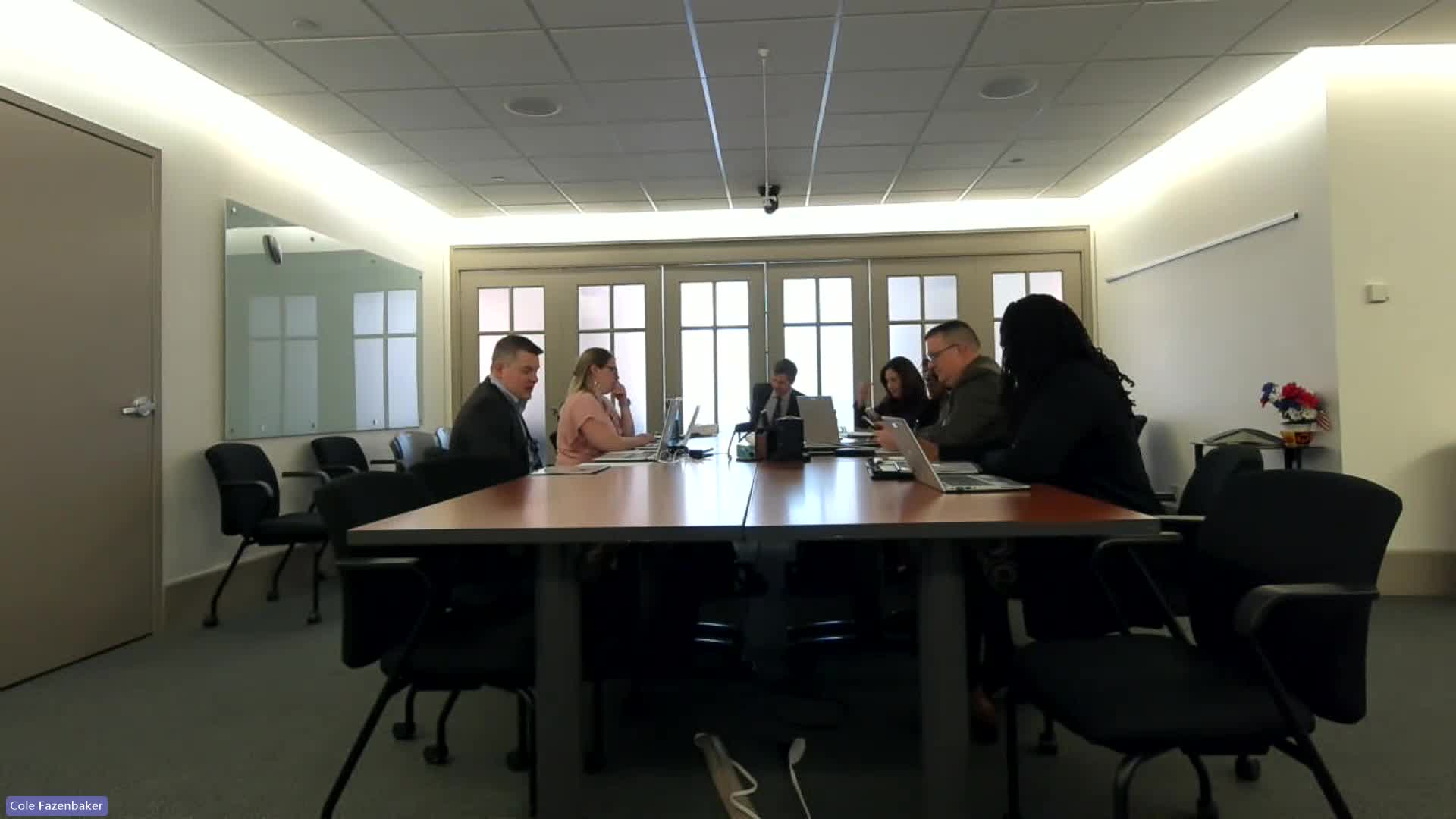
PFM representatives Scott Fleming and Allison Corbeli briefed the Howell Leesburg OPAT Trust Finance Board on economic conditions and the fund—s fourth-quarter performance, saying the current portfolio mix is unlikely to meet the trust—s 7% discount-rate assumption without taking additional equity risk.
PFM representatives Scott Fleming and Allison Corbeli briefed the Howell Leesburg OPAT Trust Finance Board on economic conditions and the fund—s fourth-quarter performance, saying the current portfolio mix is unlikely to meet the trust—s 7% discount-rate assumption without taking additional equity risk.
PFM summarized U.S. economic strength and market drivers ahead of the portfolio review. "2024 turned out to be another excellent year for the financial markets," Allison Corbeli, representative, PFM, said, and Scott Fleming, representative, PFM, added that "we continue to grow at above 2%." The advisers told the board that solid corporate earnings, a still-healthy labor market and steady consumer spending helped returns in 2024, while headline inflation remained elevated relative to the Fed—s 2% goal.
PFM then reviewed the trust—s asset allocation and modeled expected returns. The consultants said the trust—s current target mix (60% equities, 40% fixed income) produces a median projected intermediate return near 6.7%, slightly below the 7% discount rate shown in the trust—s actuarial/financial statements. "If we look at a 70/30 portfolio, yes, you're bumping up to 7%," Corbeli said, while also warning that higher equity weightings increase portfolio volatility. The consultants characterized these figures as projections based on their capital-markets assumptions and emphasized there is no guarantee.
PFM reported portfolio actions already taken and recent performance. They said the board—s equity sleeve moved from active to passive management and that the portfolio added a real estate investment trust (REIT) allocation late last quarter. For the fourth quarter the portfolio returned about -1.6%, versus a -1.81% benchmark; PFM said the fund nevertheless produced double-digit outperformance versus the benchmark for the full year 2024. The consultants noted they had trimmed international and emerging-market exposures and driven a modest underweight to international equities relative to the benchmark.
Board members and PFM discussed options for aligning expected returns with the plan—s 7% discount rate. PFM offered three approaches: increase overall equity exposure (for example to 70/30 or 80/20), accept a lower expected return by keeping a more conservative mix, or pursue targeted changes such as removing emerging-market exposure while preserving developed international equities. Corbeli said the managers can "run the model portfolio ... and just take emerging markets out and see what it looks like." The consultants recommended matching any allocation change with updated actuarial assumptions and, if implemented, amending the trust—s investment policy statement.
Board members flagged the trust—s status as a closed plan and its expected multi-decade payout horizon. A board member noted that the plan closed in April 2016 and estimated there may be roughly 30 years of future payouts. Trustees asked PFM to model portfolio pathways that account for expected outflows and actuarial projections, and to provide those results at a future meeting along with the most recent actuarial/experience report.
No new allocation changes or formal motions on investment strategy were adopted at the meeting. The only formal vote recorded on the agenda was approval of the November meeting minutes; the minutes were approved and seconded (second by Octavia) and the chair stated the motion carried unanimously. PFM and staff said they would return with modeled scenarios tied to the actuarial inputs and a proposal for any required investment policy amendments.
Looking ahead, PFM recommended the board focus on long-term fundamentals rather than reacting to daily headlines about tariffs or near-term political developments. "There's so much coming down the pipe ... it's not prudent to react to those," Fleming said. The board scheduled follow-up work: PFM will run additional capital-markets scenarios (including models excluding emerging markets and scenarios for 70/30 and 80/20 mixes) and staff will circulate the most recent actuarial/experience report so the committee can consider policy adjustments at the next meeting.
The meeting opened with attendance and administrative items, and concluded after the PFM presentation and the items described above.