Get Full Government Meeting Transcripts, Videos, & Alerts Forever!
Get email alerts on the Technology Ai topic
No spam. Unsubscribe anytime.
City updates AI governance, pilots RAG chatbot and other targeted projects
Summary
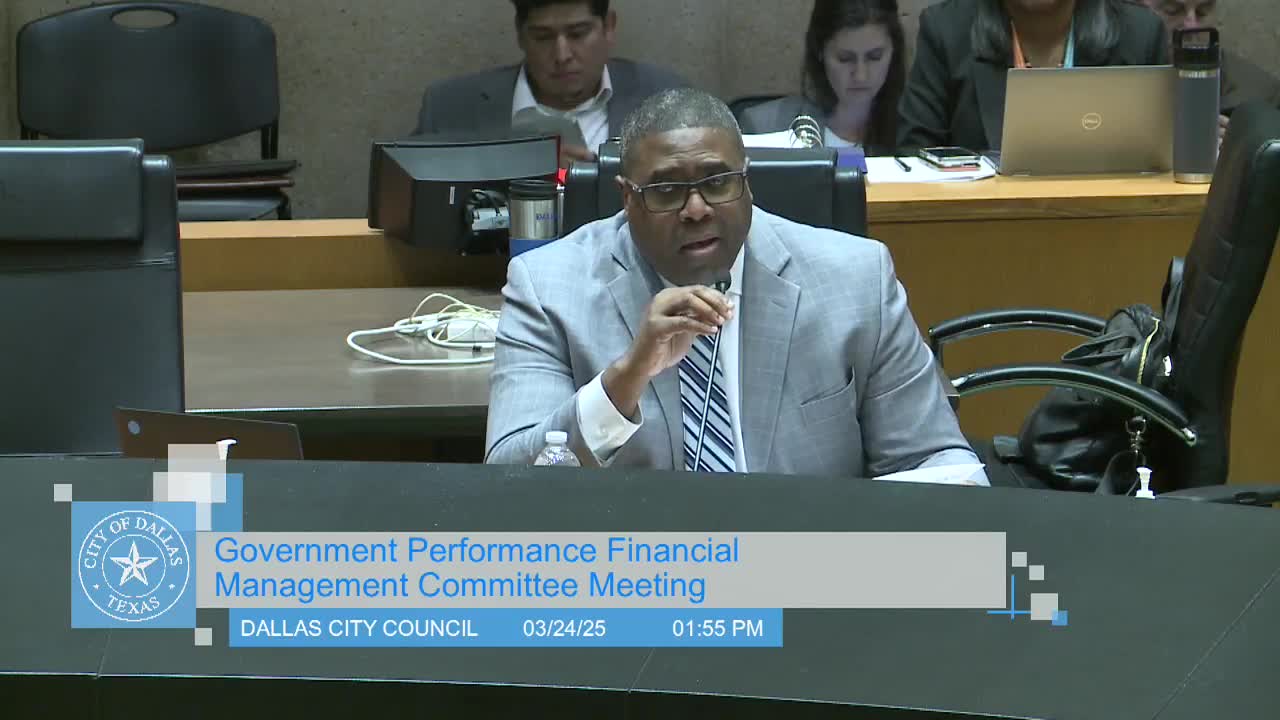
IT staff and an AI advisory team updated the committee on an enterprise approach to AI governance, select pilots (code-compliance RAG chatbot, fire-risk models, opioid spatial modeling), staff training and a plan to route all AI requests through IT governance.
Britta Andrachek and Tanesha (Tanisha) Dorsey updated the committee on the city—s artificial intelligence plan and early pilots. City staff outlined a governance-first approach: centralize AI requests through the IT governance "one front door" process (technology request intake) to ensure review by IT governance, data governance and other stakeholders; emphasize transparency, human-in-the-loop safeguards, and selection of appropriate use cases; and adopt NIST risk-management guidance for AI implementations.
Staff described several pilot and near-term projects. A retrieval-augmented-generation (RAG) chatbot is being piloted to help code compliance staff search the municipal code for plain-language answers (for example, maximum grass height) and staff said they plan to make a public-facing chatbot available after testing. Other pilots include a Tangoe Gen AI assistant and Grammarly Enterprise for staff productivity, a geospatial AI chatbot for plain-language access to datasets, a fire-risk structural scoring model to prioritize inspections, and opioid-spatial modeling and other data-driven prioritization tools. Staff said they are exploring a government-specific hosted LLM (including vendor partnerships such as Microsoft government offerings) and are conducting a preliminary data assessment, but they have not committed to building an in-house LLM and said that would require significant infrastructure and training.
Committee members asked about bias mitigation, public access, training plans and whether tools would be intuitive for staff. IT staff said they are following NIST guidance, limiting sharing of sensitive data, offering role-appropriate training and planning phased rollouts. Staff also said some pilots will be made available to staff first and then to the public (for example, the code-compliance RAG and geospatial chatbot).